Top Reasons to Use Remote Bookkeeping Services
When a business begins to grow, it becomes harder to manage bookkeeping. At that point, many business owners start looking for something easier, something that can manage books remotely. Instead of keeping a bookkeeper at your office, you may connect with one online. Remote bookkeeping services can help you record entries, track expenses, prepare reports, and save you from financial problems.
What makes it so special? Why are so many people moving toward remote bookkeeping services these days? In this blog, we’ll look at all the main reasons behind that shift. You may find that it’s not just about saving money, but about gaining time, clarity, and comfort in how your business runs.
Understanding Remote Bookkeeping
Remote bookkeeping is when professionals manage your business finances from a distance using online tools. They may not sit in your office, but they can track expenses, record sales, and prepare reports as if they were right beside you.
You may upload documents, check accounts online, and even see your reports updated in real time. It can feel as if your financial team lives inside your screen, quietly keeping things steady.
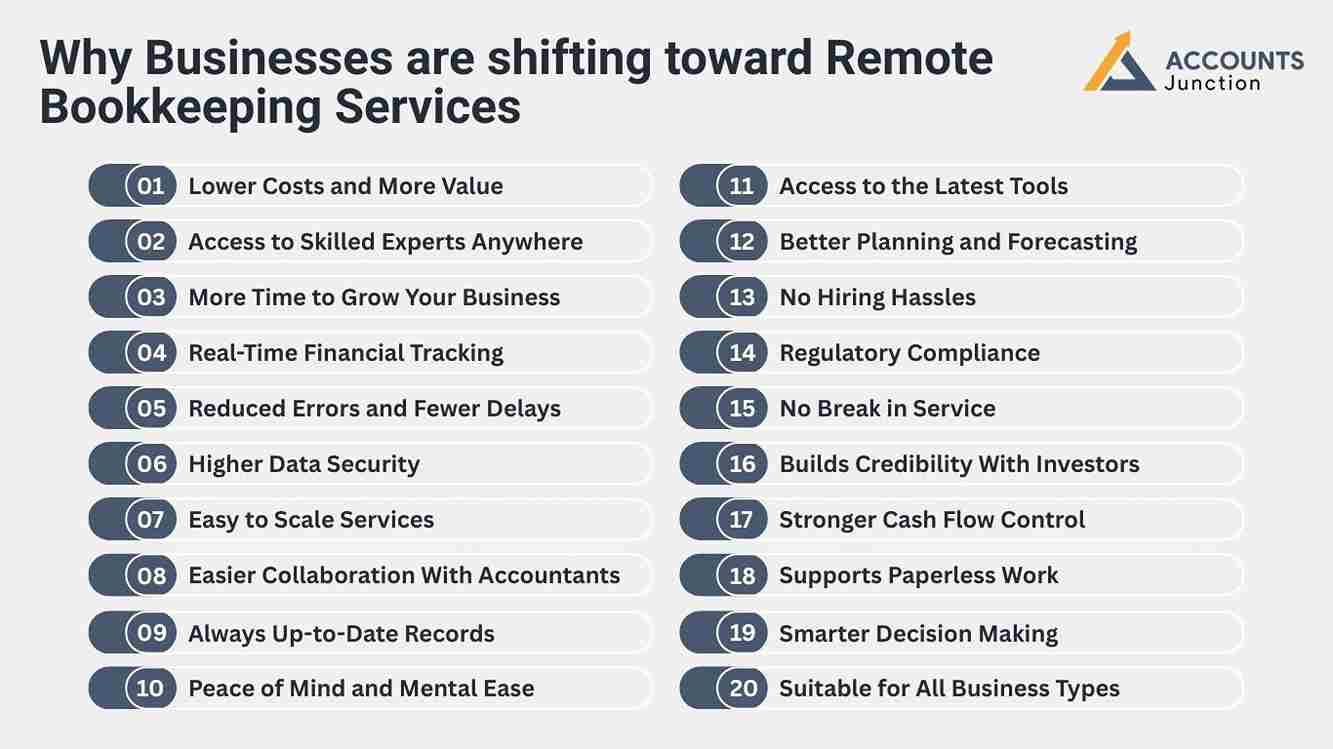
Why Businesses are shifting toward Remote Bookkeeping Services
In earlier times, business owners may have preferred in-person accountants. But now, with faster internet and cloud-based tools, more companies may turn to remote options. The reasons can be both practical and emotional — lower costs, more time, and a sense of calm that comes from knowing experts are watching over your finances.
Let’s explore some of the strongest reasons behind this growing choice.
1. Lower Costs and More Value
Hiring a full-time bookkeeper comes with extra costs — salaries, training, equipment, and office space. Remote bookkeeping services can remove most of that burden.
You may save money through:
- No need for office desks or furniture
- No vacation or sick leave to cover
- Access to top talent without full-time pay
For small businesses, these savings may make a real difference. The money saved can be redirected toward growth, marketing, or team development.
2. Access to Skilled Experts Anywhere
Remote services can connect you with professional bookkeepers from different locations. This opens doors to skills and experience that may not exist locally.
A business in a small town may find an expert who understands global tax systems or specific software. The best part — distance may no longer matter.
3. More Time to Grow Your Business
When you spend less time managing receipts or invoices, your mind may open up for strategy and creativity. Remote bookkeeping may give back hours that once vanished into routine work.
This time can be used to:
- Focus on customer growth
- Develop new products or services
- Improve internal operations
A few saved hours a week may seem small, but they can compound into real progress over time.
4. Real-Time Financial Tracking
One special part of remote bookkeeping lies in its speed. Since it uses online systems, your financial records may update instantly.
You may open your dashboard and see income, expenses, and cash flow in real time. This visibility may help you make quick decisions and avoid surprises during tax season.
5. Reduced Errors and Fewer Delays
Manual bookkeeping often invites human mistakes. Missed entries or duplicated expenses can cause confusion later. Remote bookkeepers may rely on automation and double-checking tools that lower the risk of such errors.
Accurate records may also lead to smoother audits and easier tax filing. You may rest easier knowing your books stay neat and consistent.
6. Higher Data Security
Many people may worry about sharing data online. However, remote bookkeeping may often use advanced security features like encryption, two-step login, and automatic backups.
These layers may keep your information safer than traditional paper records. Data stored digitally can also be recovered quickly in case of loss or damage.
7. Easy to Scale Services
As your business grows, so do your financial needs. Remote bookkeeping services may adjust easily.
They can:
- Add more support during busy seasons
- Scale down when workloads drop
- Offer customized reports for larger operations
This flexibility may suit both new startups and mature companies that want adaptive solutions.
8. Easier Collaboration With Accountants
Remote bookkeepers and accountants may work together smoothly using shared tools. Instead of passing files by hand, accountants may log in directly to review transactions.
This may make audits faster and reduce the stress of tax filing. Everything may be ready and accessible when needed.
9. Always Up-to-Date Records
A common struggle for many small business owners is staying updated. Records may lag for weeks or even months. Remote bookkeepers may keep things current, sometimes even daily.
Up-to-date information may guide smarter choices, such as when to invest or how to handle slow months.
10. Peace of Mind and Mental Ease
Behind every small business lies a person juggling countless things. Bookkeeping may quietly add pressure. Remote services may lift that stress.
Knowing that professionals are handling your books can bring a calm sense of balance. It may not sound dramatic, but the peace it brings can feel priceless.
11. Access to the Latest Tools
Remote bookkeepers often use modern software like QuickBooks, Xero, or Zoho Books. These tools can organize data faster and show reports visually.
You may view trends, track cash, and even predict outcomes through charts and graphs. It may turn dull numbers into something that tells a clear story.
12. Better Planning and Forecasting
Remote bookkeeping may help you understand not just where money goes, but where it may go next. Accurate data may lead to smart planning.
You may forecast future income, prepare for taxes, or plan expansion without guessing. Numbers, when managed well, may become a guiding map instead of a mystery.
13. No Hiring Hassles
Hiring and training a full-time bookkeeper may take weeks. With remote services, the process may finish in days.
Providers already have trained staff who can jump into work right away. You may skip the long onboarding and move straight to results.
14. Regulatory Compliance
Financial laws and tax rules may change often. Keeping up with them may be tough for small businesses. Remote bookkeepers usually stay updated on new rules.
This awareness may protect your business from penalties and keep records compliant with standards.
15. No Break in Service
Unlike full-time employees who may take leaves or fall sick, remote services often work in teams. Your books may stay managed without delay.
Work may continue even if one team member steps away. This steady rhythm may make your operations more reliable.
16. Builds Credibility With Investors
Accurate records may impress banks and investors. When you present well-organized financials, trust naturally builds.
It may show that your business is stable and well-managed — traits that may attract partnerships and funding.
17. Stronger Cash Flow Control
Remote bookkeepers may keep a close eye on inflow and outflow. They may remind you of overdue invoices or upcoming bills.
Such awareness may prevent shortfalls and help maintain balance in daily operations.
18. Supports Paperless Work
Digital bookkeeping means fewer papers lying around. Receipts, bills, and statements may all live safely in the cloud.
Not only does this save time, but it may also reduce waste and help the planet a little bit every day.
19. Smarter Decision Making
When data is clear, decisions may feel less like guesses. Remote bookkeeping may provide insights that guide your steps.
You may see which products bring more profit or which expenses eat up cash. Clarity may lead to confidence.
20. Suitable for All Business Types
Remote bookkeeping may fit nearly any setup — from freelancers to retail stores to startups. Services may adapt to match your volume, goals, and pace.
Whether your operations are small or expanding, this model may fit comfortably without pressure.
Key Takeaways
- Remote bookkeeping may save money and time
- Experts may bring skill and security
- Businesses may gain real-time insight
- Flexibility and peace of mind may be priceless
When handled right, it may not just be about tracking money but about building trust and freedom.
Remote bookkeeping services are not just about saving money or simplifying work. These services can prove to be the kind of support that lets you breathe, plan, and build your business with ease. Need remote bookkeeping services customized for your business? At Accounts Junction, we provide accounting and bookkeeping services that are completely remote. Whatever your business may be, you can contact us anytime and get the remote support you want.
FAQs
1. What are remote bookkeeping services?
- They are online services where professionals manage your books from any location.
2. Are remote bookkeeping services secure?
- Yes, they may use encrypted systems and cloud backups for safety.
3. Can small businesses afford them?
- Yes, they may cost less than hiring a full-time employee.
4. Do I lose control of my finances?
- No, you may still access and review your data anytime.
5. What tools do remote bookkeepers use?
- They may use cloud platforms like QuickBooks, Xero, or Zoho.
6. How fast can services start?
- Setup may take only a few days once records are shared.
7. Can they handle payroll?
- Yes, many services include payroll and tax support.
8. Will it reduce my stress?
- It may lighten your load and save hours each week.
9. Is data sharing safe?
- Yes, files are protected through secure cloud systems.
10. Can they work with my accountant?
- Yes, collaboration may be smooth through shared access.
11. Are updates done often?
- Most services may update weekly or daily.
12. Can I scale services later?
- Yes, you may increase or reduce as your business changes.
13. Do they follow legal standards?
- Yes, professionals usually stay aligned with tax laws.
14. Can I view reports myself?
- Yes, dashboards may show live financial data anytime.
15. Are remote bookkeepers trained?
- Yes, they may be certified and experienced in multiple industries.
16. Can this save time?
- It may save hours by automating manual work.
17. Is it suitable for freelancers?
- Yes, even solo workers may benefit from clear records.
18. Can I go paperless?
- Yes, all data may stay digital and well-organized.
19. Does it improve planning?
- Yes, clear data may help plan future budgets with confidence.
20. Is it a long-term option?
- It may grow with your business and stay useful for years.