
Outsourced Bookkeeping: A Simple Guide for Growing Businesses
Outsourced bookkeeping often feels like a safe choice for owners. Many teams use outsourced accounting and bookkeeping to lower stress and track cash. As the business grows, daily finance tasks may feel slow and hard.
Outsourced bookkeeping then seems easy, flexible, and simple to manage. This blog shares tips, examples, and ideas to help owners decide. Many growing businesses look for clear ways to handle financial work.
Outsourced bookkeeping may appear during this search as a good option. Owners may wonder if current systems will handle future growth needs. This blog shows how outsourced accounting and bookkeeping can reduce stress and save time. It explains when outsourced accounting and bookkeeping become smart and simple for growth.
Teams may feel more confident when records are always correct. Planning may feel easier, and decisions may happen more quickly.
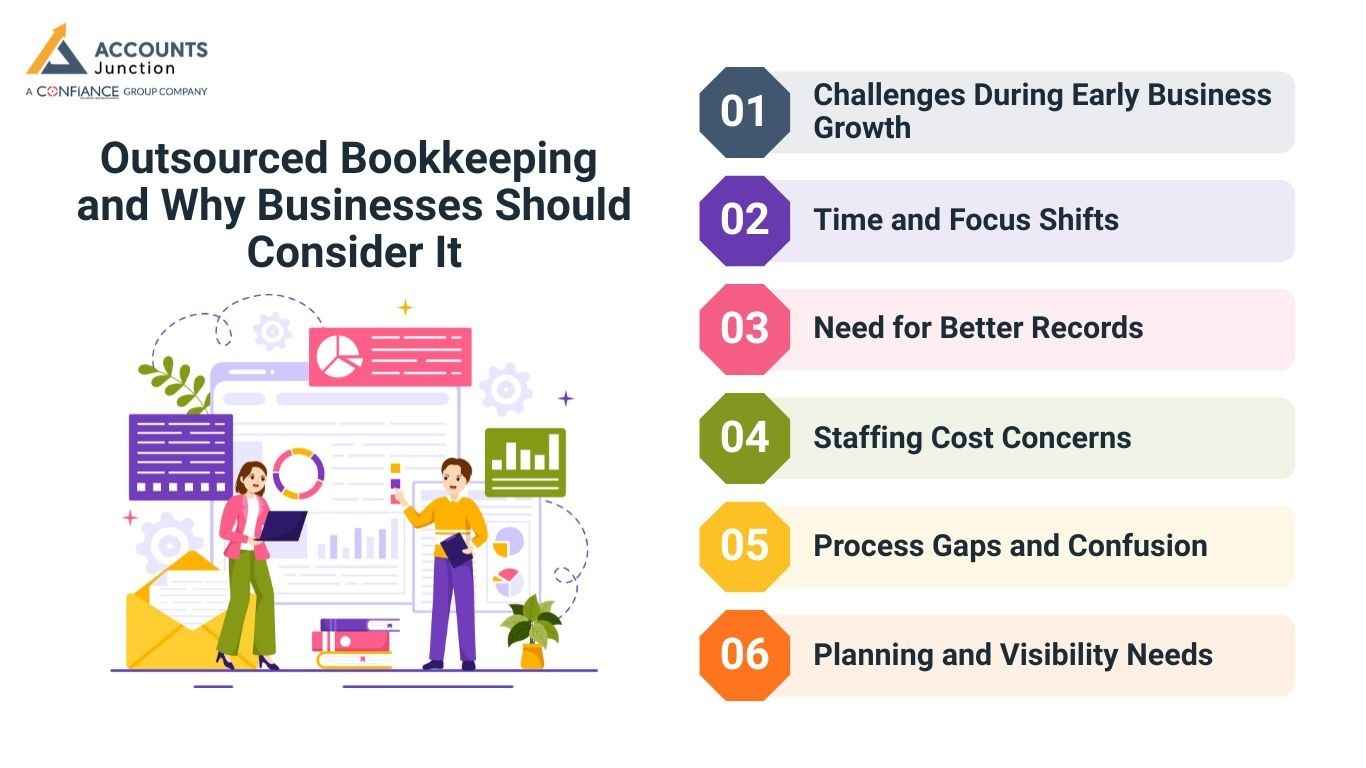
Outsourced Bookkeeping and Why Businesses Should Consider It
Outsourced bookkeeping often appears during early growth stages of a business. Many owners feel time pressure when daily finance work grows larger.
Outsourced accounting and bookkeeping may feel like a step toward balance and control. Some leaders believe outside support brings fresh views on financial routines.
Challenges During Early Business Growth
- Growth can feel exciting yet tiring at the same time. Sales may rise, but records may fall behind often.
- Owners may feel unsure about reports or missing numbers. Remote bookkeeping services sometimes look like a relief during such phases.
Time and Focus Shifts
- Time often feels limited for growing teams. Finance tasks may pull focus from sales or service work.
- Outsourced accounting bookkeeping may help owners regain focus on core goals. This shift may support calmer planning and better use of work hours.
Need for Better Records
- Clear records often feel essential as businesses grow larger. Errors may appear when tasks move too fast internally.
- Remote bookkeeping services could reduce daily pressure around record updates. Many owners feel comfort when records seem orderly and current.
Staffing Cost Concerns
- Hiring full-time staff may feel costly during early growth stages. Pay costs and staff training may raise stress on small budgets.
- Outsourced accounting and bookkeeping may feel like a lighter cost choice. Many owners see it as flexible help without long-term duty.
Process Gaps and Confusion
- Work steps may feel unclear when tasks increase rapidly. Different staff may record data in different ways.
- Outsourced bookkeeping may bring clear steps and checks. This clear flow may reduce mix-ups and repeat fixes.
Planning and Visibility Needs
- Planning may feel harder without clear money views. Late records may limit short-term choice comfort.
- Outsourced accounting and bookkeeping may improve the view of cash flow. This clear view may help owners feel calm during growth.
How Outsourced Bookkeeping Usually Works
Outsourced bookkeeping often follows a shared process model. The business shares data while the service team manages records.
Communication often stays remote through tools and calls. This structure feels simple for many growing businesses today.
Data Sharing Methods
- Files may be shared through secure online systems. Invoices and bank data often move in digital formats.
- Outsourced bookkeeping teams usually request regular data access. This flow may feel smooth after the early setup steps.
Monthly and Weekly Tasks
- Routine tasks often include entry checks and balance reviews. Reports may arrive weekly or monthly based on preference.
- Outsourced accounting and bookkeeping help keep cycles consistent and predictable. Some owners prefer fewer surprises with steady, regular updates.
Review and Feedback Cycles
- Feedback loops often remain important for accuracy. Owners may review reports and share notes or questions.
- Outsourced accounting and bookkeeping teams usually adjust based on feedback given. This shared loop may build steady working comfort over time.
Role Clarity and Task Flow
- Clear roles often help stop overlap and missed steps. The service team posts entries while owners review key points.
- Outsourced accounting and bookkeeping may work better when tasks feel clearly split. This clarity may lower confusion during busy report periods.
Use of Standard Processes
- Simple steps often guide daily and monthly work. Lists may help keep records clean and on time.
- Outsourced accounting teams often follow these set steps. This structure may help keep work quality steady.
Virtual Bookkeeping as a Modern Approach
Virtual bookkeeping often feels natural in remote work settings. Teams connect online rather than sharing physical office space.
Virtual bookkeeping may support faster access and flexible schedules. Many growing firms explore this model for daily ease.
Remote Access Benefits
- Access from anywhere often feels helpful for owners. Reports may be viewed while traveling or working remotely.
- Virtual bookkeeping supports this flexible access pattern. This freedom may suit modern business lifestyles well.
Tool-Based Communication
- Most communication happens through digital tools today. Messages, calls, and dashboards replace paper-based updates.
- Virtual bookkeeping often relies on such systems for clarity. These tools may reduce confusion and repeated explanations.
Comfort With Distance
- Distance sometimes feels risky at first. Over time, trust may grow with steady results.
- Virtual bookkeeping may then feel as reliable as local support. Comfort often depends on communication quality and clarity.
Flexible Work Timing
- Work no longer stays within fixed office hours. Virtual bookkeeping may support updates across varied work times.
- This time, freedom may help owners plan tasks with ease. Many firms feel less pressure with flexible support access.
Easy Team Scaling
- Team size may shift as business needs expand. Virtual bookkeeping allows for support growth without long hiring steps.
- Extra help may join during busy work periods. This scale often feels useful for growing firms.
Outsourced Bookkeeping Services and Business Scale
Outsourced bookkeeping services can change as a business grows. Small firms may begin with simple task support. As teams grow, they may need more checks and clear reports. This flexible setup often suits owners planning steady growth.
Support for Small Teams
- Small teams often share many work roles. Money tasks can feel heavy during busy times.
- Outsourced bookkeeping services can lower this load. This help allows teams to stay focused on daily work.
Support for Medium Firms
- Medium firms handle more sales and payments. At this stage, mistakes can cost time and money.
- Outsourced accounting and bookkeeping services may add review steps. These steps help firms feel more in control.
Adjusting Service Scope
- Service needs often change as work increases. Extra reports or checks can be added over time.
- Outsourced bookkeeping services support this slow change. This approach helps avoid sudden work pressure.
Integrating Bookkeeping and Accounting Services
Outsourced bookkeeping and accounting services may work as one team. Bookkeeping keeps daily books while accounting checks full money views.
Many firms choose one team for both money and work. This choice may feel simple for planning and workflow.
Record and Review Balance
- Bookkeeping keeps daily logs neat and clear. Accounting checks sums, rules, and tax needs.
- Outsourced bookkeeping and accounting services link both tasks well. This mix may help owners read money with ease.
Single Point Coordination
- One team may cut gaps in talk. All questions move through one clear path.
- Outsourced bookkeeping and accounting services use this work style. Some owners feel this saves time and effort.
Broader Financial Awareness
- Reports may show cash move and spend trends. Owners may spot shifts in pay and cost flow.
- Outsourced bookkeeping and accounting services may help this view. This view may guide calm and steady plans.
How Outsourced Bookkeeping Helps Business Owners
Outsourced accounting and bookkeeping may feel helpful for many business owners today. These views may change based on goals, work pace, and team habits.
Some owners feel at ease early, while others adjust over time. Below are shared views that often appear during daily work.
Reduced Daily Stress
- Daily money tasks may feel lighter during work hours. Deadlines may seem clear and easier to manage.
- Outsourced accounting and bookkeeping may help reduce daily work pressure. This calmer flow may support focus during key business choices.
Consistent Record Flow
- Money records may stay current more often. This steady flow may limit rush work at the month's end.
- Outsourced bookkeeping may help keep records in order. Many owners prefer steady timing for record updates.
Cost Perception
- Hiring the full staff may feel costly for some firms. Outsourced accounting and bookkeeping may feel lighter on monthly spend.
- This view may depend on task size and service depth. Cost comfort often shifts across growth stages.
Common Concerns in Outsourced Accounting and Bookkeeping
Outsourced bookkeeping also raises certain concerns for owners. These concerns often surface before final decisions. Open discussion may help reduce feelings. Below are common areas of hesitation.
Data Security Feelings
- Sharing data may feel risky for some owners. Trust often builds slowly with time and results.
- Outsourced accounting and bookkeeping providers usually explain safety measures. Comfort levels vary based on past experiences.
Communication Gaps
- Time zone or schedule gaps may occur. Delays in replies may feel frustrating at times.
- Outsourced bookkeeping teams often set communication rules. Clear expectations may reduce such concerns gradually.
Control and Visibility
- Some owners prefer direct task visibility. Letting go may feel uncomfortable at first.
- Outsourced accounting bookkeeping requires trust and clear reporting. Visibility tools may ease this transition phase.
Local vs Virtual Bookkeeping: Key Differences
|
Aspect |
Local Bookkeeper |
Virtual Bookkeeping |
|
Definition |
Bookkeeper or team located near your business. |
Bookkeeping is done online via cloud-based tools. |
|
Best For |
Businesses prefer in-person interaction and paper records. |
Businesses are comfortable with online banking and digital tools. |
|
Interaction |
Face-to-face or local meetings. |
Online chat, phone, or secure messaging. |
|
Access to Financials |
Depends on software; may be slower. |
Real-time access through cloud software and mobile apps. |
|
Pricing |
Usually hourly; varies by experience. |
Typically, a flat monthly fee. |
|
Security |
Must trust the bookkeeper; owner retains control of payments. |
Data stored securely in the cloud; controlled access. |
|
Automation & Tax Support |
Often, manual record handling; tax prep may require extra effort. |
Automatic expense downloads provide tax-ready financial statements. |
Choosing the Right Outsourced Bookkeeping Partner
Outsourced bookkeeping often works well when the right partner is chosen. Not all services suit every type of small or mid-sized business.
Checking carefully can help set clear goals from the start. Here are some points that owners usually think about first.
Experience Signals
- Past work may show that the team knows the process. Familiarity with similar businesses can give owners calm feelings.
- Providers often show examples or past projects to explain skills. These signs may help owners feel safer with the service.
Communication Style
- How teams talk and respond matters a lot for clarity. Simple words often reduce mistakes or unclear instructions.
- Outsourced bookkeeping works best with open and clear dialogue. Owners can test communication in early talks before hiring.
Tool Compatibility
- Tools used must fit the business software and systems. Wrong tools may slow work or cause small mistakes.
- Providers usually share a list of the tools they support. Checking compatibility early can save time and frustration later.
Transitioning to Outsourced Bookkeeping Smoothly
Outsourced accounting and bookkeeping transitions often feel smoother with planning. Sudden changes may cause confusion for teams. Gradual steps may reduce resistance and errors. Below are commonly suggested transition approaches.
Start With Core Tasks
- Beginning with basic tasks may feel easier. Advanced reports may follow later.
- Outsourced accounting and bookkeeping can grow in scope gradually. This pace may support team comfort levels.
Clear Role Definitions
- Internal and external roles should feel clear. Overlap may create confusion or duplication.
- Outsourced bookkeeping works better with defined boundaries. Clear roles may support smoother daily flow.
Review Period Setup
- Early review periods help catch issues quickly. Owners may share feedback during these phases.
- Outsourced accounting and bookkeeping teams often expect adjustments early. This phase may shape long-term satisfaction.
Reasons Businesses Often Choose Outsourced Accounting and Bookkeeping
Outsourced bookkeeping may seem useful for growing firms. Many owners look at this choice after their daily work feels heavy. These points reflect common thoughts shared by many businesses.
Time Relief
- Daily bookkeeping may take more hours than planned. Owners may lose time for sales or growth tasks.
- Outsourced accounting and bookkeeping may help free work hours. This change often feels helpful during busy periods.
Process Stability
- Internal steps may feel uneven as work volume grows. Late entries or missed updates may happen.
- Outsourced bookkeeping may bring a steady task flow. Steady records often help with reviews and plans.
Skill Access
- Some teams may lack strong record-handling skills. Learning finance rules may feel hard for staff.
- Outsourced accounting and bookkeeping may offer trained support. This help may reduce doubt in daily records.
Cost Comfort
- Full-time staff may feel costly for many firms. Training and setup may raise total spend.
- Outsourced accounting and bookkeeping may seem flexible in cost. This feeling depends on needs and service scope.
Business Stages That Often Trigger Outsourcing Decisions
Outsourced bookkeeping is rarely chosen at the start. The choice often comes during key business phases. Below are moments when owners often pause and rethink.
Growth Phase
- Sales growth may raise record volume fast. Manual tracking may feel slow or unsafe.
- Outsourced bookkeeping may feel timely then. This stage often shows process gaps clearly.
Cash Confusion
- Cash status may feel unclear each month. Late reports may cause stress or doubt.
- Outsourced accounting and bookkeeping help improve the view. Clear numbers often support calm choices.
Compliance Pressure
- Tax dates may feel close and stressful. Missing data may raise worry levels.
- Outsourced accounting and bookkeeping may help with prep. This support may ease peak season stress.
Team Overload
- Staff may handle many roles together. Bookkeeping may clash with core work.
- Outsourced accounting and bookkeeping reduce staff load. Shared tasks may restore work balance.
Common Models Used in Outsourced Bookkeeping Services
Outsourced bookkeeping services exist in many forms. Each model fits different comfort levels. Below are service types often seen.
Basic Record Support
- This model covers daily entry tasks. Bills and costs are often tracked.
- Outsourced accounting and bookkeeping stay simple here. It suits early-stage firms well.
Monthly Review Model
- Records are checked once each month. Reports are shared for owner review.
- Outsourced accounting bookkeeping follows a fixed cycle. This model suits steady businesses.
Virtual Bookkeeping Model
- Virtual bookkeeping runs through online tools. Calls and dashboards support contact.
- Files stay digital and easy to reach. This model suits remote work styles.
Full Finance Support
- This model adds reports and reviews. Trends and summaries may be shared.
- Outsourced accounting and bookkeeping services grow in depth. Some firms like this single setup.
Outsourced bookkeeping can feel like a safe help for business growth. Many owners use it to gain more time and a clear view.
Results change based on needs, goals, and team feedback. Virtual bookkeeping and outsourced bookkeeping services are growing in use today.
When done right, bookkeeping and accounting services simplify financial tasks and bring peace of mind. With clear plans and regular reviews, teams gain confidence and better control over their finances. At Accounts Junction, our certified experts keep records accurate, provide clear updates, and handle daily money tasks with care. Ready for easier financial management? Discover how Accounts Junction can help your business grow.
FAQs
1. Is outsourced bookkeeping suitable for small businesses?
- Outsourced accounting and bookkeeping help small teams do work. It cuts stress and lets owners focus on tasks.
2. How does virtual bookkeeping differ from in-house work?
- Virtual bookkeeping uses web tools and remote staff. In-house work is done at the office each day.
3. Are outsourced bookkeeping services flexible?
- Outsourced accounting and bookkeeping let you change the task scope. Flexibility may depend on the service plan.
4. Can outsourced bookkeeping and accounting services work together?
- Outsourced bookkeeping and accounting often work as one. This can make reports and tasks much clearer.
5. Does outsourced accounting and bookkeeping reduce errors?
- Outsourced accounting and bookkeeping may cut most small mistakes. Results rely on clear steps and good checks.
6. How long does the transition usually take?
- Time depends on data size and prep work. Most moves happen in small, staged steps.