
Top Bookkeeping Firms for Small and Growing Businesses
Small and growing businesses often face complex tasks with their financial records. Bookkeeping firms can help maintain clear reports, track expenses, and support smooth growth plans.
Many owners find it hard to balance daily operations with record-keeping needs. When this happens, outsourcing tasks to expert support makes sense for business stability. Most leaders seek top bookkeeping firms that deliver quality care and reliable results.
Using these trusted firms often improves clarity in financial records and boosts owner confidence in future plans. For small businesses, strong bookkeeping support can mean more time for sales, strategy, and customer service growth goals.
This blog explores how bookkeeping firms help, what they offer, and how to choose the right partner. It describes the best practices in outsourced accounting services and sheds light on the firm's strengths in bookkeeping services, accounting solutions, and thorough business accounting support.
Why Small Businesses Seek Top Bookkeeping Firms
Many small firms struggle with complex receipts and daily entries. Hiring a top bookkeeping firm brings expert focus to financial tasks. Leaders often find relief when experts manage invoices, payroll, and tax records.
Good bookkeeping firms help with cash flow checks, cost control, and firm planning steps. Without this help, small leaders often feel overwhelmed and uncertain about their numbers. Competent firms use strong methods that bring clear, updated books every month.
Outsourced help also gives owners time back for key business tasks. Most small firms that adopt this model feel less stress in financial reviews.
1. Accurate Daily Income and Expense Tracking
- Accurate tracking of income and expenses for daily operations. Reliable books show every cash movement with clear dates. This level of detail makes owner reviews and audits far less stressful.
2. Enhanced Cash Flow Visibility and Forecasting
- Improved cash flow visibility and forecasting abilities. Bookkeeping firms help predict shortages and plan for future costs with precise forecasting.
3. Tax and Regulatory Compliance Support
- Follow tax rules and meet government needs. Top firms get ready for tax checks on time. They often find mistakes before they cost much.
4. Cost Savings Over In-House Accounting
- Cost savings compared to full-time accounting staff. Outsourcing removes salary costs and benefit charges for in-house hires. This approach helps small teams invest in growth areas instead.
5. Expert Financial Advice and Investment Guidance
- Expert advice on financial decisions and investments. Top bookkeeping firms share ideas that help owners see new opportunities and make smarter investments. This support often improves budgeting results over time.
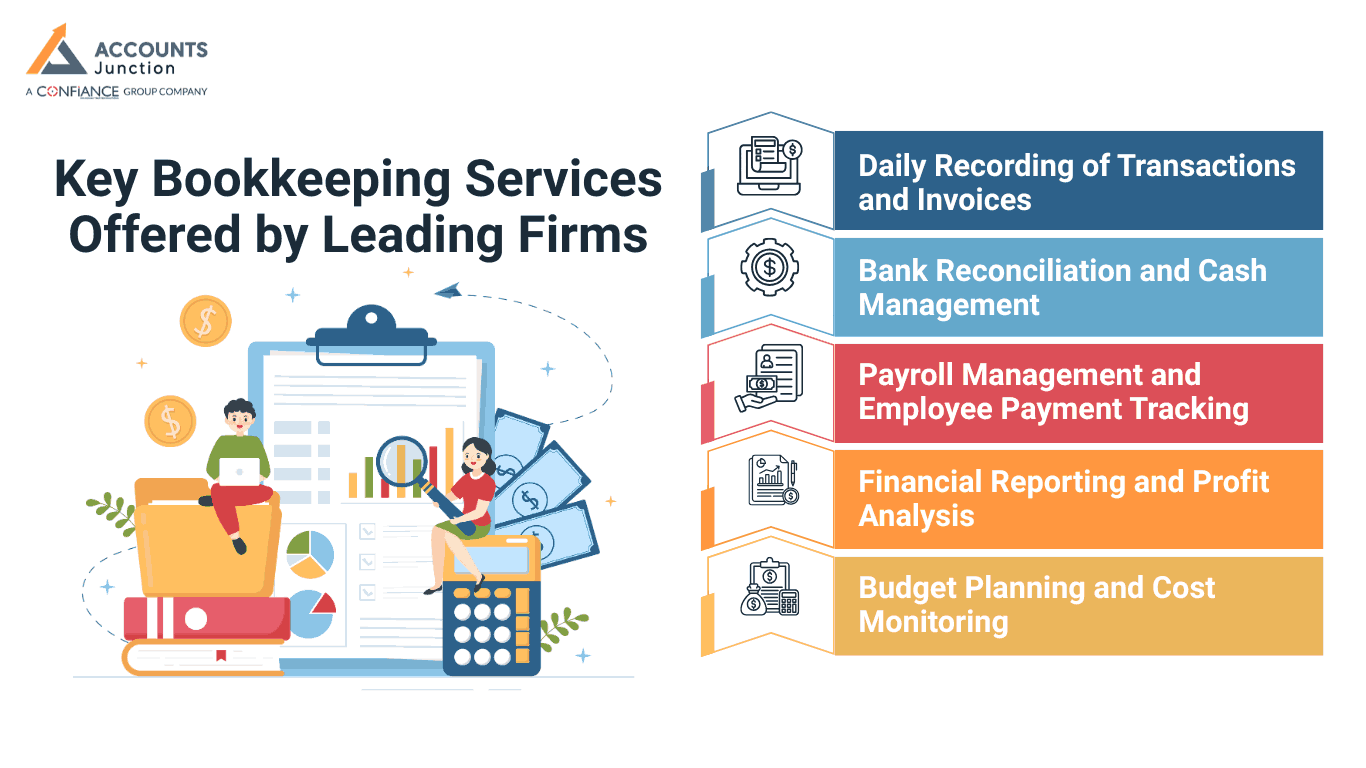
Key Bookkeeping Services Offered by Leading Firms
Bookkeeping services range from simple entry tasks to advanced reports. The best bookkeeping firms tailor offerings to client needs with flexible plans. They know small businesses often need custom reports based on their industry and size.
Each service adds value and keeps records strong and up to date. Many small firms lack the time or skill for month-end work and turn to bookkeeping firms for expert help.
Top providers step in with digital tools that help owners see live financial data.
Here are the major bookkeeping services most leading firms provide:
Daily Recording of Transactions and Invoices
- Daily recording of transactions and invoices. Professional teams in leading bookkeeping firms enter every purchase and sale with care. This ensures bank totals match the business books every day.
Bank Reconciliation and Cash Management
- Bank reconciliation and cash management. Firms compare bank statements to recorded entries each month. This process stops errors and uncovers missing funds quickly.
Payroll Management and Employee Payment Tracking
- Payroll management and employee payment tracking. Payroll runs on time, and tax forms stay up to date. Workers are paid correctly, and records are audit-ready.
Financial Reporting and Profit Analysis
- Financial reporting and profit analysis. Clear reports help owners measure income and loss with facts. They can see where profits grow and where costs rise.
Budget Planning and Cost Monitoring
- Budget planning and cost monitoring. Firms help owners create forecasts and track spending in real time. This makes it easier to stay within the plan all year.
How Outsourced Accounting Services Drive Growth
Many small companies feel stuck when financial work slows priorities. Outsourced accounting services give businesses the freedom to focus on sales and growth. Leaders gain real expertise by partnering with bookkeeping firms without the burden of hiring full staff.
Outsourced teams can scale with business growth and adjust to new needs. They also keep financial records precise and reliable month after month.
In many cases, outsourcing brings faster results with fewer errors than internal teams. With strong support, owners can see trends and risks faster in live data. Most small and growing firms find this model both cost-effective and time-saving.
1. Reduces Overhead Costs
- Reduces overhead by eliminating the need for in-house staff. Outsourcing cuts costs tied to pay and benefits. Owners can use that money for growth or marketing.
2. Access to Specialized Tax and Financial Knowledge
- Offers specialized knowledge on tax and financial laws. Experts know the rules that many small owners do not. This lowers risk and prepares firms for audits.
3. Scalable Services for Growing or Seasonal Needs
- Scalable services as businesses expand or contract. When needs grow, support grows too, without long hiring waits. This flexibility helps during peak periods.
4. Minimizes Errors and Improves Accuracy
- Minimizes errors and improves record accuracy. Focused teams catch mistakes early before they cost money. Clean books help leaders make clear choices.
5. Timely Financial Reporting for Informed Decisions
- Provides timely financial reports for decision-making. Owners can see results fast each month or quarter. This speed improves planning and action steps.
Understanding Business Accounting and Its Importance
Business accounting goes beyond basic entry tasks and helps with strategic decisions. Many small owners think of accounting only at tax time, but good bookkeeping firms show their value year-round. A strong system reveals trends, cost patterns, and growth signs in real time.
Owners can use these insights to expand, invest, or cut costs wisely. Good business accounting also supports firm valuation when seeking funding or loans. Clear and correct books build trust among investors and lenders. With proper support, owners feel more confident when planning for new hires or new markets.
What Makes a Bookkeeping Firm a Top Choice?
Finding the right bookkeeping firm means comparing skills, tools, and client fit. Not every firm works equally well for every business type.
Firms with deep experience in your industry often serve best. Others may shine in tech solutions or monthly reporting speed. Leaders should look at reviews, case results, and sample reports before deciding.
It also helps to ask about the software used for data accuracy and security. Most top bookkeeping firms use cloud tools that let owners view books anytime. Trust and clear communication matter just as much as technical skill.
1. Check Experience with Small or Growing Businesses
- Check experience with small or growing businesses. Firms that work with small teams understand common needs. They can offer advice that fits real situations.
2. Review Available Bookkeeping Services and Specialties
- Review available bookkeeping services and specialties. See if the firm offers exactly what you need each month. Some focus more on payroll, others on reports.
3. Ask About Software and Accounting Solutions
- Ask about the software and accounting solutions used. Modern tools help track books without paper and long delays. Owners can get live access to key figures.
4. Consider Customer Support and Communication Speed
- Consider customer support and communication speed. Quick answers matter when you have urgent questions. Strong support means less waiting and more clarity.
5. Evaluate Cost Versus Value
- Evaluate the cost versus value of services provided. Cheaper is not always better when records are at stake. Think about long-term benefits and savings.
Comparison of Leading Bookkeeping Firm
Below is a clear comparison of top bookkeeping firms and the most common types of providers available in today’s market.
Mid-Size Firms with Broad Services
Many midsize firms offer full outsourced accounting services that fit growth plans. They balance cost and scalability with trained staff. These firms often use leading software for easy access and shared dashboards. Clients get month-end reports, payroll help, and planning tools. They focus on steady service and continuous improvement.
Key Features of Mid-Size Firms
- Specialist teams for bookkeeping tasks.
- Full sets of financial reports and dashboards.
- Clear pricing with monthly or quarterly plans.
- Support for tax prep and compliance checks.
- Regular reviews with owners to track goals.
Boutique Firms with Personal Attention
Smaller boutique bookkeeping firms often deliver close, hands‑on support. They build strong client relations and know every detail of your books.
Boutique firms may tailor services more deeply based on niche needs. They often work well for niche or creative business models. Many owners like the tailored care and direct access to senior experts.
Key Traits of Boutique Firms:
- Personalized client care and attention to detail.
- Quick responses and direct lines to experts.
- Adaptive reporting that matches the owner's style.
- Focus on close collaboration and advice.
- Often ideal for niche business types.
Large Professional Firms with Full Solutions
Big firms often deliver robust business accounting and deep expertise. They can handle multi-state, multi-entity accounts easily. Large teams often include accountants, tax pros, and auditors side by side. These firms suit businesses preparing for scale or a deeper review. Their systems often link bookkeeping to planning and forecasting.
Key Traits of Large Firms:
- High depth of expertise across many tasks.
- Audit-ready books and advanced internal control checks.
- Support for expansion and complex revenue streams.
- Access to tax pros and compliance specialists.
- Often use enterprise-level tools for accuracy.
Industry Specific Bookkeeping Needs
Different businesses need different support. Retail firms track inventory and cost of goods sold daily. Service firms focus more on billable hours and invoices. Tech firms may need subscription tracking and revenue deferral help.
Restaurants track tips and payroll with split shifts. Each sector has unique quirks that a good firm must know well. When a top bookkeeping firm knows your industry, you get clearer insights and fewer surprises.
How to Prepare for Working with a Firm
Before you start with a bookkeeping partner:
- Gather your bank statements for the last year.
- Organize invoices and receipts into digital folders.
- Set financial goals for growth this year.
- List problems you want the firm to solve first.
- Pick software tools that match their system.
This prep work speeds onboarding and gives bookkeeping firms the context they need. It also shows the firm your current numbers, so they can plan the next steps well.
Choosing the top bookkeeping firms can change the way small businesses run their finances. Bookkeeping firms bring clarity, reduce stress, and build confidence in numbers. When paired with strong outsourced accounting services, owners focus on growth and core work.
The best firms offer tailored bookkeeping services and modern accounting solutions for daily success. This support also strengthens overall business accounting and financial planning.
With careful choice and clear goals, small and growing businesses can use expert firms to reach new levels of success. Investing in the right partner often means faster growth, clearer books, and stronger confidence in every financial decision.
Accounts Junction delivers simple, reliable accounting and bookkeeping for small and growing businesses that want clarity and confidence. We keep your books accurate, send timely reports, and maintain clear financial records you can trust. With remote accounting support and modern tools, managing numbers becomes easy and stress-free. Our certified experts follow compliance rules, reduce errors, and share powerful insights to guide smart decisions. Ready for smooth finances and steady growth? Contact Accounts Junction today and partner with a team that truly supports your success.
FAQs
1. What is a bookkeeping firm in simple terms?
- A bookkeeping firm helps track income and expenses clearly.
2. Why hire top bookkeeping firms for small businesses?
- They bring expertise that saves time and reduces mistakes.
3. What services do outsourced accounting services include?
- They include payroll, reporting, tax prep, and data checks.
4. How do bookkeeping services help business growth?
- They have free time, so owners focus on sales and strategy.
5. What is the difference between bookkeeping and business accounting?
- Business accounting includes planning and reporting beyond daily entries.
6. When should a small business choose outsourced help?
- When the workload grows and internal tracking feels slow.