
Outsource and Lower Costs By 70% - Business Process Outsourcing
Companies in the modern business environment often face pressure to cut costs while maintaining quality. Business process outsourcing may offer a solution that reduces expenses significantly. By delegating certain operations, businesses can focus on their core tasks while external experts handle routine functions. Outsourcing may not only save money but also increase efficiency and flexibility for firms of any size.
What is Business Process Outsourcing?
Business process outsourcing involves hiring third-party organizations to manage specific business functions. These functions may include accounting, payroll, customer service, human resources, IT support, and more. Companies may outsource either domestic or international services depending on their needs. Outsourcing can provide access to experienced professionals without expanding internal teams.
Businesses often outsource repetitive or specialized tasks that require skill but do not form part of their core operations. For instance, payroll management is crucial but may be time-consuming. Outsourcing payroll can allow businesses to reduce errors and save time.
Why Companies Consider Outsourcing
Several reasons may drive businesses toward outsourcing.
- Cost Reduction: Outsourcing can reduce costs by up to seventy percent.
- Expertise Access: External teams may bring specialized skills unavailable internally.
- Time Efficiency: Routine tasks may be completed faster by outsourcing partners.
- Flexibility: Firms may scale operations up or down without long-term commitments.
- Risk Mitigation: Outsourcing providers may carry responsibility for compliance and errors.
While the advantages can be significant, companies must carefully select outsourcing partners. The wrong choice may result in inefficiency or poor service quality.
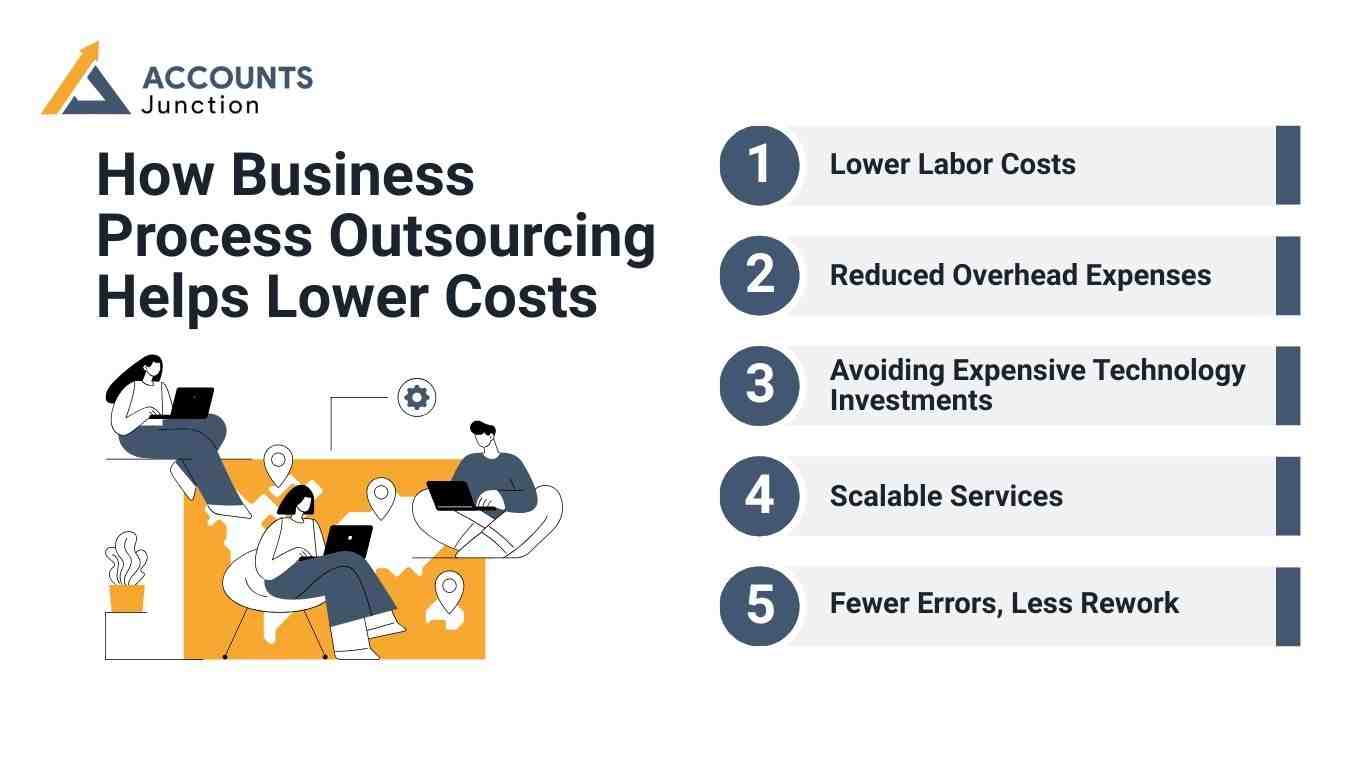
How Business Process Outsourcing Helps Lower Costs
A lot of companies in the world are turning to Business Process Outsourcing because it can help them lower their costs. A well-managed BPO strategy can help a business lower its expenses by as much as 70%. Here are several ways:
1. Lower Labor Costs
When companies hire full-time employees, they have to pay their salary, give them perks and benefits, and also spend on their training. But if companies use BPO services, they have to pay only for the work they do. Apart from that, you gain professionals from lower-cost regions.
2. Reduced Overhead Expenses
Running an office requires money for rent, furniture, computers, and utilities. BPO providers operate independently, so you don’t have to worry about these overheads.
3. Avoiding Expensive Technology Investments
Many tasks require advanced software and tools. Rather than buying and maintaining these tools, BPO companies provide them as part of their service. This saves you from big upfront and maintenance costs.
4. Scalable Services
BPO solutions allow you to scale services up or down depending on your needs. Companies do not need to hire or lay off staff during busy or slow periods. You only pay for what you use.
5. Fewer Errors, Less Rework
Errors cost time and money. BPO teams are experts in their fields, reducing the chances of mistakes. They also use reliable systems, leading to higher accuracy and less rework.
Types of BPO Services for Businesses
BPO services can help with many different parts of a business. Here are the types of services:
1. Customer Service
Many companies outsource their customer support. This includes answering calls, emails, and online chats. BPO companies make sure customers get fast and helpful service.
2. Finance and Accounting
Jobs like bookkeeping, paying salaries, making invoices, and filing taxes can be handled by BPO teams. This helps make sure everything is done right and on time.
3. Human Resources (HR)
BPO services in HR can help with hiring new employees, managing records, and handling benefits. This saves your team a lot of time and effort.
4. IT Services
BPO providers can take care of tech support, software updates, website maintenance, and online security.
5. Marketing Services
Digital marketing, content creation, SEO, and social media management are also common BPO services that help businesses grow their online presence.
Key Benefits of BPO Services for Companies
1. Work Gets Done Faster
BPO teams are trained to handle specific tasks efficiently. They use the right tools and follow set processes. This helps finish work quickly and reduces delays.
2. Skilled People on Your Side
You get access to professionals who already know the job well. No need to spend time or money on hiring and training. They start delivering results right away.
3. Easy to Scale
BPO services are flexible. As your business grows, you can easily increase the level of support. If you need less help, you can scale down without any hassle.
4. Less Risk
BPO providers follow legal rules and industry standards. They help reduce the chances of costly mistakes and keep your data safe..
5. Save on Costs
Outsourcing can reduce costs by up to 70%. You save on salaries, office space, equipment, and overhead expenses.
6. Better Technology
Many BPO providers use the latest software and systems. You get access to advanced technology without having to buy it yourself.
Selecting the Right BPO Solutions for Your Business
1. Define Your Needs
- When a company decides to outsource any kind of task, it must identify which tasks are taking up its time and its resources. Make a list of areas where BPO support—like accounting, HR, or customer service—could make a big impact.
2. Check for Industry Experience
- Not every BPO provider understands your business model. Select the right BPO service provided by an experienced professional in your field.
3. Review Technology Stack
- Modern BPO companies use cloud tools, automation, and secure platforms. Ask about the software they use and how it integrates with your current systems for smooth collaboration.
4. Evaluate Security Measures
- Data privacy and compliance are critical when outsourcing financial or employee data.
Choose BPO solutions that follow strict data protection protocols and have a history of secure practices.
5. Compare Costs and Value
- Do not just focus on the lowest price. Rather than focus on how much it adds value to your firm. A qualitative BPO service saves you money, also improving accuracy, speed, and compliance.
Business process outsourcing may allow companies to cut costs, improve efficiency, and access skilled professionals. Outsourcing can support multiple business functions, including accounting, IT, HR, and marketing. When executed correctly, outsourcing may reduce operational expenses by up to seventy percent.
At Accounts Junction, we provide reliable business process outsourcing services with certified experts. Our team ensures smooth operations while you focus on growing your business. Partner with us to unlock cost savings and operational efficiency.
FAQs
1. What is business process outsourcing?
- Business process outsourcing is hiring external teams to manage specific company tasks. It may reduce internal workload and costs.
2. How does business process outsourcing reduce operational costs?
- It may lower labor, infrastructure, and technology expenses by using specialized external teams.
3. Which business functions are best suited for outsourcing?
- Accounting, payroll, HR, IT support, and customer service are often outsourced.
4. Can business process outsourcing improve efficiency?
- Yes, trained external teams may complete tasks faster and with fewer errors.
5. How can outsourcing accounting help my business?
- Accounting outsourcing may save money, reduce errors, and provide timely financial reports.
6. Is outsourcing customer support beneficial for companies?
- Outsourcing may provide 24/7 support, faster response times, and improved client satisfaction.
7. How does business process outsourcing help scale operations?
Outsourcing may allow businesses to expand or reduce services quickly without permanent hires.
8. Can outsourcing IT services reduce costs?
- Yes, IT outsourcing may lower infrastructure and software expenses while accessing skilled professionals.
9. How secure is business process outsourcing?
- Security may vary, but trusted providers follow strict protocols to protect sensitive company data.
10. Can outsourcing payroll improve compliance?
- Yes, external providers may ensure payroll follows regulations and reduces the risk of penalties.
11. How does outsourcing HR functions benefit businesses?
- HR outsourcing may streamline recruitment, employee management, and benefits administration efficiently.
12. Can outsourcing marketing tasks be cost-effective?
- Marketing outsourcing may provide expert campaigns without hiring a full in-house team.
13. What industries benefit most from business process outsourcing?
- Small businesses, startups, e-commerce, finance, and tech firms often gain major advantages.
14. How do I select the right outsourcing partner?
- Consider experience, reputation, pricing transparency, security measures, and communication practices.
15. Does outsourcing affect control over business processes?
- Companies may retain control through contracts and regular monitoring of outsourced operations.
16. Can outsourcing help during seasonal workload spikes?
- Yes, outsourcing may provide temporary support without hiring permanent staff.
17. What are hidden costs to watch for in outsourcing?
- Extra fees for setup, maintenance, or project changes may occur; clarify costs upfront.
18. Can outsourcing improve overall business focus?
- Yes, delegating routine tasks may allow internal teams to focus on strategic growth areas.
19. How long does it take to implement business process outsourcing?
- Implementation may take a few weeks, depending on the process and provider readiness.
20. Are outsourced services flexible to business changes?
- Most providers allow scaling services up or down based on company needs and demand.