Is online bookkeeping worth it?
Many owners may ask if online bookkeeping can help. Some firms may feel that old book tasks drain time. A few may seek tools that save cost and stress. When work grows fast, clear books can aid smart plans. For that reason, the idea of online bookkeeping may gain more space.
In many cases, online tools can shape new paths. They may guide teams with neat views and calm flow. But some may still feel unsure about trust and data. Each firm may weigh gains with care and time. This post may help you think about this choice with an open mind.
What is Online Bookkeeping?
Online bookkeeping may use cloud-based tools for book tasks. These tools can store data in safe remote servers. Teams may log in from many sites with great ease. They can check ledgers, bills, and cash flow in real time. Some tools may sync with bank feeds for neat views.
When firms grow, these tools may scale with new needs. They can keep work clear across more staff and tasks. Some tools may run updates that keep laws in view. Other tools may give alerts when tasks need fast care. Because of such points, online bookkeeping may feel smoother.
Reasons Firms Consider Online Bookkeeping
Many firms may feel a strain with old paperwork. Some may spend long nights on data entry tasks. Other firms may face stress with late tax checks. When books feel slow, core work may take a hit.
Online bookkeeping can offer relief in many ways. It may give calm space for teams who need a clean flow. It may help owners see numbers with less wait. When time is saved, staff may plan more key moves.
Ease of Use
- Ease may be a main point in this shift. Many online tools show clear screens with neat steps. A new user may learn tasks with small guides. With short time spent, the team may feel more at ease.
- When tools are built well, errors may fall with use. Menus may guide each task with soft cues. For some firms, this ease may make the shift worth it.
Workflow Management
- Clean workflows can help teams stay calm each day. Online tools may sort bills with neat tags and dates. They may track pay terms and send alerts for overdue notes. This can make teams more aware of cash needs and gaps.
- Some tools may group jobs for fast batch work. This may save large chunks of time for staff. When tasks flow with ease, stress may drop.
Real-Time Insights
- Real-time data may support firm goals in many ways. When owners can see fresh cash flow views, plans may shift fast. This may help steer the firm through hard weeks.
- Real-time views may also give calm during change. If sales shift, teams may act with more care. When data grows clear, trust in the next steps may rise.
Cost Considerations
- The cost of online bookkeeping can vary in wide bands. Some tools may be low-cost for core tasks. Other tools may cost more due to large sets of features. Many firms may check prices based on size and needs.
- While cost may seem high at first, gains may grow. A tool that cuts errors may save cash each year. A tool that saves time may free staff for more key work. But still, some firms may feel cost pain in hard years. For that reason, the cost must be checked with calm thought.
Data Security
- Data security may be a top point in this choice. Many owners may worry about leaks or loss. Some online bookkeeping tools may use strong codes and shields. They may guard data in far safer sites with strict rules.
- Even so, no tool can claim perfect safety. For that reason, firms may take time to check each guard plan. They may ask about backup sets and breach steps. Awareness may guide them to safe and sound choices.
Support and Training
- Support can play a key role in this shift. Some tools may give live chat rooms with fast guides. Other tools may give deep learning hubs for new staff. When help is clear, firms may feel safe with each task.
- But support can vary from tool to tool. Some may feel slow at peak hours. Others may give short guides that feel too vague. Firms may check support before they choose.
How Teams Adapt to Online Bookkeeping
Team skill may shape how well this change goes. Some staff may adapt fast with calm minds. Others may need time to trust new screens and steps. This path may need slow care and small tests.
Owners can start with small parts of the books. They may test bank sync tasks first. Then they can try bill scans and post checks. A slow path may guide staff with less stress.
-
Cash Flow Views Become Clearer
- Clear cash flow may guide firm plans with more ease. Online tools may show daily inflow and outflow sets. They may show due bills with days left for pay.
- These views may help firms steer through slow weeks. When cash runs tight, alerts may guide fast steps. This can give a wide sense of calm in hard times.
-
Online Tools Aid Smooth Tax Work
- Tax tasks may feel large when done with old tools. Online bookkeeping may help track key data in neat ways. They may sort sales, buys, and cost sets for quick grabs.
- During tax time, some tools may offer short guides. They may help teams fill forms with clear pairs of fields. This may lower stress when due dates loom.
-
Online Bookkeeping Support Remote Teams
- Many firms may work with remote teams today. When books sit in one site, teams may feel locked. Online tools may let teams check books from anywhere. This can improve pace and make tasks more fair.
- Remote teams may use shared links and views. They may check parts of the books at once. When all can see the same data, trust may rise.
Tasks That May Feel Easier With Online Bookkeeping
Online tools may make many tasks smooth.
Some tasks may include:
- Bill scans for fast data grab.
- Cash flow and bank view sync.
- Quick sort for cost and sale lists.
- Real-time check for due tasks.
- Easy sharing of ledgers with the firm team.
These tasks may build a calm pace for the firm.
How Online Bookkeeping Helps Small Firms
1. Reducing Workload Stress
- Small firms may feel strain with old book tasks. Time may run low, and stress may grow. Online bookkeeping may bring clear views.
2. Minimizing Errors
- It may help cut errors that cause steep losses. Fewer mistakes may save money and reduce compliance issues.
3. Daily Book Checks Made Easy
- Small teams may trust these tools for daily checks. Online tools may automate many recurring tasks.
4. Freeing Time for Core Activities
- They may gain more time for core sales and client talks. Staff may focus on strategic growth instead of routine tasks.
5. Cost Effectiveness
- In many cases, these gains may outweigh the cost. Savings in time and error reduction may justify the investment.
How Large Firms Use Online Bookkeeping
1. Streamlining Team Collaboration
- Large firms may need neat links across wide teams. Online tools may sync data across multiple work sites.
2. Managing Complex Data
- They can help keep track of bills from many lines. Consolidated views may make financial management smoother.
3. Reducing Risks
- With large teams, small errors may cause large losses. Online tools may help cut such risk with smart alerts.
4. Integrating With Other Systems
- They may also link with other apps for a smooth flow. Integration may reduce duplicate entries and improve efficiency.
5. Improving Visibility
- Managers may gain real-time insight into cash flow and bills. This may help make faster, informed decisions.
Drawbacks Firms May Consider
1. Technical Glitches
- Online bookkeeping may still bring some concerns. A tool may crash due to wide net issues.
2. Learning Curve
- Staff may feel lost when they see new screens. Some tasks may feel slow at first use.
3. Additional Costs
- Cost may rise when firms add more users. Subscription fees may increase with extra features.
4. Data Security Concerns
- Some firms may fear that data tools may shift rules fast. Security policies may vary between providers.
5. Vendor Dependence
- Reliance on software may make firms dependent on providers. Support quality may influence workflow efficiency.
Should Your Firm Try Online Bookkeeping
1. Start With a Pilot Test
- Your firm may gain from a short test phase. You may try one tool for a month or two.
2. Evaluate Fit for Team
- This test may show if the tool fits your team. Staff adaptation may indicate long-term success.
3. Gather Staff Feedback
- During this phase, staff may share their views with care. Feedback may guide tool adoption and training plans.
4. Monitor Workflow Improvements
- You may check if tasks feel smoother each day. Improvements in speed and accuracy may be measured.
5. Decide on Full Implementation
- If gains feel strong, you may keep the tool full-time. Adoption may increase efficiency and reduce errors in the long run.
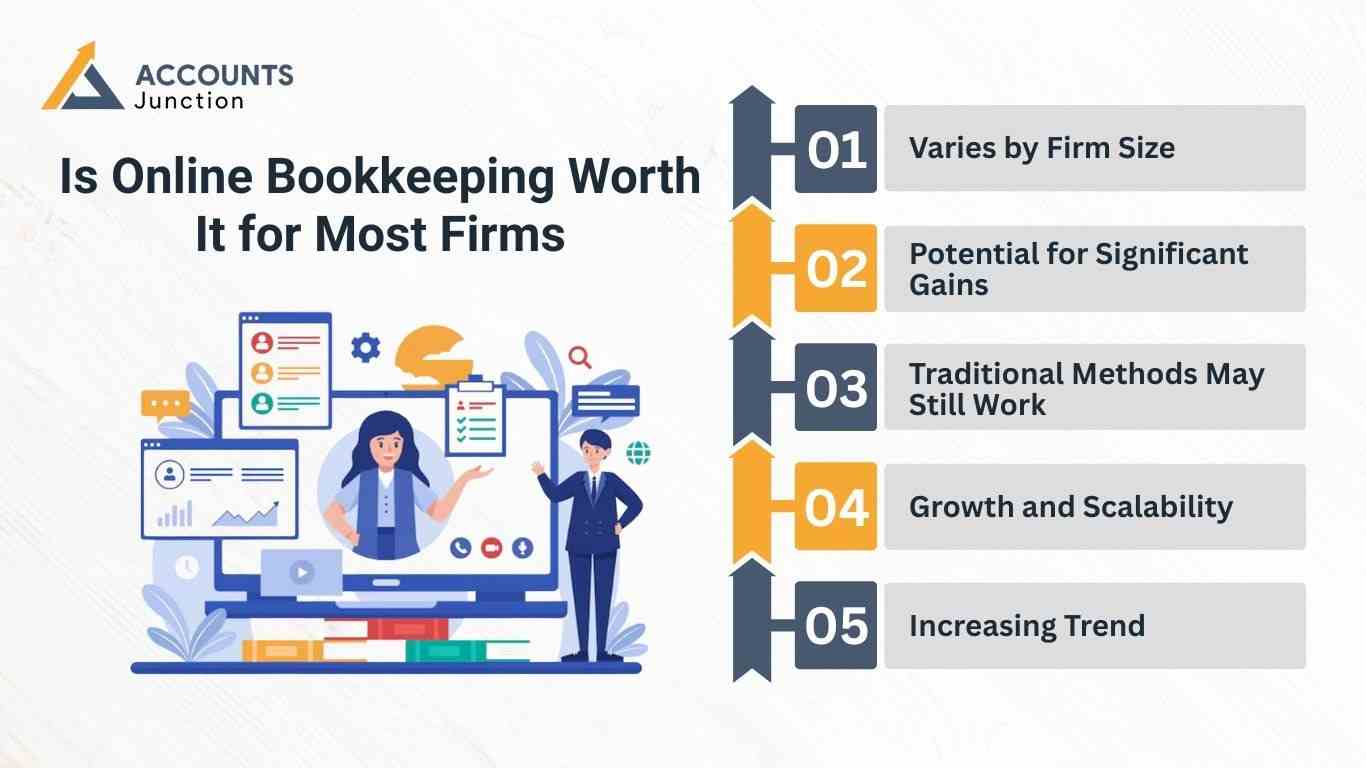
Is Online Bookkeeping Worth It for Most Firms
1. Varies by Firm Size
- Online bookkeeping may be worth it for many firms. But each case may depend on size, cost, and needs.
2. Potential for Significant Gains
- For some, gains may far exceed price. Savings in time and reduced errors may justify investment.
3. Traditional Methods May Still Work
- For others, old methods may still feel safe. Some firms may prefer manual control and paper-based tracking.
4. Growth and Scalability
- The worth may grow as tools gain more smart sets. Online bookkeeping may scale with firm expansion.
5. Increasing Trend
- When nets grow fast, firms may lean more on cloud views. Because tools keep growing, this trend may rise in time.
Online bookkeeping may shift how firms see their books. It may bring ease, clear views, and a neat pace. But it can also bring new needs and costs. Each firm may choose based on calm checks.
With a wise and perfect plan, online bookkeeping may guide smart moves. Firms may gain more trust in their numbers. The choice rests on your goals, team skills, and pace. Accounts Junction provides complete online bookkeeping services. We manage payroll, taxes, reports, and all daily book tasks. Our certified experts ensure accurate and timely financial management. Partner with us to make online bookkeeping seamless and efficient.
FAQs
1. What is online bookkeeping?
- Online bookkeeping may track finances using cloud-based tools. It allows firms to check books anytime, anywhere.
2. How can online bookkeeping benefit my business?
- It may save time, reduce errors, and improve cash flow visibility. Firms may gain clarity on financial health quickly.
3. Is online bookkeeping better than traditional bookkeeping?
- Online bookkeeping may provide faster updates and remote access. Traditional methods may still suit very small firms.
4. Can online bookkeeping help reduce accounting errors?
- Yes, online bookkeeping tools may automate calculations and record-keeping. This can help firms avoid costly mistakes.
5. Does online bookkeeping help with tax compliance?
- Many tools may track expenses, invoices, and payments. This may make tax filing simpler and more accurate.
6. Is online bookkeeping suitable for small businesses?
- Yes, small businesses may benefit from ease of use and lower cost. Tools may help manage finances without extra staff.
7. Can large businesses use online bookkeeping effectively?
- Yes, online bookkeeping may scale for multiple teams. It may integrate with other apps for smoother operations.
8. How secure is online bookkeeping?
- Most platforms may use encryption and secure cloud storage. Firms may still follow internal protocols for added safety.
9. Will online bookkeeping save time?
- Yes, automation may reduce manual data entry. Teams may focus on strategy instead of repetitive bookkeeping tasks.
10. Can I access online bookkeeping remotely?
- Yes, cloud-based tools may let staff and owners access books anywhere. This may support remote work and multi-location teams.
11. How much does online bookkeeping cost?
- Costs may vary based on features and user count. Some platforms may offer affordable plans for small businesses.
12. Can online bookkeeping integrate with bank accounts?
- Yes, many tools may sync directly with banks. This may ensure real-time updates for transactions and balances.
13. Is training required for online bookkeeping tools?
- Most tools may have easy-to-use interfaces. Short tutorials or guides may help staff learn quickly.
14. Can online bookkeeping provide real-time financial reports?
- Yes, reports on cash flow, expenses, and revenue may be generated instantly. This may help informed decision-making.
15. Will online bookkeeping help manage invoices and payments?
- Yes, tools may automate invoice tracking and payment reminders. Firms may reduce late payments and errors.
16. How does online bookkeeping improve business decision-making?
- It may provide clear financial insights quickly. Teams may make smarter choices based on real-time data.
17. Can online bookkeeping work with accounting software?
- Yes, most tools may integrate with popular accounting apps. This may streamline reporting and bookkeeping tasks.
18. How often should I update online bookkeeping records?
- Daily or weekly updates may maintain accuracy. Online tools may also sync automatically with bank transactions.
19. What are the common drawbacks of online bookkeeping?
- Some tools may have learning curves or subscription costs. Firms may also worry about data security or downtime.
20. How do I choose the right online bookkeeping tool?
- Check features, cost, security, and support. Tools may vary based on firm size and workflow needs.
21. Can online bookkeeping reduce manual paperwork?
- Yes, it may store receipts, invoices, and records digitally. Firms may save time and reduce clutter.
22. Does online bookkeeping improve cash flow visibility?
- Yes, many tools may provide dashboards showing inflow and outflow. This may help predict shortfalls or opportunities.
23. Can online bookkeeping be customized for my business?
- Some platforms may allow custom categories and reports. Firms may tailor it to unique financial needs.
24. Will online bookkeeping grow with my business?
- Yes, cloud tools may scale with more users and data. This may reduce the need for software changes.
25. Is online bookkeeping worth it overall?
- It may be worth it for firms seeking efficiency and clarity. Benefits may vary based on cost, team, and business size.