What is the main difference between sole trader and limited company accounting?
Understanding how business accounts may work can help owners plan their next steps with more care. Many new owners may feel lost as tasks grow. They may see that rules can shift as their setup grows. Some paths can seem easy at first. Some paths may demand more detail as time moves on. In many cases, people start as sole traders. They can run work with less stress and fewer rules. Yet with time, the work may grow and call for more structure. At that stage, some owners may think about a limited company setup. This move can shape how they file accounts and how they report each cost. When this choice comes up, the question may arise. What is the difference between sole trader and limited company accounting, and why does it matter? This blog may guide you through that thought with care.
The world of small business can look wide at first. Many rules may stand in your way. Yet if you break each part down, the full picture may feel clearer. This post may help you see what changes as you shift from one setup to the other. It may also show how your tasks can grow or ease as rules shift.
What is a sole trader?
A sole trader is a person who runs a small setup on their own. The tasks may stay simple. The rules may look light. The cost to run the work may stay low. Many new owners start this way to test an idea. They may find this path gives them more room to learn and fail. The growth may be quick or slow. The risks can stay with the owner as the trade runs under one name.
What is a limited company?
A limited company is a legal setup that may stand as its own body. It may form a clear line between the owner and the work. This setup may need more rules and more checks. It may also call for clean and precise accounts. Many owners use this path when they want to build trust or seek new deals. A limited company may give a strong sense of order to the work.
Many new owners face high stress in their first year. They may try to track cash flow on their own. They may try to work out tax rules with guesswork. They may feel that they can save time by doing work slowly and simply. Yet this approach can bring risk as the work grows.
When owners see more sales, they may look at new setups. A sole trader path may feel light and clean. But a limited company path may catch their eye for a more planned future. With that thought, they must know the difference between sole trader and limited company accounting. This point can guide them toward a path that can give more order in the long run.
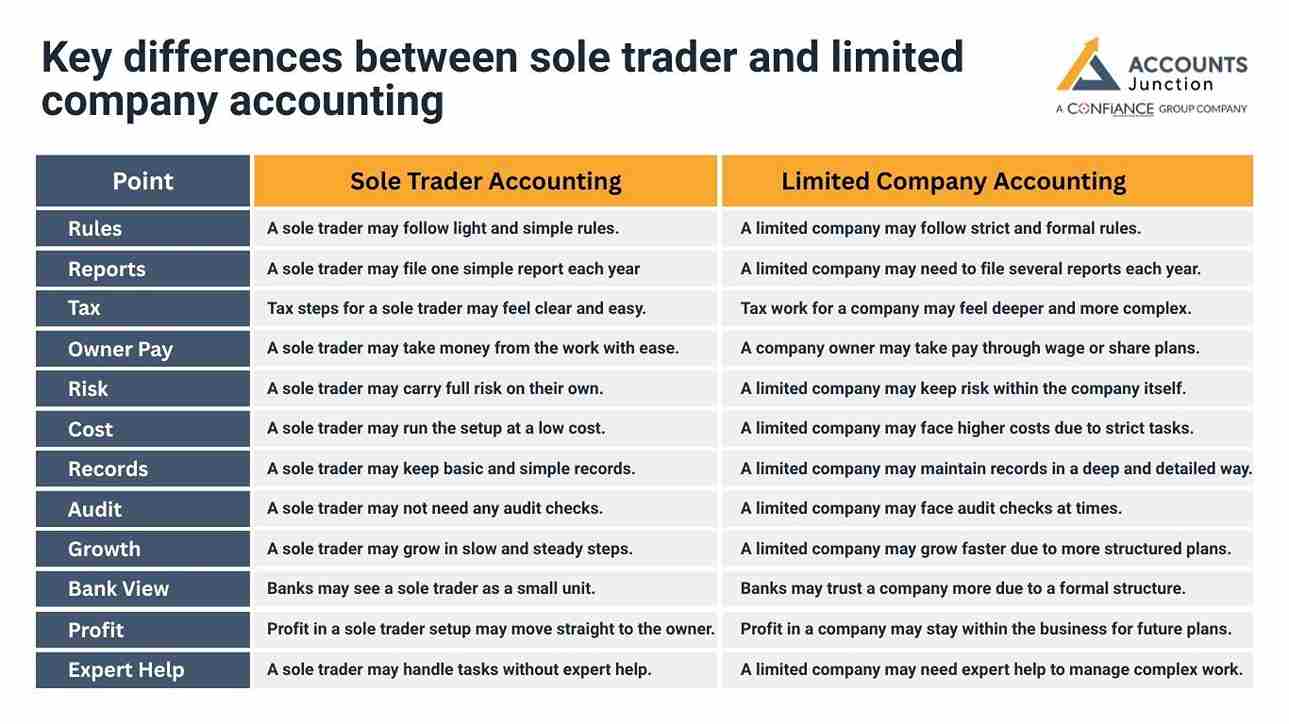
Key differences between sole trader and limited company accounting
Below are the core differences that may guide your choice. Each point is written in simple terms so that even an eighth-grade reader can learn with ease.
|
Point |
Sole Trader Accounting |
Limited Company Accounting |
|
Rules |
A sole trader may follow light and simple rules. |
A limited company may follow strict and formal rules. |
|
Reports |
A sole trader may file one simple report each year. |
A limited company may need to file several reports each year. |
|
Tax |
Tax steps for a sole trader may feel clear and easy. |
Tax work for a company may feel deeper and more complex. |
|
Owner Pay |
A sole trader may take money from the work with ease. |
A company owner may take pay through wage or share plans. |
|
Risk |
A sole trader may carry full risk on their own. |
A limited company may keep risk within the company itself. |
|
Cost |
A sole trader may run the setup at a low cost. |
A limited company may face higher costs due to strict tasks. |
|
Records |
A sole trader may keep basic and simple records. |
A limited company may maintain records in a deep and detailed way. |
|
Audit |
A sole trader may not need any audit checks. |
A limited company may face audit checks at times. |
|
Growth |
A sole trader may grow in slow and steady steps. |
A limited company may grow faster due to more structured plans. |
|
Bank View |
Banks may see a sole trader as a small unit. |
Banks may trust a company more due to a formal structure. |
|
Profit |
Profit in a sole trader setup may move straight to the owner. |
Profit in a company may stay within the business for future plans. |
|
Expert Help |
A sole trader may handle tasks without expert help. |
A limited company may need expert help to manage complex work. |
Role of Effective Records in Daily Work
-
Clean notes guide smooth tasks
Good notes may help you keep calm each day. Clear notes can guide you when tasks may pile up.
Such notes may help track the difference between sole trader and limited company accounting.
-
Clear logs help track cash
Clear logs can show where cash may flow next. These logs may help you plan each new move. Strong logs can show steps when tracking accounting differences.
-
Safe files help long-term plans
Safe files may give trust when you plan ahead. Such files can help you act with less fear. Safe files can reflect the difference between sole trader and limited company accounting.
-
Fresh records ease tax checks
Fresh records can make tax time feel less hard. These records may stop stress that grows near tax dates. Clean records may guide you in managing accounting differences.
-
Small steps build strong books
Small steps may help your books stay neat daily. These steps can shape habits that guide steady work. Small steps can track the difference between sole trader and limited company accounting.
How Tools Can Shape Book Tasks
-
Smart apps ease each task
Smart apps may guide you through each small task. These apps can clear doubt when your mind feels tired.
Smart apps may help highlight the difference between sole trader and limited company accounting.
-
Cloud storage keeps files safe
Cloud storage can hold your files in one safe space. These stores may guard data from loss or harm. Cloud storage can reflect the difference between sole trader and limited company accounting.
-
Fast views show cash moves
Fast views may show how cash can shift now. These views can highlight points that need your care. Fast reports may reveal how accounting differs in setups.
-
Alerts warn when dates are near
Alerts may help you act when due dates near. Such alerts can stop stress that rises near late tasks. Alerts can support the difference between sole trader and limited company accounting.
-
Linked bills clear old doubts
Linked bills can help clear doubts in later checks. These links may show how old costs fit the plan. Linked notes may explain the difference between sole trader and limited company accounting.
Accounting Practices and Tips for Small Business Owners
Good accounting habits may save time and prevent mistakes. Both sole traders and limited companies may gain from simple practices. Understanding the difference between sole trader and limited company accounting may help owners choose the right path. Applying simple accounting tips for small businesses can make record keeping and reporting easier.
1. Record Keeping Techniques
-
Maintain Daily Records
Write down income and costs every day to avoid errors. This may also help when comparing the difference between sole trader and limited company accounting.
-
Use Simple Tools
Spreadsheets or online apps may cut mistakes. Using accounting software for small businesses may further improve accuracy.
-
Sort Expenses Clearly
Group costs like rent, bills, and ads for ease. Proper categorization may make tax filing simpler.
-
Keep Digital Files
Store files on a computer or cloud for safety. Digital records may be helpful for audits or future growth.
-
Check Bank Accounts
Match bank records with your notes often. This may help avoid cash mismatches and errors.
2. Cash Flow Management
-
Forecast Cash
Plan cash in and out each month to avoid shortfalls. Accurate cash flow management for businesses may improve financial stability.
-
Keep Separate Accounts
Even sole traders may benefit from two accounts. This may help clarify the difference between sole trader and limited company accounting.
-
Track Invoices and Bills
Check unpaid invoices and plan supplier payments well. Proper tracking may ensure consistent cash flow.
-
Save Cash for Safety
Set aside money for emergencies or sudden costs. A cash reserve may reduce financial risk.
-
Use Cash Reports
Reports may help make smarter money choices. They may highlight trends useful in accounting planning.
3. Budgeting and Planning
-
Make a Clear Budget
Plan costs based on past spending and expected sales. A budget may guide decisions for growth.
-
Compare Plan and Actual
Look at differences to spot extra spending or savings. This may help owners understand the difference between sole trader and limited company accounting.
-
Update Budget When Needed
Change plans if sales rise or fall. Flexibility in budgeting may reduce stress.
-
Plan for Tax
Set aside money for tax to avoid last-minute stress. Using tax planning for small businesses may keep owners prepared.
-
Check Yearly Goals
Review targets to guide the business each year. Clear goals may improve financial discipline.
4. Software and Automation
-
Use Cloud Software
Apps may help track money and cut mistakes. Accounting software for small businesses may simplify reporting.
-
Automate Invoices
Send bills automatically to get paid on time. This may improve overall cash flow management.
-
Automate Payments
Pay regular bills on set dates with apps. Automation may prevent late fees.
-
Get Instant Reports
View profit, loss, and cash quickly. Instant reports may support better business decisions.
-
Link Bank Accounts
Bank links may make account checks easier and save time.
5. Tax Planning Strategies
-
Track Allowed Costs
Claim all eligible costs to lower tax bills. This may reduce taxable income legally.
-
Know Tax Dates
Use a calendar to avoid late payments. Awareness of deadlines may prevent penalties.
-
Pay Estimated Tax
Spread payments across the year to reduce stress. Regular payments may simplify cash flow management.
-
Ask for Help
An accountant may give tips to save tax. This may also clarify the difference between sole trader and limited company accounting.
-
Keep Tax Files Safe
Store files for audits or future use. Proper storage may reduce mistakes and save time.
6. Preparing for Growth
-
Plan New Investment
Decide when to buy gear or tools for work. This may improve efficiency.
-
Plan More Staff
Growth may need more people or help from outside. Staffing may affect accounting complexity.
-
Watch Profit Margin
Keep profits steady while growing the work. Margin checks may help in planning taxes.
-
Plan Funding
Clear accounts may help in getting loans. Investors may also review difference between sole trader and limited company accounting.
-
Follow Rules
Growth may bring new rules and forms to file. Proper compliance may reduce penalties and errors.
FAQs
1. What is the main difference between sole trader and limited company accounting?
- Sole traders may keep simple books. Companies may keep full, detailed accounts.
2. How does tax treatment differ for sole traders and limited companies?
- Sole traders pay tax on all profit. Companies pay tax on profit and dividends.
3. Do limited companies need more bookkeeping than sole traders?
- Yes, companies track all transactions. Sole traders keep simple income and cost records.
4. Can a sole trader switch to a limited company later?
- Yes, they may change when business grows. Accounting may get more detailed after change.
5. Which accounting setup is simpler for small businesses?
- Sole trader accounting is often simpler. Companies may need help from an expert.
6. How do reporting requirements differ for both setups?
- Sole traders file one tax return a year. Companies file accounts, tax, and company reports.
7. Does owner’s income reporting differ between the two setups?
- Sole traders report all profit as income. Company owners report wages and dividends.
8. Are audits necessary for sole traders or limited companies?
- Audits are rare for sole traders. Companies may need audits if business is big.
9. How does liability affect accounting for both types?
- Sole traders are fully responsible for debts. Companies are separate from owners.
10. Do banks prefer one setup over the other for loans?
- Companies may seem more safe. Sole traders may get stricter checks from banks.
11. Which setup may require professional accounting help?
- Companies often need an accountant. Sole traders can manage with simple records.
12. How do expenses get recorded differently?
- Sole traders subtract costs from profit. Companies put costs in proper categories.
13. Does payroll accounting differ between the two setups?
- Sole traders do payroll only if hiring staff. Companies must run full payroll.
14. Can a sole trader claim dividends?
- No, only company owners get dividends. Sole traders take all profit themselves.
15. How does VAT registration differ?
- Both register if sales are high. Companies keep stricter VAT records.
16. Is profit distribution simpler for sole traders?
- Yes, sole traders take all the profit. Companies divide profit as wages and dividends.
17. How does record-keeping differ in detail?
- Sole traders keep short, simple records. Companies keep full, detailed books.
18. Do limited companies need regular financial statements?
- Yes, they may make reports often. Sole traders usually need one yearly tax report.
19. Does forming a company change accounting rules?
- Yes, rules may get stricter. Reports and accounts may need more detail.
20. Which setup may handle growth and expansion better?
- Companies may grow more easily. Sole traders may face limits on scale.