
Cash Flow Statement Tips to Better Manage Your Cash Flow and Working Capital
Cash flow statements help you track how money moves in and out of your business. We will make it easier to manage cash and maintain good working capital with some cash flow statement tips. Efficient cash management is necessary for the survival of any business. It helps business owners to understand the inflow and outflow of money as income and expenses. It helps in making important investment decisions for the growth of the business.
It is crucial for SMEs and startups, especially, to keep their business running in these competitive markets. Good working capital management helps improve a business’s finances. It gives owners room to cover surprise costs and invest in new ideas. This blog will guide you with simple cash flow statement tips. It will help you understand your cash flow financial statement and improve your working capital.
What Is a Cash Flow Statement?
A cash flow statement shows the cash coming in and going out of a business. It is considered one of the most important financial documents for any business. This statement helps track actual money movement. It differs from both the income statement and the balance sheet.
There are three main parts of a cash flow statement:
- Operating Activities: Displays the cash generated or used through regular business operations.
- Investing Activities: Tracks money spent on equipment, buildings, or investments.
- Financing Activities: Covers loans, equity, and repayments.
Using the cash flow financial statement helps in making smart financial decisions.
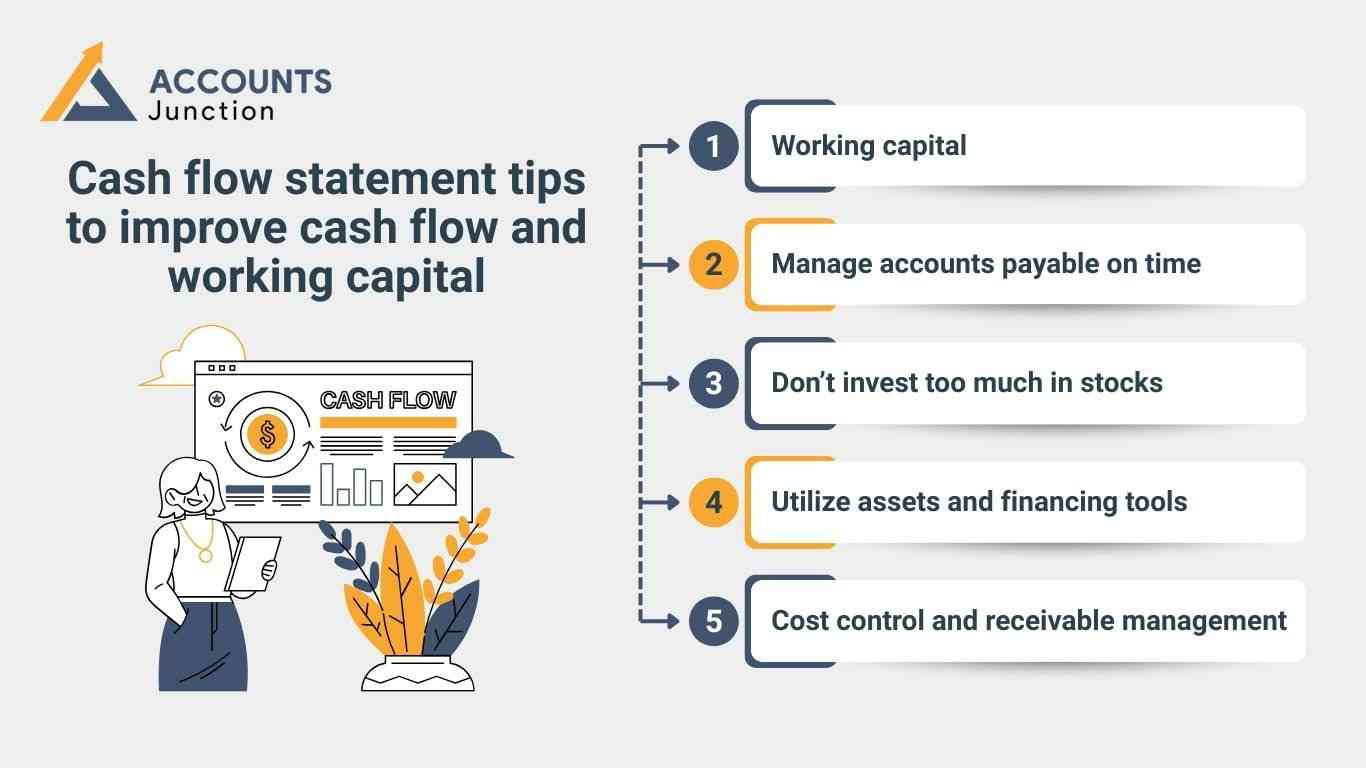
Cash flow statement tips to improve cash flow and working capital
Business owners can take simple steps to improve cash flow and working capital. These cash flow statement tips help make the company more stable. Some key tips include:
1. Working capital
- Business owners often think of working capital as work associated with the finance team.
- They must have KPIs for working capital that are understandable by the management team.
- Everyone needs to be aware of KPIs and know-how and why it is necessary to manage working capital.
- Part of what helps improve better decisions and a balanced approach to cash flow management is when the whole business is aware of how working capital is measured and managed.
2. Manage accounts payable on time
- When you pay suppliers on time, you don’t have to chase invoices; it will help in getting flexibility in prices and business terms.
- You can effectively negotiate with suppliers and can charge a particular person for maintaining a healthy business relationship.
- On-time payments will also save you the time used to chase the invoices, which will give you more room to negotiate with suppliers.
- This builds a strong reputation. You may also get better terms, which can improve your cash flow statement and cash flow financial statement.
- It's one of the practical cash flow statement tips businesses can adopt.
3. Don’t invest too much in stocks
- Excessive stock holdings block a substantial amount of capital.
- Overbuying of stock can be avoided by monthly or quarterly stock checking, while also ensuring no shortage.
- Thus, one needs to maintain the balance between excessive and shortage concerns.
- Keeping a clear balance is key to managing working capital well. It also enhances the overall cash flow financial statement.
- One of the top cash flow statement tips is monitoring inventory closely to support a better cash flow statement.
4. Utilize assets and financing tools
- Businesses can secure long-term finances against assets such as plants and equipment etc.
- Businesses can opt for quicker repayment to cut interest or longer terms to lower monthly payments.
- This helps meet financial needs without affecting working capital and supports growth.
- Asset-backed financing improves liquidity reflected in the cash flow statement and ensures a healthy cash flow financial statement.
5. Cost control and receivable management
- Invoice factoring and discounting free up cash stuck in accounts receivable. Businesses can borrow up to 85% of the invoice amount.
- It also reduces the burden of collecting payments and ensures liquidity for operations.
- Controlling costs through set expense rules and tools like corporate cards supports better cash management.
- These practices positively affect the cash flow financial statement.
Review Payment Terms Regularly
Payment terms affect both cash inflow and outflow.
Use these simple steps:
- Shorten receivable terms: Ask customers to pay sooner.
- Extend payable terms: Request suppliers for flexible deadlines.
- Offer early payment deals: Give discounts to prompt faster payments.
- Document all changes: Keep written records to avoid disputes.
Balanced terms improve liquidity and strengthen your working capital cycle.
How to monitor Non-Cash Expenses
Non-cash expenses can blur your true cash position.
To stay clear:
- Separate them in reports: Keep items like depreciation apart from cash items.
- Focus on liquidity: Judge performance by available cash, not only profit.
- Update your cash flow statement often: It helps you see the real picture.
- Avoid overestimating funds: Don’t make spending plans based on book profits.
Keeping tabs on these ensures your cash flow financial statement stays true to reality.
Maintain an Emergency Cash Reserve
An emergency reserve keeps you ready for the unexpected.
Follow these rules:
- Save at least two months of expenses: This helps during lean times.
- Keep it liquid: Use savings accounts or short-term deposits.
- Refill it often: Replace funds after use to stay prepared.
- Use it only for real emergencies: Avoid tapping it for daily operations.
This simple step shields your cash flow statement from sudden shocks.
Tools to Manage Cash Flow
Use tools that show real-time data. These help you track cash more easily:
- Accounting Software: QuickBooks, Xero
- Spreadsheets: Google Sheets or Excel
- Cash Flow Dashboards: Custom dashboards in tools like Zoho or FreshBooks
Keep these tools updated with the latest data. Use these tools to keep your cash flow statement and cash flow financial statement up to date.
Managing cash flow and working capital effectively plays a key role in the growth of the business. Follow the cash flow statement tips shared in this blog. Review your cash flow statement often. A strong cash flow statement helps you stay ready for upcoming opportunities. Use the tips to keep your business stable, efficient, and profitable.
Cash flow and working capital management determine the sustainability of a business or organization. Accounts Junction has a dedicated team of CPAs, CAs, and accountants. Accounts Junction will help you in keeping your books and accounting up to par so that your business remains healthy and prosperous.
FAQs
1. What is a cash flow statement?
- A cash flow statement shows your income and spending in cash form.
2. How frequently should I assess my cash flow?
- Review it weekly or monthly depending on your business size.
3. Can cash flow be positive but profits low?
- Yes, you can have cash but still show low profits due to accounting methods.
4. How does cash flow help in decision-making?
- It indicates whether you have enough cash to invest or settle expenses.
5. What is working capital?
- You can consider working capital as the gap between what you own and what you owe in the short term.
6. What tools can help in tracking cash flow?
- Using tools like QuickBooks, Zoho, or Excel can help in tracking cash flow.
7. How can I tell if my cash flow is healthy?
- Check if your operating activities consistently show positive cash flow to determine the health of cash flow.
8. How is a cash flow statement different from an income statement?
- The cash flow statement shows actual cash. The income statement shows profit that may not be in hand yet.
9. What are a few easy Cash Flow Statement Tips to follow?
- Pay on time, control costs, manage stock wisely, and keep a cash reserve. Simple habits make a big difference.
10. How can I improve my working capital using these tips?
- Collect dues early and plan expenses smartly. Keeping this balance ensures cash is always available for short-term needs.
11. Why track non-cash expenses apart from cash flow?
- Items like depreciation don’t move cash but affect profit. Separating them helps your cash flow financial statement stay true to actual funds.
12. Can a business show profit but have poor cash flow?
- Yes. Late payments or high stock levels can lock up cash even if your books show profit.
13. What are signs of poor cash flow control?
- Frequent borrowing, missed payments, or delays in supplier dues all signal weak cash handling.
14. Why is an emergency cash reserve important?
- It acts as a safety net. You can handle slow sales or surprise costs without hurting your cash flow statement.
15. Why should I prepare a cash flow forecast?
- A forecast shows what your future cash might look like. It helps you plan spending and stay ahead of any shortage.