
BOOKKEEPING FOR EVERYONE

Outsource Bookkeeping And Accounting Services
Accounts Junction is your trusted partner for accounting and bookkeeping solutions. We are dedicated to empowering businesses of all sizes with precise financial insights. Our experienced team specializes in a wide range of services, including bookkeeping, taxation, payroll management, and financial consulting, tailored to meet the unique needs of each client. We employ an innovative technology to guarantee precision and efficiency, allowing you to effortlessly manage the complexities of financial oversight.
At Accounts Junction, we prioritize client satisfaction through a client-centric approach built on trust, integrity, and transparency. Our dedication to personalized service ensures that we are always ready to assist with your financial requirements, enabling you to concentrate on what you do best in your business. Experience the difference with Accounts Junction and let us help you achieve your financial goals.
0 +
Happy customers

0 +
Completed Projects
0 K +
Hours Of Experience
0 K +
Software Used

Software Expertise








Our All Service
Bookkeeping to CFO Services
Accounts Junction is a CPA firm providing complete outsourced bookkeeping and accounting solutions to CPAs and small & medium-sized businesses across the United States, United Kingdom, Australia, New Zealand, Hongkong, Canada, and European countries.
Bookkeeping Service
Regular Management Accounts for your Business, We serve bookkeeping services for different
Setup Xero/Quickbooks
Set up your accounting software in a day through our checklist, for converting a client from your legacy
Bookkeeping for CPAs
Regular Management Accounts for your Business, We serve bookkeeping services for different.
Payroll
We do Payroll for all countries in all software and comply with all tax formalities of the IRS, HMRC, ATO
Payable Accounting
Manage your Payables on daily basis, cost-effectively with reduced invoice discrepancies and disputes.
Indirect Tax
We do BAS, VAT, GST101A, Sales Tax, etc. reduce attribution errors and costs, and ensure indirect.

ECommerce
- Protect and grow your eCommerce business with our expert financial management solutions tailored for your needs.

Small Business
- Address all your financial queries of your small-scale business with ease with our skilled accountants and bookkeepers.

Professional Services
- Our expert team manages back-office operations across Digital Marketing, IT, Real Estate, Consulting, and influencer sectors, utilizing the latest accounting software and trends to deliver cost-effective bookkeeping solutions.

Franchise
- We help both emerging and established franchises, providing a customized and scalable approach that integrates smoothly with your operations.
Why Accounts Junction?
We help businesses to perform with our customized solutions helping them take business decisions.
Passion for Bookkeeping
Skilled Manpower and Realtime Accounting
Turnaround time and Quality Service


Outsource
Outsource Accounting
Services
India is one of the booming dreamland for outsource accounting service. These are the reasons why choosing India as an outsourcing destination is a feasible option for businesses worldwide �

Cost Efficient
Low cost professional accounting and bookkeeping solutions

Qualified
Most experienced and qualified accounting professional

Accurate Proficiency
Expertise on various accounting software

Engaging
Strong communication skills and adaptability

Objective and Streamlined
Industry specific expertise and ready to solve challenges
Mission and Vision
Mission
Our mission is to empower businesses with a range of comprehensive and innovative accounting solutions designed to improve financial transparency, promote growth, and optimize operations. We are committed to delivering outstanding service and building lasting partnerships with our clients. By utilizing innovative technology and providing outsourced bookkeeping services, we foster personal relationships that improve collaboration and drive success.
Vision
To be the leading provider of accounting and bookkeeping services globally, recognized for our expertise, integrity, and commitment to technological innovation. We envision a world where every business, regardless of size, has access to the financial insights needed to grow.
Our Core Values
- Integrity and Respect: We believe that honesty and respect are essential in all interactions. Our goal is to create an environment where everyone feels valued and treated fairly.
- Work-Life Balance: We promote a healthy work-life balance that allows team members to attend important life events. This adaptability boosts productivity and contributes to greater overall job satisfaction.
- Innovation and Relevance: We prioritize innovation in accounting by utilizing technological advancements to ensure our services remain relevant and effective for clients.
- Value-Driven Services: We provide outstanding value by offering customized bookkeeping and accounting services designed to meet the specific needs of our clients, thereby strengthening their businesses.
- Accountability: We promote a culture of accountability among team members, clients, and vendors to build trust and enhance collaboration in overcoming challenges.
- Financial Empowerment: We are dedicated to mastering bookkeeping and accounting through continuous learning to provide insightful advice that enhances our clients' financial health.
Get a resource within 24 hours from our
pool of 320+ professionals
-
 Bookkeeper
 -
 Tax Preparer
 -
 Complex Accounting, Reporting
 -
 Audit Support
Bookkeeper
- Experience : Ranges from 1-20 years of experience.
- Certification : QuickBooks/Xero/ NetSuite/ SAGE Certified.
- Qualification : Commerce Graduate/ Master’s in commerce or Semi-Qualified CPA.
- Industry : Worked with multiple industries for various CPA firms.
- Geography : Expert in US/ Canada Bookkeeping.
- Data Point : Process 10 Million+ bookkeeping transactions per year.
 *
*
Tax Preparer
- Experience : Ranges from 3-20 years of experience in US & Canada Taxation.
- Tax Tools : ProConnect/ProSeries/ Lacerte / Drake/ATX
- Qualification : EA, Indian CPA, Commerce Graduate/ Master’s in commerce or Semi-Qualified CPA.
- Tax Returns : US : 1040, 1065, 1120-s, 1120, 990 and 1041 CA : T1, T2 and T3
- Data Point : Prepare 7,500+ tax returns per year.
 *
*
Complex Accounting, Reporting
- Experience : Ranges from 4-20 years of experience in US GAAP & IFRS.
- Type : CaseWare, FxPro Systems & Excel based templates
- Qualification : Indian CPA, Master’s in commerce or Semi-Qualified CPA.
- Assignments : US GAAP & IFRS Advisory, Accounting implementation,
- Assignments : Accounting policies, Period end accounting & reporting.
- Data Point : Prepare 2,500+ financial statements per year.
 *
*
Audit Support
- Experience : Ranges from 2-20 years of experience in US & IFRS Audit.
- Type : Listed/SEC & Non-SEC Audits
- Qualification : Indian CPA, Master’s in commerce or Semi-Qualified CPA.
- Assignments : End to end USGAAP & IFRS Audit support including audit planning, materiality
- Assignments : assessment, control & substantive testing & finalization of audit assignment.
- Data Point : 2,000+ audits per year.
 *
*

Why Choose Accounts Junction?

Tailored Solutions
We tailor our services to address the specific requirements of each client, guaranteeing the best possible outcomes.

Innovative Technology
We utilize innovative software and tools to enhance accuracy and efficiency in financial management.

Transparent Pricing
Our clear pricing structure ensures no hidden fees, allowing you to plan your budget effectively.

Timely Reporting
The GST billing and accounting software converts all We prioritize timely financial reporting to keep you informed and facilitate better decision-making.

Client-Centric Approach
Our focus is on building long-term relationships by providing exceptional customer service.

Compliance Assurance
We stay updated with regulatory changes to ensure your business remains compliant at all times.

Comprehensive Services
From bookkeeping to tax preparation, we offer a full suite of financial services under one roof.

Proven Track Record
We have successfully assisted numerous clients in improving their financial health and achieving their goals.

Our Commitment to Client Success
Check out this quick video to see how Accounts Junction helps drive your success!
Our Faqs
Frequently Asked Insights
1. Why should I consider outsourcing my bookkeeping?
Outsourcing provides you access to professional expertise without the cost of an in-house team, allowing you to focus on growing your business. It saves time, reduces operational expenses, and gives you financial insights that can lead to better decision-making.
2. Is outsourcing bookkeeping safe?
Yes, outsourcing with Accounts Junction is safe. We implement strict confidentiality protocols, data encryption, and regular audits to safeguard your information, ensuring the privacy and security of your financial data at all times.
3. Which industries does Accounts Junction serve?
Accounts Junction provides specialized bookkeeping and accounting services for diverse industries, including eCommerce, healthcare, real estate, construction, and law firms, among others.


faq's
?
This Planning Needs Your Growth

Your Need
Search the Service You need

Enquiry
For enquiring make a call or mail us

Confirm
Get your Quote and confirm us

Stay Calm
Feel free and Relax Yourself

Testimonial
Satisfied Customers
Really great firm. Highly recommend!

Noah Palansky
Very happy with their services. Thank you again

Angie Resendes
Been using them for a while and very pleased.

Michael Carels
been using them for a year now no complaints great service

Loki Nichlani
Rush and the Meru team have provided me with great service!

Luke Iaboni
Accounts Junction does an excellent Job. Very timely, very proficient and very meticulous. I highly recommend

Giamar Gilchrist
Harnish was excellent. He was very responsive, proactive, and easy to work with. I would definitely hire him again.

Sean Mason
Very punctual and efficient service from the team at Accounts Junction. I will continue to use their services for my Irish and French businesses.

ImMax
Rushabh & the team have been working on my book for almost a year. I am a satisfied client who trusted him over 2 thousand transactions in a month. Keep it up, guys!Rushabh & the team have been workin...

Ruben N.
Thanks Accounts Junction for the professional and excellent customer service. Highly recommend!

TistaMinis Hobby Shop
Our Latest Blog
Explore Our Blog
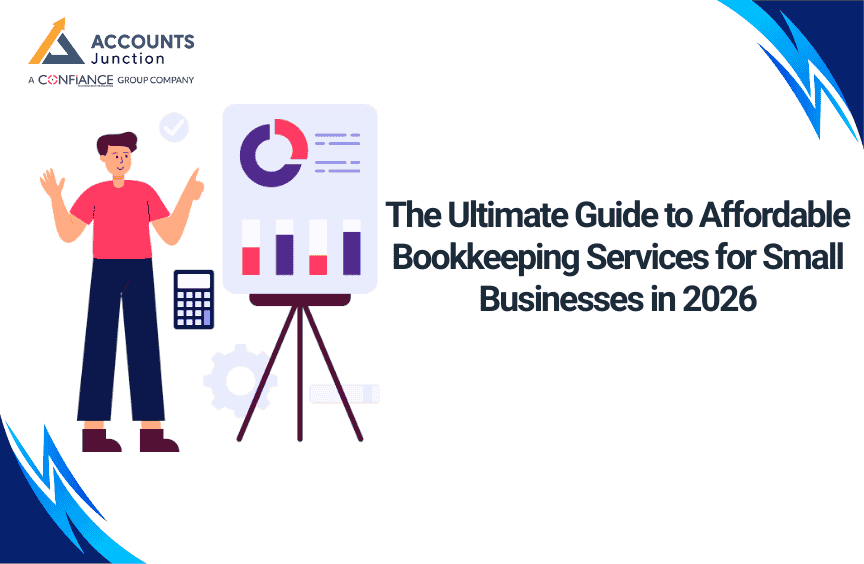
The Ultimate Guide to Affordable Bookkeeping Services for Small Businesses in 2026
Running a small business is exciting-but let’s be honest, keeping your finances in order can be stressful. Have you ever spent hours entering receipts, invoices.
Read More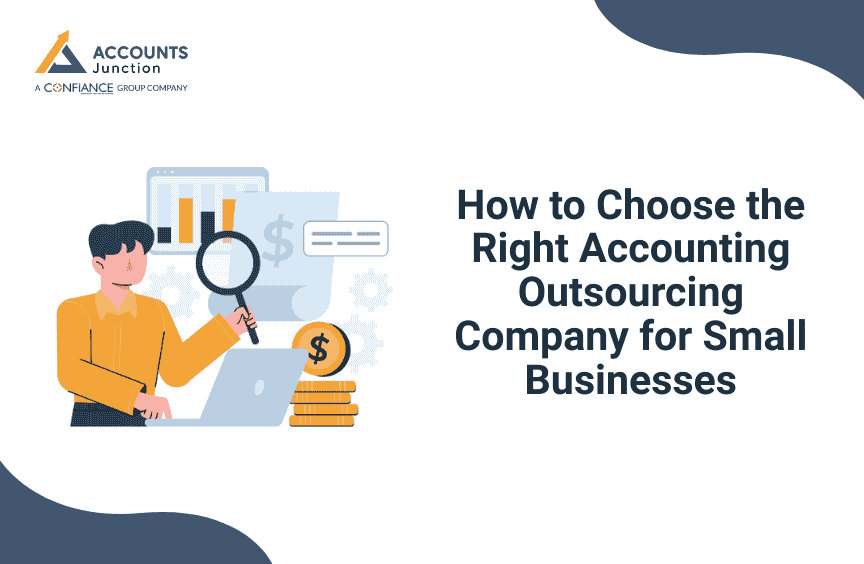
How to Choose the Right Accounting Outsourcing Company for Small Businesses
That’s usually when the idea of hiring an accounting outsourcing company for small businesses starts to feel less like a luxury and more like survival.
Read More
Top Bookkeeping Tips for Startups: Avoid These Mistakes in 2026
Bookkeeping tips for startups have become essential for many new founders. Many startups face early financial chaos and costly mistakes.
Read More