Accounts Payable Optimisation Best Practices for Your Business
Managing accounts payable with accounts payable optimisation can help a company run well. Many businesses face delays in payments or errors in bills. Using accounts payable improvement methods may save time and reduce mistakes. It can also improve cash flow and trust with vendors.
Accounts payable improvement is not only about paying fast. It may include using software, tracking bills, and clear rules. Companies can check their work steps to find weak spots. These steps can lower costs and give better control of money.
What Is Accounts Payable Improvement?
Accounts payable improvement means making bill and payment tasks easier. It can include speeding up invoices, checking payments, and keeping good vendor ties. Companies can use tools or change steps to reach this goal. The main aim is to save time while keeping vendor trust.
Accounts payable optimisation may also involve reviewing payment timing, terms, and approval steps. Companies can watch key numbers to see weak points. This can help leaders make better money choices.
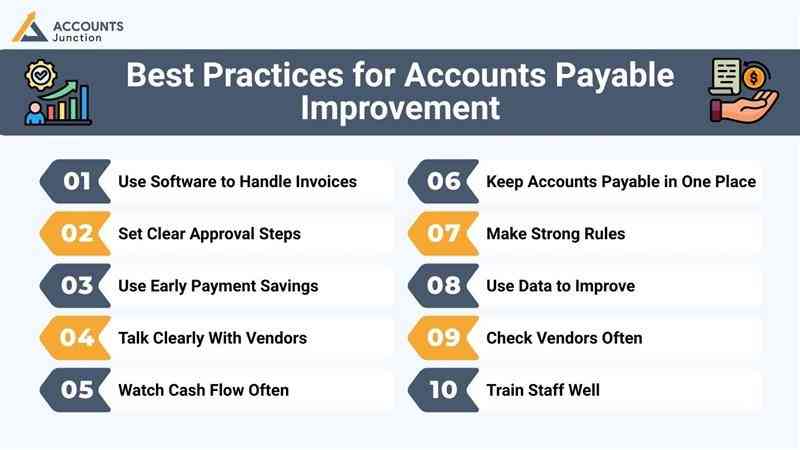
Best Practices for Accounts Payable Improvement
1. Use Software to Handle Invoices
- Using software for accounts payable optimisation may cut errors and save staff time. It can check bills, match details, and approve quickly. Software can also spot double or wrong bills early. This can save hours and make payments right.
2. Set Clear Approval Steps
- Clear steps for approval may avoid delays and mistakes. Companies can set who approves each bill and when. This may help track payments and reduce fraud risks. Staff can follow simple rules and pay faster.
3. Use Early Payment Savings
- Paying bills early may give small savings or discounts. Companies may ask vendors for discounts for quick payments. This can lower costs and build trust with suppliers. Vendors may prefer doing business with such companies.
4. Talk Clearly With Vendors
- Clear talks with vendors may avoid mix-ups. Companies may tell vendors about payment dates and needed details. This may stop disputes and late bills. Good talk can keep long-term relationships strong.
5. Watch Cash Flow Often
- Accounts payable optimisation may include watching cash flow to plan payments. Businesses can pay bills when money is available. This may stop missed payments or extra charges. Checking cash flow may also guide future plans.
6. Keep Accounts Payable in One Place
- Centralising may make work easier and clearer. Companies can manage all bills in one team. This may reduce repeated work and mistakes. It can also make reporting and checks simpler.
7. Make Strong Rules
- Good rules may guide how bills are paid. Companies can fix approval limits, timing, and ways to solve disputes. Rules may make work clear and reduce errors. Staff can follow them without confusion.
8. Use Data to Improve
- Accounts payable optimisation may use data to find weak steps or slow parts. Companies can track bill times, error rates, and vendor help. This may suggest better ways or tools to use. Data may also help plan money for future months.
9. Check Vendors Often
- Checking vendors may help improve accounts payable. Companies can see vendor work, terms, and reliability. Reviews may show chances to save money or change terms. Vendors may stay reliable and support the company's needs.
10. Train Staff Well
- Training staff may lower errors and save time. Employees may learn the best ways to handle bills. Training can help them follow rules and use tools correctly. Staff can work smoothly and without mistakes.
Common Problems in the Accounts Payable Optimisation Process
1. Late Approvals
- Slow approvals can cause late vendor payments.
- Late payments may hurt vendor trust.
2. Manual Data Entry Errors
- Typing bills by hand can cause mistakes.
- Errors may lead to wrong payments.
3. Hard-to-Track Invoices
- Messy or lost invoices are hard to track.
- This can delay reports and payments.
4. Lack of Tools and Automation
- Few tools or software slow down work.
- Manual steps take more time and effort.
5. Fixes with Accounts Payable Optimisation
- AP software helps track invoices and cut errors.
- Clear rules and staff training speed approvals.
- Regular checks show what needs work.
Key Metrics for Accounts Payable
Invoice Time
- Track how long it takes from receiving to paying a bill.
- Shorter times may show the process is working well.
Error Count
- Count mistakes in bills or payments.
- Fewer errors may mean staff follow steps correctly.
Cash Flow Check
- See how payments affect available money.
- Helps plan payments and avoid running out of cash.
Vendor Happiness
- Ask if vendors are satisfied with payment speed.
- Good relations may make vendors work well with you.
Risk in Accounts Payable
Stop Fraud
- Keep tasks separate so staff do not approve their own bills.
- This may help prevent wrong or fake payments.
Find Errors
- Tools may show double or wrong bills.
- Companies can fix mistakes before paying.
Check Often
- Regular checks may find unusual bills early.
- Helps keep money and records safe.
Advanced Strategies for Accounts Payable Improvement
1. Use Vendor Portals
- Vendor portals may let vendors send invoices online. Companies may check and approve bills faster. This can cut paperwork and save staff time. Vendors may see when payments are made.
2. Use Cloud Accounting
- Cloud systems may let teams see accounts from anywhere. It may help remote staff approve bills fast. Data updates right away and cuts mistakes. Cloud tools may also keep backup and data safe.
3. Follow Rules
- Following tax and law rules may cut risks. Companies may avoid fines by checking bills carefully. Rules may include keeping records and approvals. Staff may need help to follow rules.
4. Cut Manual Data Entry
- Typing bills by hand may cause mistakes. Using tools or software may get invoice data fast. This may make work correct and free staff time.
5. Watch Key Numbers
- Watching numbers may show how well bills are handled. Companies may check bill times, late payments, and errors. Numbers may guide changes and help managers plan.
Benefits of Outsourcing Accounts Payable
1. Reduced Administrative Workload
- Accounts payable optimisation through outsourcing may cut manual work for the team. Staff may focus on main business tasks.
2. Access to Expertise and Technology
- External teams may bring skills and tools. Companies may use smart software and systems.
3. Faster Invoice Processing
- Outsourcing may speed up invoice approval. Payments may be done on time and correct.
4. Scalable Operations
- Companies may grow accounts payable without extra staff. Outsourcing may handle more transactions easily.
5. Improved Financial Reporting and Control
- Outsourcing may keep records more correct. Businesses may see clear insights and better control.
Role of Compliance in Accounts Payable
1. Follow Rules and Regulations
- Companies may need to follow tax and finance rules. They may meet reporting and audit needs.
2. Keep Proper Documentation
- Records may reduce the risk of fines or errors. Companies may stay ready for audits at all times.
3. Adhere to Policies
- Policies may help meet industry and contract standards. Staff may follow rules to keep work consistent.
4. Build Trust and Reputation
- Focusing on compliance may improve business reputation. Partners may trust companies that follow rules closely.
Accounts payable optimisation may make work easier for any business. Companies can pay bills faster, cut mistakes, and keep vendor trust. Using software, rules, and data may save money and time. Centralising and training staff may give strong control.
At Accounts Junction, we provide bookkeeping and accounting services to businesses to improve their accounts payable work. Our team may use simple steps, software, and checks to save time. Companies may get better control of cash flow and vendors. With our help, accounts payable improvement may make money work smoothly.
FAQs
1. What is accounts payable optimisation?
- It may mean making invoice processing faster. Errors may drop and costs may fall.
2. Why focus on accounts payable optimisation?
- It may help cash flow and vendor trust. Late fees and duplicates may be reduced.
3. How can automation help accounts payable?
- Automation may cut manual work and delays. It may make the process faster.
4. Which software can support accounts payable?
- ERP or accounting software may track invoices and approvals. It may save time.
5. How does invoice processing affect optimisation?
- Slow or manual steps may cause mistakes. Faster processing may save time.
6. What is the role of early payment discounts?
- Paying early may lower costs. It may build trust with suppliers.
7. How can approval workflows improve accounts payable?
- Clear steps may speed approvals. Errors may drop, and work may flow better.
8. Can centralising accounts payable improve efficiency?
- Yes, it may cut repeated work. It may make control and reports easier.
9. How does supplier communication impact accounts payable?
- Clear talk may cut disputes. It may strengthen trust with vendors.
10. What are common challenges in accounts payable?
- Errors, late approvals, and poor tracking may happen. Optimisation may fix them
11. How can analytics support accounts payable?
- Analytics may show delays and trends. It may help improve the process.
12. Can optimisation reduce operational costs?
- Yes, it may cut errors and staff time. Savings may come from better steps.
13. How does cash flow tracking support optimisation?
- Tracking may prevent late payments or overdrafts. It may help plan pay cycles.
14. How to implement accounts payable optimisation?
- Use software, clear rules, and train staff. Track progress for better results.
15. What are the benefits of standard payment policies?
- Policies may cut errors and confusion. Approvals may be faster and clearer.
16. Can optimisation improve audit readiness?
- Yes, clear records and steps may help audits. Reports may be easy to get.
17. How does optimisation affect vendor trust?
- Paying right may build trust. Vendors may offer better terms.
18. Is optimisation good for small businesses?
- Yes, it may save time and cut mistakes. Growth may happen with less work.
19. Why is staff training important?
- Training may help staff use tools well. Mistakes may drop, and work may flow.
20. How do recurring invoices affect optimisation?
- Repeating invoices may slow manual steps. Automating may save time and reduce errors.