
How Can Tax Planning Services Shape Your Financial Future?
Tax Planning Services involve strategic financial planning to minimize tax liabilities while ensuring compliance with tax laws and regulations. These services help individuals and businesses structure their financial activities efficiently, taking advantage of available tax deductions, credits, exemptions, and legal loopholes. Taxpayers want to avoid overpaying; effective tax planning allows them to reinvest their savings.
Tax planning services analyze income and expenses; they then create the best tax-efficient approach. Tax planners review financial situations; they then offer advice on managing assets and deductions. The service covers income tax and capital gains planning; it also includes retirement and estate tax strategies.
Businesses need to follow corporate tax laws; tax planning services help them reduce burdens through legal deductions. Businesses need to optimize tax efficiency; tailored tax advice helps them increase profitability and growth plans. Individuals and businesses need to avoid penalties; expert guidance helps them stay ahead of tax deadlines.
Importance of Tax Planning for Individuals and Businesses
Individuals and businesses need financial security; proper tax planning provides this and ensures legal compliance. Here’s why tax planning is important:
1. Minimizing Tax Liabilities
- Tax planning strategies offer deductions and exemptions, and individuals and businesses can use them to reduce their tax burden.
2. Enhancing Financial Stability
- Effective tax planning enables better financial management by forecasting tax obligations and avoiding unexpected liabilities.
3. Ensuring Compliance with Tax Laws
- Staying compliant with ever-changing tax regulations is crucial to avoid penalties and legal issues.
4. Facilitating Business Growth
- For businesses, tax planning helps in reinvesting savings into operations, expansion, or workforce development.
5. Optimizing Investments
- Tax-efficient investment planning helps individuals maximize returns while minimizing tax implications.
6. Retirement Planning
- Individuals can utilize tax planning services to optimize contributions to retirement accounts, ensuring long-term financial security.
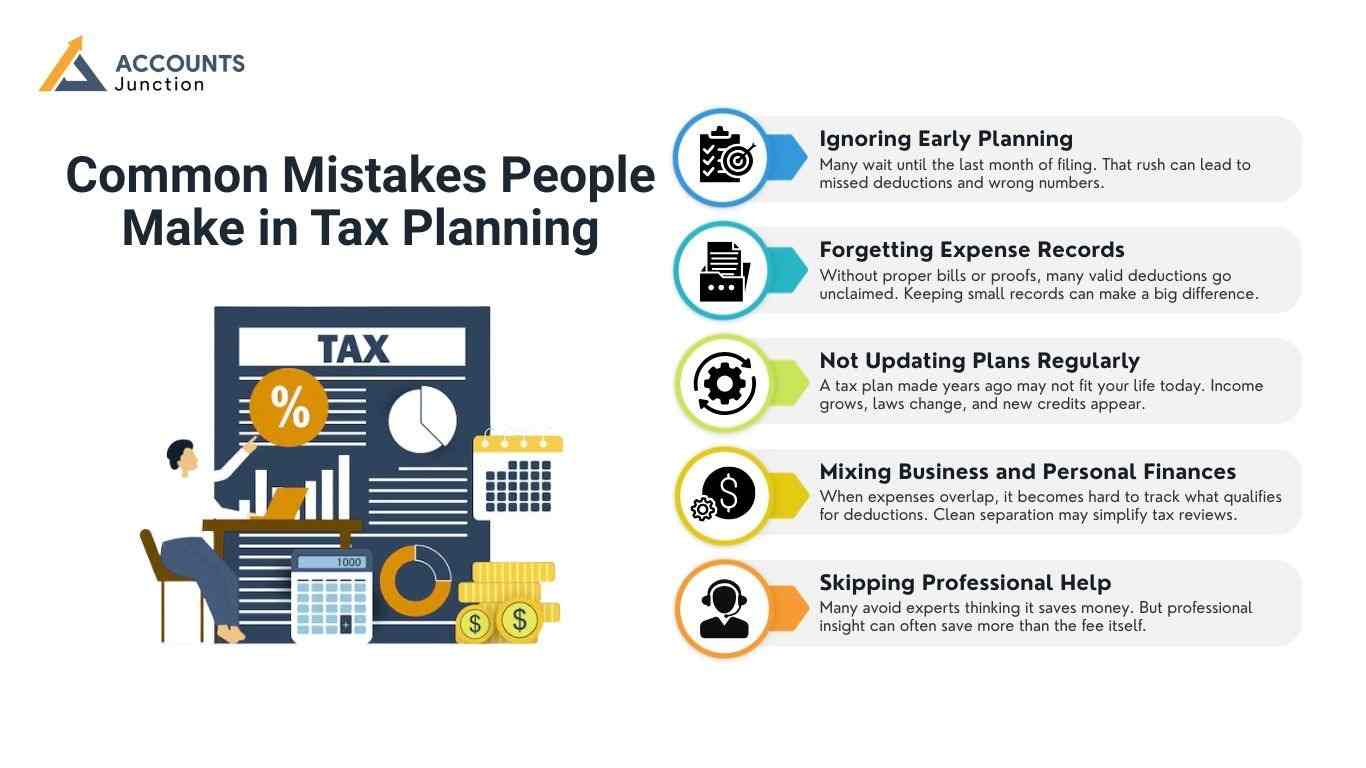
Common Mistakes People Make in Tax Planning
Tax planning may sound simple, but small mistakes can create big troubles. Some are easy to avoid, yet they happen often.
Here are a few common slips:
- Ignoring Early Planning
Many wait until the last month of filing. That rush can lead to missed deductions and wrong numbers.
- Forgetting Expense Records
Without proper bills or proofs, many valid deductions go unclaimed. Keeping small records can make a big difference.
- Not Updating Plans Regularly
A tax plan made years ago may not fit your life today. Income grows, laws change, and new credits appear.
- Mixing Business and Personal Finances
When expenses overlap, it becomes hard to track what qualifies for deductions. Clean separation may simplify tax reviews.
- Skipping Professional Help
Many avoid experts thinking it saves money. But professional insight can often save more than the fee itself.
A small review each quarter may stop most of these mistakes before they cost you.
Role of Technology in Modern Tax Planning
Tax planning has entered the digital age. Manual files are giving way to cloud systems and smart tools.
Here’s how technology can reshape your tax life:
- Automated Record Tracking
Software can collect and sort expense data automatically, saving hours of manual entry.
- Error-Free Calculations
Smart tools can reduce math slips and mismatched figures that lead to audit risks.
- Real-Time Updates
Some apps alert you about tax law changes or pending payments before deadlines.
- Data Storage and Safety
Cloud-based systems may store records securely and keep them handy for years.
- Insightful Analytics
Technology may show patterns in your spending or income that reveal new saving opportunities.
Digital tools don’t replace human judgment, but they surely make the process faster, cleaner, and smarter.
Key Benefits of Effective Tax Planning
An effective tax planning strategy offers several advantages:
1. Increased Savings
- By strategically managing income and deductions, individuals and businesses can save significant amounts in taxes.
2. Better Cash Flow Management
- Tax planning ensures businesses and individuals allocate resources effectively to meet tax obligations without financial strain.
3. Reduced Risk of Audits
- Accurate tax planning and compliance reduce the chances of errors that may trigger audits from tax authorities.
4. Improved Investment Decisions
- Tax-efficient investment strategies help individuals and businesses make informed decisions that align with financial goals.
5. Peace of Mind
- With a well-planned tax strategy, taxpayers can avoid last-minute tax filing stress and potential penalties.
When Should You Seek Professional Tax Advice?
Not every financial matter needs an expert. But when things grow complex, seeking advice early may help.
You might need a planner when:
- Your income sources are diverse
- You run a business or invest overseas
- You face frequent tax audits
- You want to plan for inheritance or retirement
Reaching out early can save time and stress. Good guidance may turn confusion into clear, well-planned steps.
How Professional Tax Planning Services Can Help
Engaging professional tax planning services provides expert tax advice tailored to individual or business needs. Here’s how professional tax advisors can help:
1. Identifying Tax-Saving Opportunities
- Tax professionals analyze financial situations to identify potential deductions, exemptions, and credits that reduce tax liability.
2. Strategic Business Structuring
- For businesses, tax planning services help determine the most tax-efficient legal structure (LLC, S-corp, C-corp, etc.).
3. Year-Round Tax Planning
- Unlike last-minute tax filing, ongoing tax planning ensures financial decisions are tax-efficient throughout the year.
4. Assistance with Tax Compliance
- Tax professionals ensure compliance with local, state, and federal tax regulations, minimizing legal risks.
5. Tax-Efficient Retirement Planning
- Advisors help individuals plan retirement contributions in a way that maximizes tax benefits and long-term financial growth.
6. Estate and Succession Planning
- Professional tax planning services assist in structuring estates and business successions to minimize tax liabilities.
Why Choose Accounts Junction for Expert Tax Planning Services?
When it comes to tax planning, choosing the right professionals is key. Accounts Junction offers comprehensive tax planning services with personalized tax advice to meet individual and business needs. Here’s why you should choose us:
1. Expertise in Tax Regulations
- Our team stays updated with the latest tax laws to ensure compliance and maximize tax-saving opportunities.
2. Customized Tax Strategies
- We develop tailored tax planning strategies based on your unique financial situation and goals.
3. Advanced Tax Planning Tools
- We utilize modern tools and software to streamline tax calculations and reporting.
4. Proactive Tax Planning
- Unlike reactive tax filing, we provide year-round tax planning services to optimize financial decisions.
5. Transparent and Reliable Services
- We ensure transparency in tax planning, providing clear insights into tax obligations and savings.
6. Hassle-Free Tax Filing
- With Accounts Junction, tax filing becomes stress-free as we handle all aspects of tax preparation and submission.
Individuals and businesses need financial stability; effective tax planning services play a crucial role in achieving this. By strategically managing income, expenses, and investments, tax planning helps minimize tax liabilities while ensuring full compliance with ever-changing tax regulations. You want to maximize deductions and optimize tax credits; professional tax advice helps you achieve significant savings.
For individuals, tax planning services ensure better wealth management, retirement planning, and estate preservation. Businesses want to reduce their tax burden; they can also improve cash flow and reinvest savings. The complexity of tax laws makes expert guidance essential to navigate tax strategies effectively, avoid penalties, and take full advantage of tax-saving opportunities.
By partnering with experienced professionals, taxpayers can benefit from customized tax planning solutions tailored to their financial goals. Personal finance optimization is important for individuals; tax efficiency is crucial for businesses, and expert tax advice provides significant long-term benefits in both cases. Taking proactive steps today with professional tax planning services will help secure a financially stable and tax-efficient future.
FAQs
1. Why is tax planning important for long-term wealth?
- It helps you manage money wisely, save more, and grow wealth without facing legal trouble.
2. Can small businesses benefit from tax planning too?
- Yes, even small firms may cut costs and boost profits with proper tax strategies.
3. Does tax planning mean avoiding taxes?
- Not at all. It means using legal methods to reduce what you owe.
4. How often should I update my tax plan?
- At least once a year, or whenever your financial situation changes.
5. What happens if I ignore tax planning?
- You might end up paying more, missing credits, or facing penalties later.
6. Is hiring a tax planner expensive?
- It can vary, but many find the savings far exceed the cost.
7. Can I plan taxes on my own?
- You can try, but experts often spot details most people miss.
8. What documents do I need for tax planning?
- Income records, bank statements, past tax returns, and proof of deductions are common.
9. How does tax planning affect retirement?
- It helps you grow savings faster by choosing tax-friendly retirement options.
10. Are tax laws the same every year?
- No, they change often. That’s why regular updates are key.
11. Can tax planning reduce audit risks?
- Yes, a well-documented plan may lower the chances of being flagged.
12. What kind of deductions can individuals claim?
- They may include education costs, home loans, insurance, and charity donations.
13. How early should I start planning for next year’s taxes?
- Soon after filing the current year’s return is a good time to begin.
14. Can freelancers or gig workers use tax planning?
- Of course. They can manage irregular income better through planned deductions.
15. Do I still need a planner if I use tax software?
- Software helps with filing, but experts provide strategy and long-term insight.
16. What if I make a mistake in my tax plan?
- It can be corrected, but timely review helps prevent such slips.
17. Can tax planning improve cash flow?
- Yes, because you may know in advance how much to set aside and when.
18. Are there tax-saving options for investment income?
- Yes, planners can suggest funds or instruments with lower tax rates.
19. What’s the best time in the year to meet a tax advisor?
- Mid-year or before major financial moves like property or business investment.
20. How can Accounts Junction make tax planning easier?
- By our tax advice, we provide accurate analysis, and year-round support that keeps you stress-free.