
05 key benefits of Bookkeeping Services for Real Estate
Bookkeeping services for real estate involve recording, tracking, and managing financial transactions related to property investments, sales, and management. These services include:
- Recording income from property sales, rental income, and commission
- Tracking expenses such as maintenance, property taxes, and mortgage payments
- Bank and credit card reconciliation
- Creating detailed financial reports, such as profit and loss statements, to provide insights into business performance
- Preparing for tax filings and ensuring compliance with regulations
- Managing payroll for real estate agents and staff
With professional bookkeeping for real estate, businesses can streamline their financial processes, minimize errors, and focus on growing their property portfolio.
Why Bookkeeping is Important for Real Estate Businesses
Bookkeeping for real estate is essential as it ensures accurate financial records, compliance with tax regulations, and better decision-making. With multiple transactions, including property sales, rentals, and management costs, maintaining organized financial data is vital. Proper bookkeeping for real estate helps businesses track income, manage expenses, and plan for future investments effectively.
Errors in financial records can lead to tax penalties and cash flow issues. Bookkeeping services for real estate ensure that every transaction is accurately recorded, categorized, and reconciled. This helps businesses maintain financial stability and prepare for audits and financial planning.
Common Bookkeeping Mistakes Real Estate Businesses Might Make
Even a few small errors can quietly grow into big troubles later. Real estate books may look simple at first glance, but many slip-ups hide in plain sight.
1. Mixing Personal and Business Expenses
Some owners may swipe the same card for home and work costs. This might blur lines and confuse your books.
- Why it matters: It becomes tough to know what belongs to the business.
- How to avoid: Keep separate accounts. Treat your real estate like a standalone venture.
2. Missing Out on Small Payments
Tiny payments often escape notice. Yet, when added up, they can twist the numbers.
- Why it happens: Many think small amounts don’t matter.
- Fix it early: Record every rupee, no matter how minor it seems.
3. Ignoring Regular Bank Reconciliation
Skipping bank checks can hide errors that sit quietly for months.
- Impact: You might see mismatched balances and wonder where money vanished.
- Better way: Match your records with bank statements every month.
4. Forgetting Receipts and Invoices
A lost receipt can feel like a small thing. But come tax time, it may sting.
- Reason: Real estate has many small moving parts—repairs, cleaning, supplies.
- Simple fix: Keep all receipts scanned or stored safely.
5. Waiting Too Long to Update Books
Some businesses delay until the pile grows tall. Then mistakes hide deep inside the clutter.
- Possible result: Tax reports may go wrong, and stress can rise.
- What to do: Update books often. A few minutes each week can save hours later.
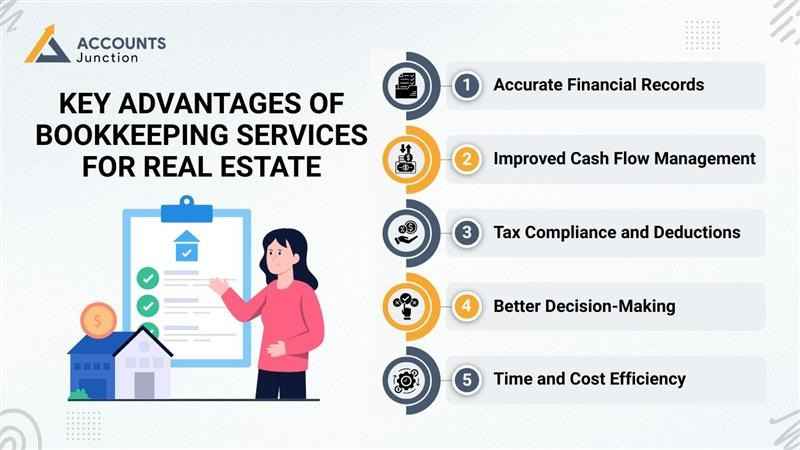
Key Advantages of Bookkeeping Services for Real Estate
Effective bookkeeping for real estate ensures financial stability and smooth operations for businesses. Here are the key benefits of bookkeeping services for real estate that help businesses stay organized and achieve their financial goals.
- Accurate Financial Records
Bookkeeping services for real estate help maintain precise financial records, reducing errors and discrepancies. Accurate records make it easier to track income and expenses, ensuring the business remains financially stable. Real estate businesses can use these records to prepare for audits and make informed financial decisions. - Improved Cash Flow Management
Managing cash flow is crucial for real estate businesses, as delays in payments and expenses can impact operations. Bookkeeping for real estate provides a clear picture of incoming and outgoing cash, helping businesses plan for expenses and avoid financial shortfalls. - Tax Compliance and Deductions
Real estate businesses deal with complex tax regulations, and improper bookkeeping can lead to penalties. Bookkeeping services for real estate ensure accurate tax preparation, allowing businesses to claim deductions for expenses like property depreciation, repairs, and mortgage interest. - Better Decision-Making
Real estate businesses need financial insights to make strategic investment decisions. Bookkeeping for real estate provides detailed reports, enabling businesses to analyze profitability, evaluate expenses, and identify growth opportunities. - Time and Cost Efficiency
Handling bookkeeping in-house can be time-consuming and prone to errors. Outsourcing bookkeeping for real estate allows businesses to save time, reduce operational costs, and focus on core activities like property sales and management.
Signs You May Need Professional Bookkeeping Help
Many real estate owners begin by managing their books alone. Over time, the numbers grow and so does the stress. There comes a point when outside help can make all the difference.
1. When You Keep Delaying Updates
If the books sit untouched for weeks, it might be time to call for help.
- Why it matters: Delayed entries can make it hard to track real-time cash flow.
- Possible fix: A bookkeeper can set a steady schedule to keep everything current.
2. When Numbers Don’t Match
You may often find that bank records and account books tell different stories.
- Sign of trouble: Frequent mismatches or missing figures.
- Help available: A professional can find the cause, clean up old errors, and set systems right.
3. When Taxes Feel Like a Maze
Tax season can turn long nights into longer worries.
- Warning: If filing taxes feels like guessing, that’s a red flag.
- Solution: A bookkeeper may prepare accurate records that make filing clear and quick.
4. When Growth Feels Unclear
You may sell more, yet the profits may not grow.
- Reason: Without clear numbers, it’s hard to see what really drives growth.
- Bookkeeper’s role: They can track trends, reveal cost leaks, and guide you to better insights.
5. When You Lose Peace of Mind
If you think about numbers even outside work hours, that’s a sign the load is too heavy.
- Possible outcome: Missed focus on clients or new deals.
- Better choice: Pass the books to experts, and focus on building your property base.
How to Choose the Right Bookkeeping Services for Real Estate?
Selecting the right bookkeeping services for real estate involves considering factors like experience, technology, and service offerings. Here are key points to evaluate:
- Industry Expertise: Choose a provider with experience in bookkeeping for real estate to ensure they understand industry-specific financial requirements.
- Technology and Software: Opt for bookkeeping services for real estate that utilize cloud-based accounting software for efficient data management.
- Customization: Ensure the services are tailored to your business needs, covering aspects like rental income tracking, expense management, and tax preparation.
- Compliance and Accuracy: The bookkeeping provider should ensure compliance with tax laws and maintain error-free financial records.
- Scalability: As your real estate business grows, bookkeeping for real estate should be able to scale accordingly to handle increased transactions and financial complexities.
Why Choose Our Real Estate Bookkeeping Services?
Our bookkeeping services for real estate offer customized solutions to help businesses maintain accurate financial records and achieve financial stability. Here’s why you should choose us:
- Experienced Professionals: Our team specializes in bookkeeping for real estate and understands industry-specific financial challenges, ensuring that businesses have access to knowledgeable professionals who can handle complex financial transactions with precision and efficiency.
- Advanced Accounting Software: We use the latest accounting tools to provide real-time financial insights and data security, ensuring businesses can access up-to-date reports that support informed decision-making and financial planning.
- Comprehensive Services: From income tracking to tax preparation, our bookkeeping services for real estate cover all aspects of financial management, allowing businesses to streamline operations and maintain compliance with financial regulations.
- Cost-Effective Solutions: We offer affordable pricing without compromising quality, ensuring your business benefits from professional bookkeeping for real estate that improves financial efficiency and reduces operational expenses.
- Dedicated Support: Our expert bookkeepers are always available to address queries, provide financial guidance, and assist businesses in optimizing their financial processes to achieve long-term growth and profitability.
With Accounts Junction bookkeeping services for real estate, you can ensure financial accuracy, compliance, and business growth.
FAQs
1. Why do real estate businesses need bookkeeping services?
- Real estate businesses need bookkeeping for real estate to maintain accurate financial records, manage cash flow, and ensure tax compliance.
2. What expenses can real estate businesses track with bookkeeping services?
- Bookkeeping services for real estate track expenses such as property maintenance, mortgage payments, property taxes, and commissions.
3. How do bookkeeping services for real estate help with tax preparation?
- They ensure all income and expenses are accurately recorded, making it easier to file taxes and claim deductions.
4. Can bookkeeping for real estate help businesses with financial planning?
- Yes, it provides financial reports and insights that help businesses make informed investment decisions.
5. Is bookkeeping for real estate cost-effective?
- Yes, outsourcing bookkeeping can save time and reduce errors, leading to better financial management and cost savings.
6. How does bookkeeping help in managing rental income?
- It records rent received, pending dues, and related costs to keep track of cash flow.
7. Can bookkeeping show how much profit I make on each property?
- Yes, detailed records can reveal which properties bring in the most gain.
8. Is it necessary to hire a bookkeeper for a small real estate firm?
- Even small firms may need help once transactions start growing.
9. How can poor bookkeeping affect my taxes?
- It may cause missed deductions or wrong filings that lead to fines.
10. Does bookkeeping help prepare for audits?
- Yes, clean records make audits smoother and faster.
11. Can bookkeeping reduce financial stress?
- When numbers are in order, the mind often feels lighter too.
12. How often should bookkeeping be updated?
- Some update weekly, others monthly—it depends on how busy the business is.
13. Do bookkeepers use special software?
- Yes, most use cloud systems that track data in real time.
14. Can I handle bookkeeping myself?
- You can, but as your portfolio grows, outsourcing may be more efficient.
15. What’s the main benefit of professional bookkeeping?
- Clarity. You know where your money stands without guessing.
16. How can bookkeeping help with future planning?
- It shows patterns that can guide your next moves in buying or selling.
17. Can I claim more deductions through better bookkeeping?
- Yes, when all expenses are recorded, eligible deductions become clear.
18. What’s a common mistake in real estate bookkeeping?
- Mixing personal and business expenses is a frequent one.
19. Does bookkeeping help track agent commissions?
- Yes, it records each commission earned and paid.
20. Can bookkeeping support my business growth?
- Accurate data often leads to better choices and steady expansion.
21. How safe is my data with outsourced bookkeepers?
- Most trusted services use encrypted systems for protection.
22. What kind of reports do bookkeepers prepare?
- They may create profit and loss statements, balance sheets, and cash flow reports.
23. Is bookkeeping costly for small real estate businesses?
- Not always. Some providers offer plans that fit smaller budgets.
24. Can bookkeeping help me during property sales?
- Yes, it keeps track of all sale costs, commissions, and profits clearly.