

What Is a 1099 form contractor and How Does It Work?
A 1099 form contractor is a term used in work deals where a firm gives tasks to a skilled person who does not work as staff. This term is used in many fields and is known in most work setups. When people talk about a 1099 form independent contractor, they tend to link it with free tasks, short work cycles, and clear track of pay. People use this term when the link is free of strict staff rules. It is used when a firm wants light rules and less long term cost.
In most work cases, the 1099 form contractor idea is used when the skilled person runs tasks with less direct watch. The term helps guide how both sides set clear tasks and pay. In broad use, a 1099 form independent contractor is seen when the link is based on task work, not time work. Some firms use this style to add skill with less long term ties. The 1099 form contractor point is used to track pay for such skilled work.
How 1099 Form Contractors Handle Tasks and Work Flexibly
Task-Based Work Structure
- A 1099 form contractor is hired for skilled tasks that stand on their own.
- Firms choose this link when they need specific skills for a short time.
- A 1099 form independent contractor handles tasks that can shift in scope.
- This setup helps both sides move through work cycles calmly and clearly.
Flexible Work Style
- A 1099 form contractor is known for free task flow in most setups.
- Firms prefer this link when they want fewer strict work rules.
- Skilled people use the 1099 form independent contractor link to maintain full task control.
- This gives both sides comfort when they want simple and clear work rules.
Task-Based Focus and Cost Efficiency for 1099 Contractors
Focus on Task-Based Needs
- A 1099 form contractor setup suits firms that lean toward task-based work.
- It works well when a firm wants clear but short work terms.
- A 1099 form independent contractor setup helps firms keep costs aligned with actual task needs.
Cost Control and Skill Access
- Firms use this link for skill sets needed only once in a while.
- A 1099 form contractor allows firms to manage and control task costs effectively.
- In this setup, a 1099 form independent contractor can work for more than one firm.
- This gives both sides a clear sense of task flow and flexible work structure.
Core Aspects of a 1099 Form
A 1099 form contractor setup is often linked to these traits:
-
Skill Based Tasks
The firm gives tasks to a skilled person with clear needs in mind. A 1099 form independent contractor is used when the skilled task is clear and can stand on its own.
-
No Staff Rules
The link runs without staff rules. This is why firms use a 1099 form contractor link when they want less long tasks. A 1099 form independent contractor is free from strict staff steps.
-
Clear Task Scope
Firms state tasks with clear scope. A 1099 form contractor setup helps the firm guide tasks in a straight way. A 1099 form independent contractor tends to work with care and skill.
-
Pay Based on Task
Pay in a 1099 form contractor link is set on task terms. A 1099 form independent contractor tends to set the pay with the firm in a clear talk. This style gives both sides calm in task and pay flow.
How a 1099 form contractor Link Works in Real Tasks
Clear Task Discussion
- The link begins with a simple talk about the task, scope, and timeline.
- The skilled worker reviews these terms and shares quick notes to keep the setup smooth.
Role Clarity
- The firm states what must be done but does not guide each small step.
- The independent worker chooses the best method to complete the task based on skill.
Flexible Work Style
- The worker keeps full control of how the task flows.
- This lets both sides move through each stage with less pressure.
Clean Update Flow
- Progress updates are shared in short, calm steps.
- The firm checks each update with light reviews, keeping the process clear.
Trust and Transparency
- Regular notes help build trust across the work cycle.
- Each part of the task stays easy to track and free from confusion.
How Firms Start Work With a 1099 form contractor
• Initial Task Note
- Work begins with a clear note from the firm outlining the task details.
- The skilled worker reviews this note and suggests how the work will run.
• Task Planning
- The worker often provides a simple plan that shows the task flow.
- This plan helps align expectations before the work begins.
• Clear Value and Work Flow Talk
- Both sides discuss task value and timing in a calm, direct way.
- A smooth talk helps form a solid base for the work link.
• Agreement and Start
- Once terms are agreed upon, the worker begins the task independently.
- The firm does not supervise each step, allowing free and skilled task execution.
• Steady Work Run
- The task follows the first plan, keeping the flow stable and predictable.
- The independent worker stays focused on the final aim without strict oversight.
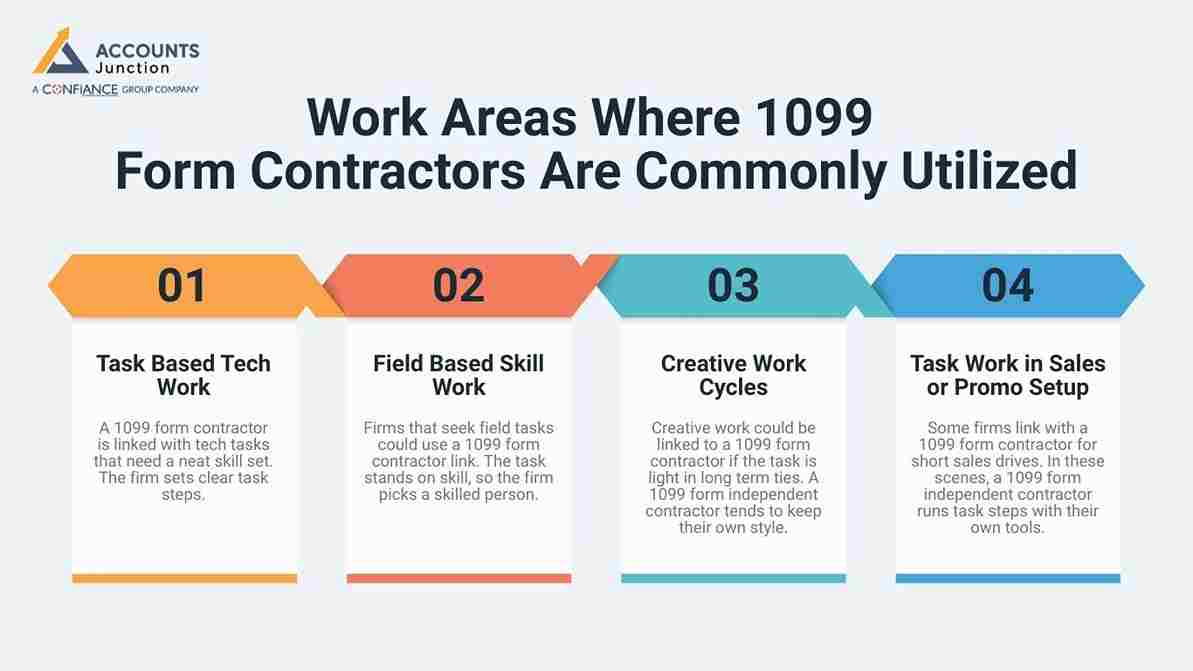
Work Areas Where 1099 Form Contractors Are Commonly Utilized
Firms call a 1099 form contractor for tasks in many work areas. Some tasks involve clear skill that the firm wants for a short phase. A 1099 form independent contractor is often used in such work areas when the skill is precise.
Below are some broad work areas linked to this arrangement.
-
Task Based Tech Work
A 1099 form contractor is linked with tech tasks that need a neat skill set. The firm sets clear task steps.
A 1099 form independent contractor builds these steps with clean tech work. This work style helps both sides know what to expect.
-
Field Based Skill Work
Firms that seek field tasks could use a 1099 form contractor link. The task stands on skill, so the firm picks a skilled person.
A 1099 form independent contractor uses their field skill to guide the task.
-
Creative Work Cycles
Creative work could be linked to a 1099 form contractor if the task is light in long term ties. A 1099 form independent contractor tends to keep their own style. The firm gives the idea and the creative person builds it.
-
Task Work in Sales or Promo Setup
Some firms link with a 1099 form contractor for short sales drives. In these scenes, a 1099 form independent contractor runs task steps with their own tools. The firm checks end results in a calm phase.
Why Skilled People Choose a 1099 form Independent Contractors
Freedom in Task Choice
- Skilled people prefer this setup because it gives clear task freedom.
- They can choose tasks that match their strengths and work in their own space.
Independent Work Style
- Many enjoy a clean task flow where they control how the work runs.
- An independent contractor can shape each project to fit their own method.
Wide Work Scope
- This link allows movement from one client to another with ease.
- Workers can manage multiple projects and plan time based on their workload.
Flexible Scheduling
- They gain freedom to arrange work hours around their comfort.
- This helps maintain balance and reduces stress in daily work.
Simple and Calm Rules
- Some prefer this link because the terms are usually clean and direct.
- They keep control over how to plan and complete each workday without strict oversight.
How Firms Track Work With a 1099 form contractor
Clear Check Points
- Firms set check points during the first task talk.
- The independent worker uses these points to show progress in a simple, clear way.
Streamlined Tracking Process
- Firms usually keep light task records without heavy control.
- Updates from the worker help the firm see what is done and what remains.
Neat and Clean Notes
- Independent workers tend to maintain clean notes for each phase.
- These notes support smooth tracking and reduce confusion.
Transparent Task Position
- This style lets both sides know exactly where the task stands.
- Final notes are shared at the end, allowing the firm to review the completed work.
Calm Work Closure
- The setup leads to a simple and calm close for each task.
- Workers find comfort in a flow that is easy to manage from start to finish.
How a 1099 form contractor Handles Task Flow and Work Steps
Clear Step Planning
- Each task starts with a clear step-by-step plan.
- The independent worker creates this plan alone, keeping it simple and stress-free.
- A structured plan gives both sides a broad view of how the task will progress.
Early Task Breakdown
- The core task is noted first and then split into smaller steps.
- Each step forms a clean route that makes the work clear and easy to follow.
- This ensures the workflow stays organized and manageable.
Regular Progress Updates
- Updates are shared at predefined points to track progress.
- Brief, simple notes help the firm review each stage quickly.
- Independent workers keep updates concise for fast understanding.
Focused Task Management
- Workers maintain control of task steps without heavy oversight.
- The firm has clarity on the workflow but does not interfere with execution.
How Task Proof is Shared
Proof of Completed Work
- Firms often need proof that the task is done as agreed.
- Workers share proof via short notes, files, or completed samples.
- A neat proof list shows each completed step and the final deliverable.
Visual Evidence
- Some tasks require screenshots, documents, or visual notes.
- Workers choose the proof format that best fits the task.
- Visual proof keeps the workflow transparent and easy to check.
Firm Review and Task Closure
- The firm checks the submitted proof and provides feedback.
- Tasks are closed when the firm confirms satisfactory work.
- Independent workers build trust through consistent and clear proof sharing.
Smooth and Trustworthy Flow
- Clear steps and organized proof help maintain calm, reliable task flow.
- Both sides gain confidence in the process and results.
How a 1099 form contractor Handles More Than One Task
It is common for an independent contractor to handle more than one task simultaneously. Successful management requires careful planning and organization.
1. Task Planning and Organization
- A 1099 form independent contractor plans each task carefully before starting.
- They maintain a task board to track the workflow of all assignments.
- The task board helps prevent mix-ups and ensures nothing is overlooked.
2. Scheduling and Time Management
- Tasks vary in duration; some are short while others take longer.
- A 1099 form contractor splits their day into clear time blocks for each task.
- Strict time slots allow them to shift priorities smoothly when needed.
3. Communication and Updates
- Regular updates provide transparency and reassurance to the firm.
- An independent contractor sends updates on time, keeping the client informed.
- Clear communication reduces stress and strengthens professional relationships.
A 1099 form contractor setup provides a clear, task-based way to work with skilled people. It gives firms the chance to manage projects without adding long-term staff. Skilled workers gain freedom to plan their tasks, pick tools, and set their own pace. This type of link keeps both sides calm and ensures work is done with care. By using clear updates, neat proof, and smooth talk, both firms and contractors can build strong trust.
For firms like Accounts Junction, working with a 1099 form independent contractor offers extra value. We help track each task, manage pay, and keep records in one place. Our team ensures work flows smoothly and clients stay confident in results. A 1099 form contractor link through Accounts Junction brings skill, clear communication, and calm task control to every project.
FAQs
1. What is a 1099 form contractor in simple words?
- A 1099 form contractor works on task based projects. They handle tasks with full control and clear choice.
2. How does an independent contractor start a task?
- They read task notes and build a clear plan. They shape steps that guide each stage with care.
3. Why do firms work with an contractor?
- Firms want clean work with simple rules in place. It brings skill fast and keeps stress quite low.
4. How does a 1099 form contractor share updates?
- They send short notes at each clear task point. These notes help firms track work in real time.
5. Does a 1099 form contractor use their own tools?
- They pick tools that fit each task with ease. This keeps work flow smooth and simple to guide.
6. How does a 1099 form independent contractor end a task?
- They share proof in neat files at the end. The firm checks work and gives their last view.