

Law firms accounting requirements and service
Law firm accounting involves more than just monitoring income and expenses. Legal professionals must follow strict rules that protect client funds, ensure ethical billing, and maintain proper trust account records. These rules form the foundation of legal compliance. Meeting all Law Firms Accounting Requirements needs the right structure, accurate tools, and expert support. In this guide, we’ll explore what these requirements involve and how professional help can make accounting easier for legal practices.
Law firms handle large sums of client money. They must keep clear records and follow legal and tax rules. Law firms accounting requirements differ from other businesses. They include managing client trust accounts, tracking billable hours, and handling retainers. Missing these steps can lead to penalties or even legal trouble.
Law firms must also regularly compare their financial records with bank statements to ensure accuracy and compliance. This confirms every dollar is in the right place. Without a clear plan, even small firms can run into issues. That’s why law firms accounting requirements must be a top priority.
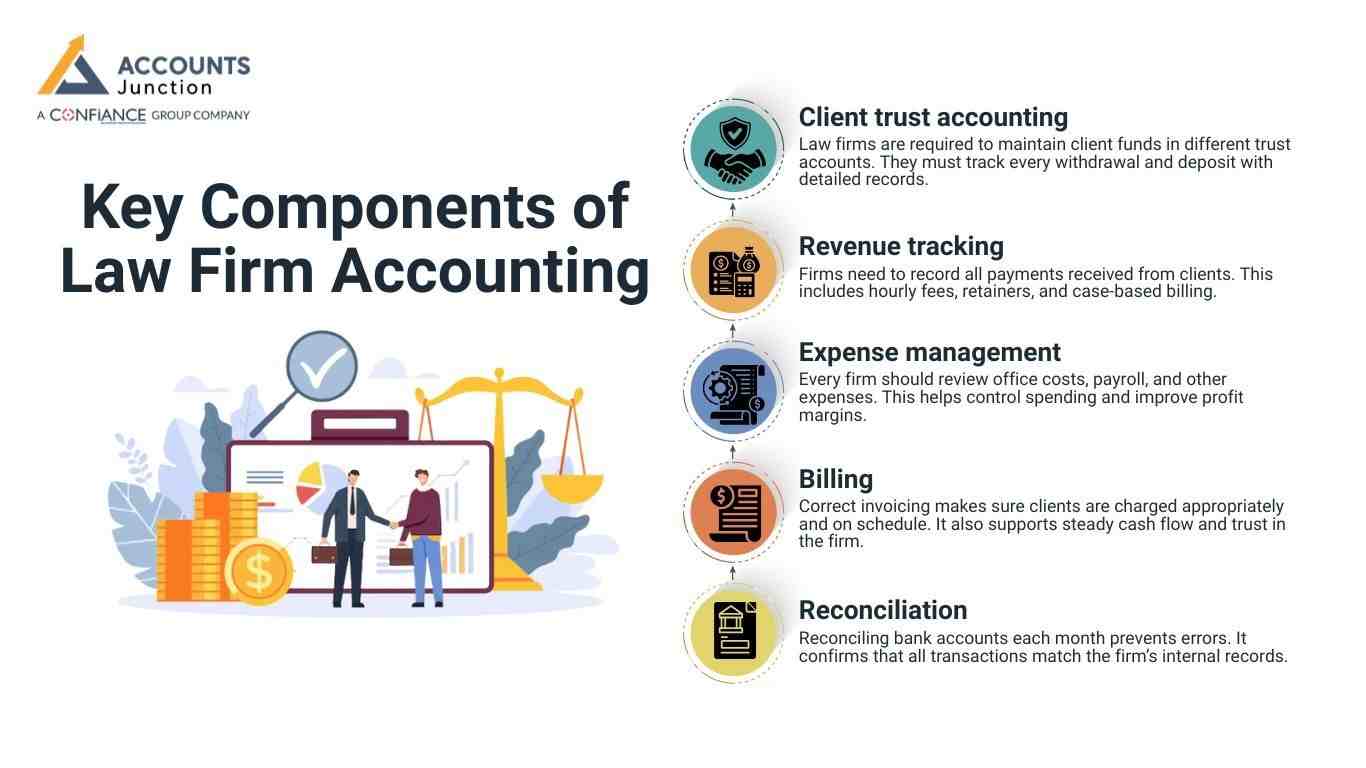
Key Components of Law Firm Accounting
Understanding the key parts of law firm accounting helps firms avoid mistakes. These tasks are not just about taxes. They affect how firms operate and grow.
Client trust accounting
- Law firms are required to maintain client funds in different trust accounts. They must track every withdrawal and deposit with detailed records.
Revenue tracking
- Firms need to record all payments received from clients. This includes hourly fees, retainers, and case-based billing.
Expense management
- Every firm should review office costs, payroll, and other expenses. This helps control spending and improve profit margins.
Billing
- Correct invoicing makes sure clients are charged appropriately and on schedule. It also supports steady cash flow and trust in the firm.
Reconciliation
- Reconciling bank accounts each month prevents errors. It confirms that all transactions match the firm’s internal records.
The Role of Law Firm Accounting Software
Manual tracking doesn’t cut it anymore. Law firm accounting software provides firms with the tools to remain precise and follow regulations.
Tracks client retainers
- It records every retainer received and applies it correctly to client invoices. This ensures trust account compliance.
Calculates taxes
- The software helps firms calculate tax amounts on fees and expenses. This reduces tax errors and saves time during filing.
Prepares financial reports
- Firms can create real-time financial reports with one click. This helps monitor performance and make better business decisions.
Automates invoice creation
- Law firm accounting software creates and sends invoices fast. It helps monitor time and costs to make sure billing is correct.
Improves cash flow tracking
- The software shows incoming and outgoing cash in real time. This helps law firms manage their budget and avoid shortfalls.
Common Accounting Challenges Faced by Law Firms
Law firms deal with unique accounting issues that can affect accuracy and compliance. Key challenges include:
1. Compliance Issues
- Law firms must follow strict rules when handling client trust accounts. Failing to meet law firms accounting requirements can lead to penalties or loss of license.
2. Tracking Billable Hours
- It’s hard to track every billable hour, especially when managing many clients and tasks. Errors can lead to lost revenue.
3. Cash Flow Management
- Income may not be steady. Late payments and long case timelines can make it tough to maintain a stable cash flow.
4. Client-Related Expenses
- Firms often pay costs upfront for clients. These expenses must be tracked and billed correctly to avoid profit loss.
5. Fraud Risk
- Large amounts of money flow through law firms. Without proper checks, firms become targets for fraud.
6. Lack of Financial Oversight
- Without regular reviews, mistakes go unnoticed. This can lead to incorrect reports and compliance issues.
Choosing the Right Law Firm Accounting Software
Using the right law firm accounting software can make accounting tasks more accurate and faster. It also helps law firms meet accounting requirements efficiently, avoiding errors and compliance issues.
1. Trust Accounting
-
The software should track client trust funds properly. This helps meet legal and ethical rules.
2. Time and Billing Integration
- Select software that tracks time and creates invoices. It should connect smoothly with billing tools.
3. Expense Tracking
- The software must record and sort expenses. It should also support billing by client or case.
4. Built-In Compliance Tools
- Pick a system that helps your firm follow laws. This is key when handling trust accounts and reports, and ensures your firm meets law firms accounting requirements.
5. User-Friendly Interface
- A simple design saves time and reduces errors. Everyone in the firm should use it with ease.
6. Secure Data Storage
- Choose software that keeps data safe. Search for encryption and regular backups to protect client info.
Popular options include Clio, QuickBooks for Law Firms, and Xero. The best choice depends on your firm’s size, specialty, and needs.
Best Practices for Managing Law Firm Finances
To stay financially strong and meet law firms accounting requirements, law firms should follow these simple practices:
1. Keep Trust and Operating Accounts Separate
- Use different accounts for client trust money and firm expenses. This prevents mixing funds and keeps you compliant.
2. Do Regular Account Reconciliation
- Check your bank and trust accounts often. This helps catch mistakes and keeps records accurate.
3. Send Bills on Time
- Always bill clients quickly and on a set schedule. Use billing software to make this easier and faster.
4. Hire a Skilled Accountant
- For larger firms, hiring a bookkeeper or outsourcing to an expert helps ensure correct financial work.
5. Track All Client Costs
- Record every cost spent for a client. This prevents billing mistakes and helps recover expenses.
6. Use Budgeting Tools
- Create and follow a budget to plan expenses. Budgeting helps avoid overspending and keeps goals on track.
7. Review Financial Reports Often
- Check financial reports monthly. This gives you insight into income, spending, and profit trends, supporting adherence to law firms accounting requirements.
Advanced Reporting and Analysis in Law Firm Accounting
Law firms can gain more than just compliance from proper accounting. Detailed reporting and analysis may help ensure adherence to law firms accounting requirements while transforming operations.
Why Reporting is Important
- Financial Visibility: Regular reports may show where money comes and goes.
- Case Profitability: You can check which clients or cases bring more revenue.
- Budget Adjustments: Reports may reveal overspending and help adjust budgets quickly.
- Decision Support: Senior partners may rely on reports to decide expansions, hires, or investments.
Types of Reports
- Profit and Loss Reports: Shows income versus expenses.
- Trust Account Reports: Displays client funds and usage.
- Cash Flow Statements: Tracks incoming and outgoing cash to avoid shortages.
- Expense Reports: Highlights where the firm spends the most money.
Outsourcing Law Firm Accounting Services
Smaller or mid-sized law firms may find accounting overwhelming. Outsourcing may reduce mistakes and save time.
Benefits of Outsourcing
- Expertise Access: Outsourced accountants may have years of experience in law firm finances.
- Reduced Workload: Staff can focus more on clients rather than bookkeeping.
- Cost Efficiency: Paying an external team may cost less than hiring full-time staff.
- Scalability: Firms may scale accounting support up or down depending on caseload.
What Can Be Outsourced
- Trust account management
- Billing and invoicing
- Payroll and staff expenses
- Tax preparation and filing
- Financial reporting
Law Firm Accounting Compliance Audits
Compliance audits can seem daunting, yet they may prevent fines and errors. Firms may view them as proactive measures rather than punishments.
Purpose of Audits
- Accuracy Verification: Confirms that all transactions are recorded properly.
- Ethical Assurance: Ensures client funds are not misused.
- Legal Protection: Reduces the risk of disciplinary action from regulatory authorities.
- Operational Improvement: Identifies inefficient practices or gaps in recordkeeping.
Preparing for an Audit
- Keep all receipts and invoices organized.
- Reconcile bank accounts regularly.
- Review trust account records before the audit.
- Document billing and client payment history.
- Maintain software logs and financial reports.
Accounts Junction provides specialized services for law firm accounting. We manage trust funds, billing, and financial reports efficiently, making daily accounting accurate and stress-free. With our certified experts, you can streamline your law firm’s financial tasks. Partner with us for reliable and professional accounting support.
FAQs
1. What are law firms accounting requirements?
- Law firms accounting requirements are rules that guide how legal practices must handle finances, including client money, firm expenses, and reporting.
2. Why must law firms keep trust accounts separate?
- Trust accounts hold client money. Keeping them separate prevents misuse and follows legal regulations.
3. What records must law firms maintain?
- Firms must track client funds, invoices, receipts, payments, and accounting reports for audits and compliance.
4. How often should law firms reconcile accounts?
- Monthly reconciliation is recommended to match balances and spot errors quickly.
5. Who sets accounting rules for law firms?
- Regulators like the state bar or legal authorities set rules for managing client funds and reporting.
6. Can law firms handle accounting manually?
- Yes, but using accounting software reduces errors and ensures compliance with legal requirements.
7. What are common compliance checks in law firms?
- Audits, dual approvals for payments, and regular reporting are key checks to meet accounting requirements.
8. How should client expenses be recorded?
- Every cost paid on behalf of a client must be documented, billed correctly, and kept separate from firm expenses.
9. What happens if accounting requirements are not followed?
- Violations may lead to fines, legal penalties, or disciplinary action from the bar association.
10. What is the role of a law firm accountant?
- They ensure records follow legal rules, manage client and firm funds, and prepare accurate reports.
11. Which software meets law firm accounting requirements?
- Software like Clio, Xero for law firms, or QuickBooks with trust accounting features is commonly used.
12. How are trust account audits done?
- Auditors check that client funds match records, transactions are authorized, and rules are followed.
13. Are certified accountants required for law firms?
- While not always mandatory, certified experts ensure compliance and reduce risk of errors.
14. What is a law firm’s duty regarding client funds?
- Firms must safeguard client money, only spend it for authorized purposes, and report transactions accurately.
15. How does budgeting fit into law firm accounting requirements?
- Budgets ensure firm spending stays legal, organized, and aligned with financial plans.
16. How often should financial reports be prepared?
- Monthly or quarterly reports help meet regulatory standards and provide oversight.
17. Can law firms outsource accounting to meet requirements?
- Yes, outsourcing to specialists ensures compliance, accurate reporting, and reduces internal risk.
18. How should law firms track billable hours?
- Software or records must capture time spent on client cases to bill accurately and meet reporting standards.
19. What controls prevent fraud in law firms?
- Dual approvals, restricted access, reconciliations, and audits help prevent misuse of funds.
20. Why is proper accounting important beyond compliance?
- It protects clients, builds trust, improves financial decisions, and avoids legal or ethical penalties.