

Why Every Law Firm Needs Trust Accounting Software for Lawyers
Law firms handle client funds, case expenses, and daily costs. Keeping client money safe is a top priority, which makes trust accounting software essential for lawyers. Trust accounting software for lawyers simplifies handling client money and ensures firms stay compliant with state and bar rules. Alongside software, using accounting services for lawyers can further strengthen financial management. In this article, we will explore why every law firm needs trust accounting software, its benefits, and how it improves overall financial management.
Understanding Trust Accounting for Law Firms
Trust accounting is different from regular accounting. Law firms hold client money in trust accounts, separate from their operating funds. Without trust accounting software for lawyers, managing these accounts manually often leads to costly errors and compliance risks.
What Is Trust Accounting Software for Lawyers?
Trust accounting software is a digital tool designed to manage client funds safely for lawyers. It tracks deposits, withdrawals, and client balances accurately. This software ensures that funds are never mixed with the law firm’s operational money, avoiding legal problems.
Key Features of Trust Accounting Software
1. Client Ledger Management
- The software keeps full records for each client. It tracks funds, payments, and balances so lawyers always know how much belongs to each client.
2. Automated Reporting
- With trust accounting software for lawyers, reports for audits and legal rules are made automatically, reducing manual checks. Lawyers can check them fast without manual work, saving time and cutting errors.
3. Transaction Tracking
- All deposits, withdrawals, and fund transfers are recorded. The software makes it easy to track money flow and prevents mistakes in client accounts.
4. Alerts and Reminders
- The system sends alerts for low balances or unusual activity. Lawyers get notified in time to act, keeping client funds safe and accounts accurate.
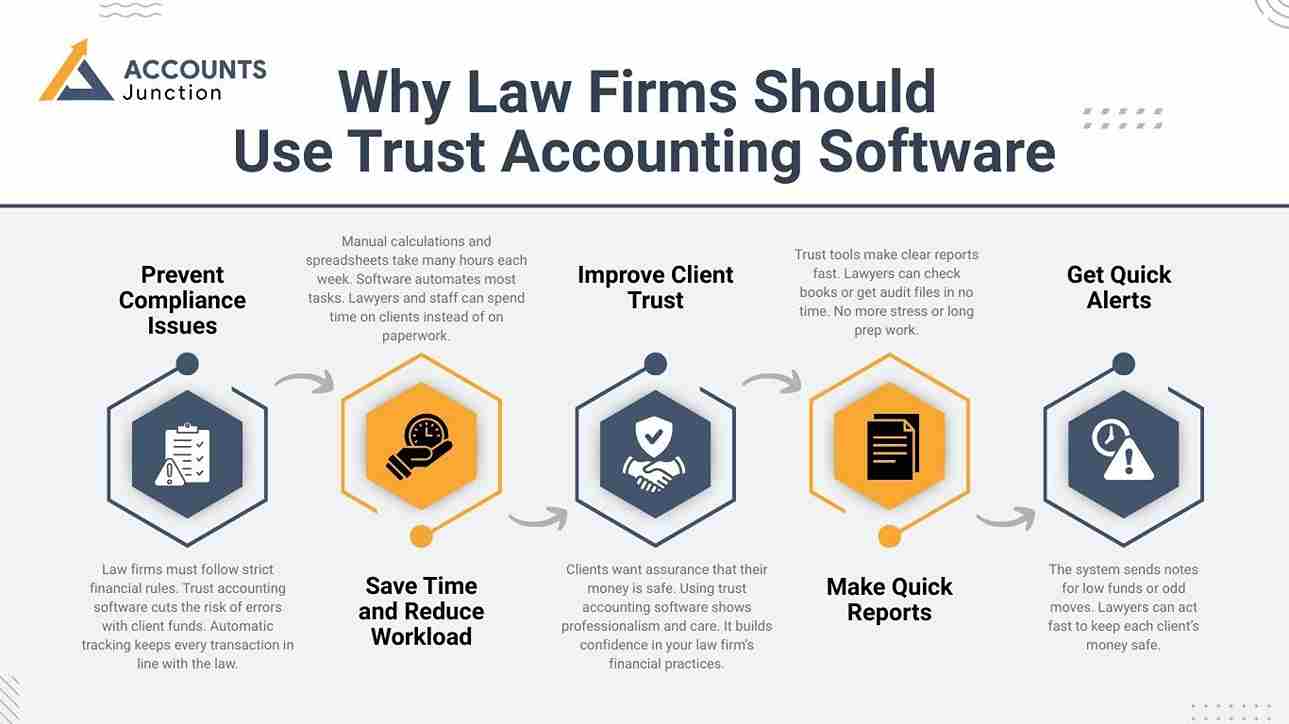
Why Law Firms Should Use Trust Accounting Software
Manual accounting can lead to mistakes. Small errors can cause legal risks that trust accounting software for lawyers helps prevent. Using trust accounting software improves accuracy, compliance, and efficiency for lawyers.
-
Prevent Compliance Issues
Law firms must follow strict financial rules. Trust accounting software cuts the risk of errors with client funds. Automatic tracking keeps every transaction in line with the law.
-
Save Time and Reduce Workload
Manual calculations and spreadsheets take many hours each week. Software automates most tasks. Lawyers and staff can spend time on clients instead of on paperwork.
-
Improve Client Trust
Clients want assurance that their money is safe. Using trust accounting software shows professionalism and care. It builds confidence in your law firm’s financial practices.
-
Make Quick Reports
Trust tools make clear reports fast. Lawyers can check books or get audit files in no time. No more stress or long prep work.
-
Get Quick Alerts
The system sends notes for low funds or odd moves. Lawyers can act fast to keep each client’s money safe.
Accounting Services for Lawyers: How They Complement Software
Many law firms use accounting services for lawyers alongside trust accounting software. These accounting services for lawyers provide expert guidance on fund management, tax filings, and long-term financial planning.
Benefits of Combining Software and Accounting Services
- Expert Oversight – Professionals check reports and transactions.
- Customized Financial Advice – Helps plan budgets and reduce costs.
- Enhanced Compliance – Ensures all state and federal rules are followed.
How Accounting Services Work With Trust Accounting Software
When law firms use accounting services for lawyers, the services often link directly to trust accounting software. This allows seamless reporting, reconciliations, and audits. Law firms can access real-time financial insights without manual work.
Choosing the Right Trust Accounting Software for Lawyers
Not all tools are equal. Law firms must choose trust accounting software for lawyers that fits their size, practice needs, and compliance standards.
Key Considerations
- Ease of Use – Should be simple for staff with limited accounting knowledge.
- Integration – Must work with existing case management and billing systems.
- Security – Protect client funds and sensitive data.
- Support – Reliable customer service and training options.
Popular Options
Some top-rated solutions include:
- Tabs3
- Clio Manage
- CosmoLex
- LEAP
Each offers features tailored for law firms and their unique accounting requirements.
Common Challenges in Law Firm Accounting and How Software Solves Them
|
Challenge |
Problem |
How Software Solves It |
|
Mixing Client and Firm Funds |
Handling client money by hand can cause mistakes. |
Software keeps the client and the firm's money separate. |
|
Error-Prone Reports |
Spreadsheets often give wrong totals. |
Software makes fast and correct reports. |
|
Slow Compliance |
Manual audits take many hours. |
Software tracks rules and reports fast. |
|
Hard to Track Expenses |
Case costs are easy to miss. |
Software logs all payments for clear records. |
|
Lost Billable Hours |
Lawyers forget to log work. |
Software records all hours automatically. |
|
Late Payments |
Bills are sent late or missed. |
Software sends invoices and reminders on time. |
|
Tax Errors |
Manual books miss deductions. |
Software keeps income and costs ready for taxes. |
|
Fraud Risk |
Bad or wrong moves can go unseen. |
Software flags strange moves right away. |
|
Poor Cash View |
Hard to know if money is on hand. |
Software shows live balances and deposits. |
|
Hard to Manage Trust Accounts |
Client funds are tricky to check. |
Software keeps trust funds correct and easy to check. |
|
Manual Entry Mistakes |
Staff may type the wrong numbers. |
Software updates data automatically to cut errors. |
|
Hard to Plan a Budget |
Hard to know where money goes. |
Software gives clear reports for budgets and plans. |
How Trust Accounting Software Improves Overall Law Firm Efficiency
Implementing trust accounting software doesn’t just improve accuracy for lawyers. It transforms the way law firms operate.
1. Streamlined Workflows
- Automation cuts repeat work and makes daily tasks faster. Staff can spend more time on clients and cases. The software keeps records clean and updates data in real time.
2. Real-Time Financial Insights
- The software shows live updates on client funds, unpaid bills, and balances. Lawyers can see where money stands anytime, helping them plan budgets and avoid late payments.
3. Reduced Risk of Fraud
- Strong safety tools guard client money from fake or risky moves. The software flags odd actions fast, stops access by outsiders, and keeps every transaction traceable.
4. Better Decision-Making
- Lawyers can use real-time data to plan better. Clear reports show income, costs, and trends. This helps guide smart choices for growth, budgets, and client work.
Training and Support for Law Firms
Even the best tool needs the right setup and use. Good training and steady help make sure law firms get the most from their trust accounting software.
-
Staff Training
Start with simple steps and show key features one at a time. Use short guides, demos, and vendor webinars to teach staff. Ongoing practice helps avoid errors and saves time.
-
Ongoing Support
Quick help keeps things running right. Support teams fix issues fast and guide updates. New software versions stay in line with rules and keep data safe.
Future of Law Firm Accounting
Technology is changing the legal field fast. Trust accounting software for lawyers is becoming a standard part of every firm’s financial system.
- Cloud-based trust accounting software for lawyers allows secure access from anywhere, giving firms full flexibility.
- AI tools help detect errors and improve financial planning.
- Integration with client management systems enhances overall workflow.
Law firms that adopt these tools stay competitive, efficient, and compliant.
Every law firm, whether large or small, can benefit from trust accounting software for lawyers. It helps keep client money safe, cuts risk, and saves time. With accounting services for lawyers, firms can see money clearly and earn client trust. Using trust accounting software is not just easy; it helps protect your clients, your firm, and your reputation.
At Accounts Junction, we specialize in providing comprehensive accounting and bookkeeping services tailored to law firms. Our team handles client trust accounts, creates accurate financial reports, and ensures all rules are followed. By outsourcing your accounting to us, your firm can stay stable and efficient, so you can focus on giving top legal service.
Contact us today and let Accounts Junction help your law firm manage client funds easily, cut errors, stay compliant, and focus on serving your clients best.
FAQs
1. What is trust accounting software for lawyers?
- It is a tool that helps law firms manage client money safely. It tracks deposits, withdrawals, and balances without mixing client and firm funds.
2. Why is trust accounting important for law firms?
- It keeps client funds separate and prevents misuse. Proper trust accounting ensures compliance with legal and ethical rules.
3. How does trust accounting software improve accuracy?
- It records all money moves in real time. This reduces manual work and avoids human errors that could cause compliance issues.
4. Can small law firms benefit from this software?
- Yes. Even small firms gain from time savings, fewer errors, and easy access to clear, real-time reports.
5. Is cloud-based trust accounting software safe?
- Yes. Cloud Based systems use strong security and backups. They keep client data safe and allow access from anywhere.
6. How does automation help law firms?
- Automation removes repetitive tasks like balance checks and report creation. It saves hours each week and reduces the chance of mistakes.
7. Can trust accounting software integrate with billing tools?
- Yes. Many platforms link with billing, payroll, and case systems. This gives firms a full view of money and saves time.
8. What reports can trust accounting software generate?
- It creates reports for audits, balances, and transactions. These help firms track funds, follow rules, and plan budgets easily.
9. Does trust accounting software help prevent fraud?
- Yes. It flags odd activity, blocks risky access, and logs every move. This helps protect both the firm and clients.
10. How often should a law firm update its trust accounting system?
- Firms should update regularly to stay in line with laws and get new features that improve speed, safety, and ease of use.
11. Can the software track client funds separately?
- Yes. Each client account is tracked alone, making it easy to see deposits, withdrawals, and balances.
12. How does lawyer bookkeeping help with client money tools?
- Lawyer bookkeeping helps work with client money tools. They check records, fix mistakes, and follow rules. This saves time and cuts errors.
13. Can client money tools make taxes easier?
- Yes. The tool tracks money in and out. With bookkeeping help, tax work is fast and safe.
14. How do client money tools build trust?
- The tool keeps client money safe. It makes clear reports and sends alerts for odd moves. This shows care and gives clients confidence.
15. Do firms still need bookkeeping help if they use client money tools?
- Yes. The tool helps, but bookkeeping gives checks and budget advice. It keeps the firm within the rules.
16. Can small firms use client money tools?
- Yes. Many tools fit small firms. With bookkeeping help, even small teams can keep client money safe.