Financial Analytics: What It Is, How It’s Used, and 6 Basic Types
Looking at your financial reports may feel confusing. Rows of numbers, columns neatly aligned, but the story behind them can remain hidden. You may notice a month with high profits and wonder why. Or expenses creep up slowly, without a clear reason. It may seem random at first. Yet slowly, those small patterns can affect your business decisions. All these issues can easily be fixed with financial analytics.
Financial analytics may not automate your tasks or do the sales, but it can help you spot trends, reduce risks, and make small decisions. In this blog, we’ll explore how financial analytics can turn data into insights and help in your business decisions.
Why Financial Analytics May Matter
Every business generates data constantly. Alone, it may seem overwhelming. But analytics can show patterns that remain hidden otherwise.
You may discover that a product sells well but barely makes a profit once costs are included. Or a marketing campaign may feel expensive but may bring your most loyal customers. Analytics can help spot these insights, even before problems appear.
It’s like walking into a dark room and flicking on a light. You may still trip occasionally, but at least you can see the path ahead.
How to use Financial Analytics
Analytics touches many areas of business. Here are some ways it can help:
- Budgeting: You believe you know about your costs, but analytics can reveal leaks. There may be a supplier who charges more than you know, or a useless subscription ongoing. Adjusting these can help you free money for important areas.
- Investments: Spending on new projects can feel risky. Analytics may show which initiatives have performed well and which may carry hidden risks. You may still need judgment, but insights can guide choices.
- Expense Tracking: Small costs may quietly add up. Analytics may detect overtime, excess inventory, or recurring bills that go unnoticed. Catching them early may prevent surprises.
- Revenue Forecasting: Predicting sales may feel like guessing. Analytics may show trends and help you prepare. Slow months can be managed better, and busy months leveraged fully.
- Risk Assessment: Loans, market changes, or investments all carry risk. Analytics may provide early warning signs before problems grow.
- Performance Measurement: Some products or teams outperform others. Analytics may show where focus is needed and which areas excel.
- Fraud Detection: Numbers sometimes hide mischief. Analytics may spot unusual patterns before they turn into losses.
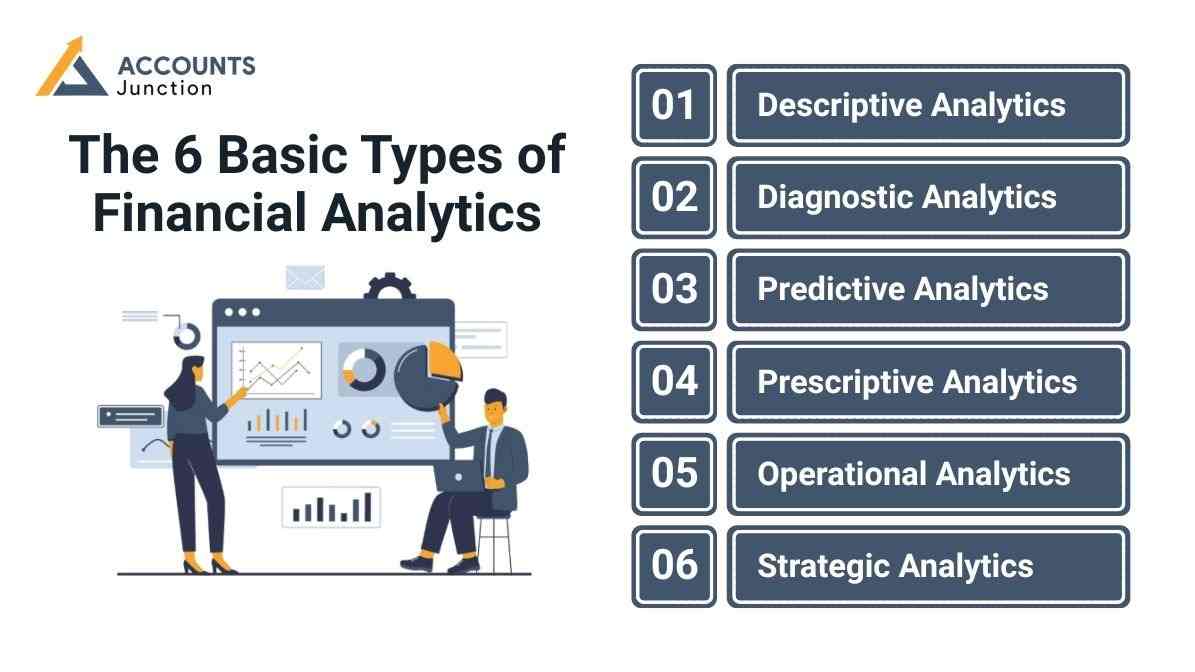
The 6 Basic Types of Financial Analytics
Breaking analytics into types may make it easier to understand. Each type serves a purpose, but together, they may give a full picture.
1. Descriptive Analytics
Descriptive analytics may answer the question: what happened? It summarizes past data. Monthly sales reports, yearly expense statements, or profit summaries are examples. It may not predict the future, but it can show what happened clearly. You may notice trends that were invisible before.
2. Diagnostic Analytics
Sometimes knowing what happened is not enough. Diagnostic analytics asks: why did it happen? If sales dipped last month, it may trace the cause. Was it seasonal changes? Did marketing underperform? Or did costs rise unnoticed? It’s detective work that may reveal hidden reasons.
3. Predictive Analytics
Using past data, it forecasts possible outcomes. You may see potential cash flow dips or predict which products may sell best. It is not the most accurate one, but it can reduce assumptions and help you prepare for it.
4. Prescriptive Analytics
If predictive analytics shows possibilities, prescriptive analytics may suggest action. It recommends focusing on a growing product, cutting costs in another area, or reallocating resources. You can consider it as advice from a friend who knows your business very well. You may still make decisions, but insights guide the way.
5. Operational Analytics
Operational analytics is completely for daily business activity. By monitoring transactions, expenses, and budgets, you can uncover issues at the earliest. You may see alerts if spending exceeds limits or targets are missed. It may act as a daily check-up, keeping small problems from becoming bigger.
6. Strategic Analytics
Strategic analytics is for long-term growth. With these, you can plan expansions, acquisitions, or large investments. With trend analysis and potential scenarios, it can help shape the future of your business. Like mapping a journey, you may not control every twist, but you see the route clearly.
Benefits You May Notice
Even basic analytics may make a difference. You may see:
- Planning becomes realistic with proper budgets.
- Decisions may rely on data, not guesswork.
- Risks may be detected early.
- Day-to-day operations run smoother.
- Opportunities may appear faster.
Sometimes a small insight may save money, prevent errors, or uncover new possibilities.
Tools That May Help
You don’t need complicated systems to start. Some tools may include:
- Spreadsheets – simple, flexible, widely available.
- Business Intelligence Platforms – visual dashboards show trends at a glance.
- ERP Systems – combine accounting, HR, and operations in one place.
- Analytics Software – handle large datasets and advanced forecasting.
The best tool matters less than accurate, clean data. Messy numbers may mislead even the smartest system.
Challenges You Might Face
Analytics is useful, but it does not come without challenges. Some issues include:
- Incomplete or messy data may give wrong insights.
- Advanced analysis may need trained staff.
- Some tools can be costly.
- Past trends may not always predict future changes.
The key is balancing cost, accuracy, and practicality. Even partial insights may guide better decisions.
A Simple Framework for Using Financial Analytics
Good analytics works like a daily habit. Clear steps, consistent review, and small adjustments can make a big difference.
Step 1: Collect Daily Data
Track daily sales, purchases, and expenses. Even simple logs may reveal patterns.
Step 2: Link Expenses with Results
Match spending with outcomes. If costs rise faster than revenue, it may need attention.
Step 3: Monitor Key Metrics
Regularly track cash flow, sales, and profitability ratios. Minor changes can give you early warnings.
Step 4: Review and Adjust Weekly
A weekly review may show trends and allow quick course corrections.
Step 5: Create Monthly Insights
Monthly reports may highlight areas for improvement, risk zones, or new opportunities.
Step 6: Act on Insights
Numbers found through insights are of no use if there is no action taken based on it. You can adjust budgets, marketing, or operations as per insights.
Turning Data into Daily Habits
Numbers alone don’t improve business. Habits built around them may.
- Planning Ahead: Forecasts may guide staffing or inventory choices.
- Smarter Spending: Clear tracking may prevent unnecessary costs.
- Performance Reviews: Metrics may show which products or teams excel.
- Strategic Adjustments: Trends may guide expansion or marketing priorities.
Small actions based on analytics may gradually improve profits and efficiency.
The Human Side of Financial Analytics
Analytics may seem cold, but it carries human impact.
- Teams may feel more confident knowing numbers reveal trends.
- Managers may act faster, avoiding surprises.
- Owners may see the effect of decisions clearly, reducing stress.
Numbers may not have emotions, but their insights may guide better choices for people.
Financial Analytics may feel complicated at first. But it’s really about noticing patterns that you usually don’t as you are busy doing the business. It can highlight risks, reveal opportunities, and suggest a better way to do things.
Even small insights may prevent mistakes, save money, or uncover new growth paths. With habits built around analytics, decisions may feel clearer, operations smoother, and your business may run with more confidence. Do you need financial analytics for your business? At Accounts Junction, we provide overall financial analytics services for all types of businesses. Contact us now and start making better financial decisions in your business.
FAQs
1. What does financial analytics really mean?
- It studies business data to find money patterns that may guide better financial choices.
2. How is financial analytics used in daily business?
- It can track income, costs, and margins to show where profits rise or slip.
3. Can financial analytics help with forecasting?
- Yes, it may turn past trends into insights that guide future planning.
4. Why is financial analytics important for managers?
- It helps them see how every small change in numbers may shape big results.
5. How does financial analytics differ from accounting?
- Accounting records what happened. Financial analytics explains what it means.
6. Can financial analytics improve cash flow control?
- It may show gaps between receivables and payments to keep cash steady.
7. What are the six main types of financial analytics?
- Descriptive, diagnostic, predictive, prescriptive, risk, and strategic analytics.
8. How can descriptive analytics help a company?
- It tells the story of past performance in simple, clear figures.
9. What does diagnostic analytics focus on?
- It studies why financial results shifted and what factors caused them.
10. How can predictive analytics guide decisions?
- It uses data models to guess what may happen next in sales or costs.
11. What is the role of prescriptive analytics in finance?
- It may suggest practical steps that can turn insights into actions.
12. How does risk analytics support businesses?
- It checks data for early risk signs, helping prevent unwanted shocks.
13. What does strategic analytics focus on?
- It helps plan long-term goals and align financial choices with growth.
14. Can financial analytics detect fraud or errors?
- Yes, it may catch odd patterns that reveal unusual or false entries.
15. How can financial analytics make reporting easier?
- It turns raw data into visual reports that explain numbers at a glance.
16. How does financial analytics support investment analysis?
- It may compare past returns, risk scores, and cash flow impacts before choosing where to invest.
17. Can financial analytics boost profitability?
- It can highlight high-margin areas and help cut costs where profits leak.
18. How do businesses start using financial analytics?
- They often begin with simple dashboards before expanding into full data systems.
19. What tools are best for financial analytics?
- BI platforms, ERP dashboards, and cloud accounting systems work best for data tracking.
20. How often should companies review analytics reports?
- Monthly reviews may reveal changes early and keep strategies on course.