

How to create a strategic business plan to ensure success?
Several businesses tend to avoid making a proper strategic business plan, focusing more on operations. A proper strategic plan is like a roadmap that defines the direction of the company to achieve its goals. The word ‘strategic’ is important in the plan, which helps to achieve the desired results and serve the purpose. Many businesses are not able to make a business plan, or they lack the ability to make a proper business plan. So, outsourcing a business plan to a suitable agency can help to serve the purpose. They will be experienced in making the proper plan.
The outsourced business plan writing done by these agencies can help businesses to go in the proper direction. A solid strategic business plan includes clear financial goals to manage cash and attract investors. Business plan writing should cover a simple marketing plan to draw in and keep customers. To know how to write a business plan, you must clearly state your mission and goals.
Why is it necessary to have a strategic business plan?
There are several reasons to have a proper business plan for running the organization successfully.
Here are some reasons to have a proper business plan:
- It will help to set the proper direction for achieving the desired results.
- There will be an increase in the pace of growth along with the proper direction.
- To manage the finances properly in the business.
- Achieving the short-term and long-term goals of the business.
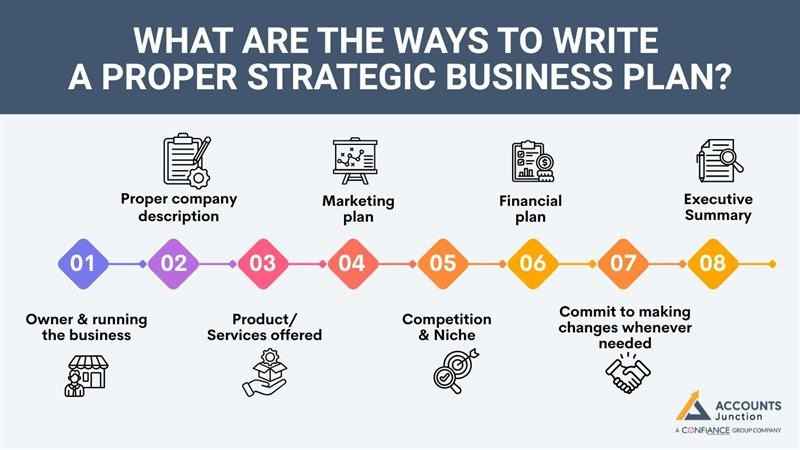
What are the ways to write a proper strategic business plan?
It is important to consider several factors while writing a proper strategic business plan.
Here are the guidelines to write a proper strategic business plan:
1. Owner & running the business
- Every business must first have detailed information about the owners and management of the business. It must be clearly specified about the direct partners and the silent partners.
2. Proper company description
- A detailed description of the company must be written down properly. It will include the purpose, type of business, ownership details, legality of the company, the target market of the company, industry of the company, the strength of the company, etc.
3. Product/Services offered
- Here, proper information about the products or services must be mentioned. This information will include aspects like price, features, availability, warranty, etc.
4. Marketing plan
- One of the most important departments for any business is the marketing plan they are opting for. A proper strategy for the marketing plan must be mentioned, which paves the path to do it effectively.
5. Competition & Niche
- After the marketing plan, it is vital to understand the competition in the industry. Understanding the competition in the specific niche makes it easier to carve out a way to get an advantage from this. It also helps to make a proper SWOT analysis for the company here.
6. Financial plan
- It is important to consider the way the funds will be raised for the company or specific projects. After this, proper financial planning is important to achieve the short-term and long-term goals of the business.
7. Commit to making changes whenever needed
- It is not always that all things remain constant for all businesses. After an interval of a certain period, there are always changes in the different factors affecting the business. The factors like market needs, market demand, attrition, laws & regulations, the pattern of working, etc. keep changing. So, businesses must keep changing their strategies and plans properly.
8. Executive Summary
- At the end of the strategic plan, it is important to write a proper executive summary. It provides the outline of the content plan to the reader properly.
A strategic business plan helps guide your business and keeps you focused on your goals. These are some outlines for writing the business plan for any organization. If you find it difficult or not possible for you to make a reputable plan, then you can look for an outsourcing business plan.
Tips for Writing a Business Plan
Good business plan writing means setting clear, realistic goals that fit your business and market. When learning how to write a business plan, research your market, know your customers, and check your competitors.
- Be Clear: Use simple words. Avoid complex terms that may confuse others.
- Use Proof: Back up your claims with facts and real data.
- Be Realistic: Set goals you can reach. Base them on what your business can do.
- Review Often: Update your plan as your business grows.
- Know Your Market: Study your audience and rivals. Understand current trends and identify what your customers are looking for.
- Stay Focused: Keep your plan simple and clear. Avoid extra details that don’t support your goals.
Simple Mistakes to Avoid When Making a Business Plan
When making your business plan, avoid these errors:
- Overestimating Revenue: Don’t overestimate income. Keep numbers realistic with market research.
- Neglecting Competitor Analysis: Failing to study competitors can hurt your chances and leave you unprepared.
- Lack of Clarity: Be clear and simple. Avoid confusion in goals and strategies.
- Forgetting to Update: A business plan must grow with your business. Review and update it often.
- Ignoring Cash Flow: Don’t ignore cash flow. Monitor your money closely to keep your business running.
- Underestimating Costs: Count all costs. Missing any can cause big issues.
- Lack of a Marketing Plan: Without a plan, reaching new customers will be hard.
A business plan helps you succeed. By following the steps and avoiding mistakes, you can make a plan that guides your business, gets investors, and helps you hit your goals.
Accounts Junction provides outsourced business plan writing for different businesses. They have expertise in writing a proper business plan as per the industry. Using all the knowledge and essential tools, they can make a better business plan. Accounts Junction is a popular accounting service providing company around the world.
FAQs
1. What is a strategic business plan and why is it needed?
- It is a document that outlines your company goals and the steps to achieve them.
- A strategic business plan may help guide decisions and focus your team.
2. How do I create a strategic business plan?
- Start by defining your mission, goals, and target market.
- Then add financial projections, marketing plans, and growth strategies.
3. What are the key components of a strategic business plan?
- It may include company description, product or service details, and financials.
- Marketing strategy, SWOT analysis, and executive summary are also vital.
4. How does a strategic business plan help small businesses?
- It may provide clarity on direction and long-term growth.
- A well-planned strategy can also attract investors and reduce risks.
5. Can I outsource the creation of a strategic business plan?
- Yes, agencies may help write plans that align with your goals.
- Outsourcing can save time and ensure professional-quality planning.
6. Why should financial planning be part of a strategic business plan?
- It may show projected revenue, expenses, and cash flow.
- Investors often look at financial planning before funding a business.
7. How do I analyze competition in a strategic business plan?
- Use a SWOT analysis to examine competitors’ strengths and weaknesses.
- It may help identify opportunities and areas where your business can excel.
8. What is an executive summary in a strategic business plan?
- It is a concise overview of the entire plan.
- It may help investors and stakeholders quickly understand your business.
9. How often should a strategic business plan be updated?
- Plans may need revision when market conditions or goals change.
- Reviewing yearly or quarterly can keep it accurate and effective.
10. What role does a marketing plan play in a strategic business plan?
- It may define how your products reach customers.
- Marketing strategies in the plan can drive growth and engagement.
11. Should risk management be included in a strategic business plan?
- Yes, contingency planning may prepare your business for unexpected challenges.
- It can reduce potential losses and improve investor confidence.
12. How detailed should goals be in a strategic business plan?
- Goals should be clear and measurable, showing progress over time.
- They may include both short-term targets and long-term objectives.
13. Can technology help create a strategic business plan?
- Yes, digital tools may organize data and track progress effectively.
- Automation can save time and reduce errors during planning.
14. Why is a company mission important in a strategic business plan?
- It may define your purpose and guide business decisions.
- A clear mission helps align your team and attract investors.
15. Can a strategic business plan help in getting investors?
- Yes, a solid plan may show growth potential and reduce perceived risks.
- Investors may trust a company with a clear strategy and financial plan.
16. What mistakes should be avoided in a strategic business plan?
- Overestimating revenue and ignoring competitor analysis may hurt results.
- Failing to update the plan regularly can make it ineffective.
17. How does a strategic business plan impact business growth?
- It may provide direction for decisions and resource allocation.
- Following a plan can increase efficiency and accelerate growth.
18. What is SWOT analysis in a strategic business plan?
- It may examine strengths, weaknesses, opportunities, and threats.
- SWOT analysis can guide better strategy and business planning.
19. How long should a strategic business plan be?
- It can vary depending on business size and goals.
- Focus on clarity and usefulness rather than unnecessary length.
20. Can a strategic business plan improve team alignment?
- Yes, clear plans may keep teams focused on shared goals.
- It can improve collaboration and reduce confusion in tasks.