How Accounting Software for Healthcare Organizations Supports Regulatory Compliance
Healthcare organizations handle many records, rules, and tasks every day. Doing accounting by hand can cause mistakes, delays, or fines. The right tools help staff track records, check rules, and keep reports correct. Accounting software for healthcare organizations makes this easier. It helps get ready for audits, store data safely, and create reports that follow all rules. The software also saves time, cuts errors, and lowers stress for staff. With this tool, healthcare organizations can focus more on patient care while staying organized and safe. It is simple, smart, and needed for smooth work.
Why Regulatory Compliance Matters for Healthcare Organizations
Healthcare organizations face strict rules. These rules protect patients, track accounting, and ensure fairness. Breaking them can cause fines, legal problems, and loss of trust.
Common Rules for Healthcare Organizations
Health groups must meet many rules to stay safe and fair. These rules guide how they keep data, pay bills, and make reports. They protect care data and make sure all work stays clear and true.
- HIPAA – This rule keeps care data private. It stops leaks and makes sure only the right staff can see it. Each health group must guard data to keep trust and avoid fines.
- Medicare and Medicaid Rules – These rules guide how claims and payments work. They stop false bills and help teams get the right pay on time. Staying true to these rules keeps the books clean.
- GAAP Rules – These rules make sure all reports are fair and clear. They help show what a health group earns and spends. When teams use GAAP, audits go fast and trust stays high.
Accounting software for healthcare organizations helps with all these rules. It checks data, fixes small errors, and makes reports easy to read. It also saves time and helps staff stay true to each rule.
Benefits of Accounting Software for Healthcare Organizations
Using accounting software for healthcare organizations brings many clear benefits. It helps staff work faster, avoid errors, and stay true to every rule. It also saves time and makes daily accounting easy to handle.
1. Clear Accounting Reports
- The software makes clear reports in less time. It tracks pay, costs, and taxes without errors. Health teams get reports that meet all set rules and show each record in a clean way.
2. Fast Audit Checks
- Audits do not need to be hard. The software keeps all data in one safe place. Each record is easy to find, so audit checks go fast and smoothly.
3. Better Cost Control
- The software helps track where money goes. It shows waste and helps staff cut extra costs. Health teams can plan better and keep funds safe for key needs.
4. Time Saving
- With the right tools, staff spend less time on manual work. The system does tasks like data entry and report making. This helps teams focus on care, not long paperwork.
5. Easy Team Access
- The software lets all users see the same data in real time. This helps teams work together and keeps every report up to date.
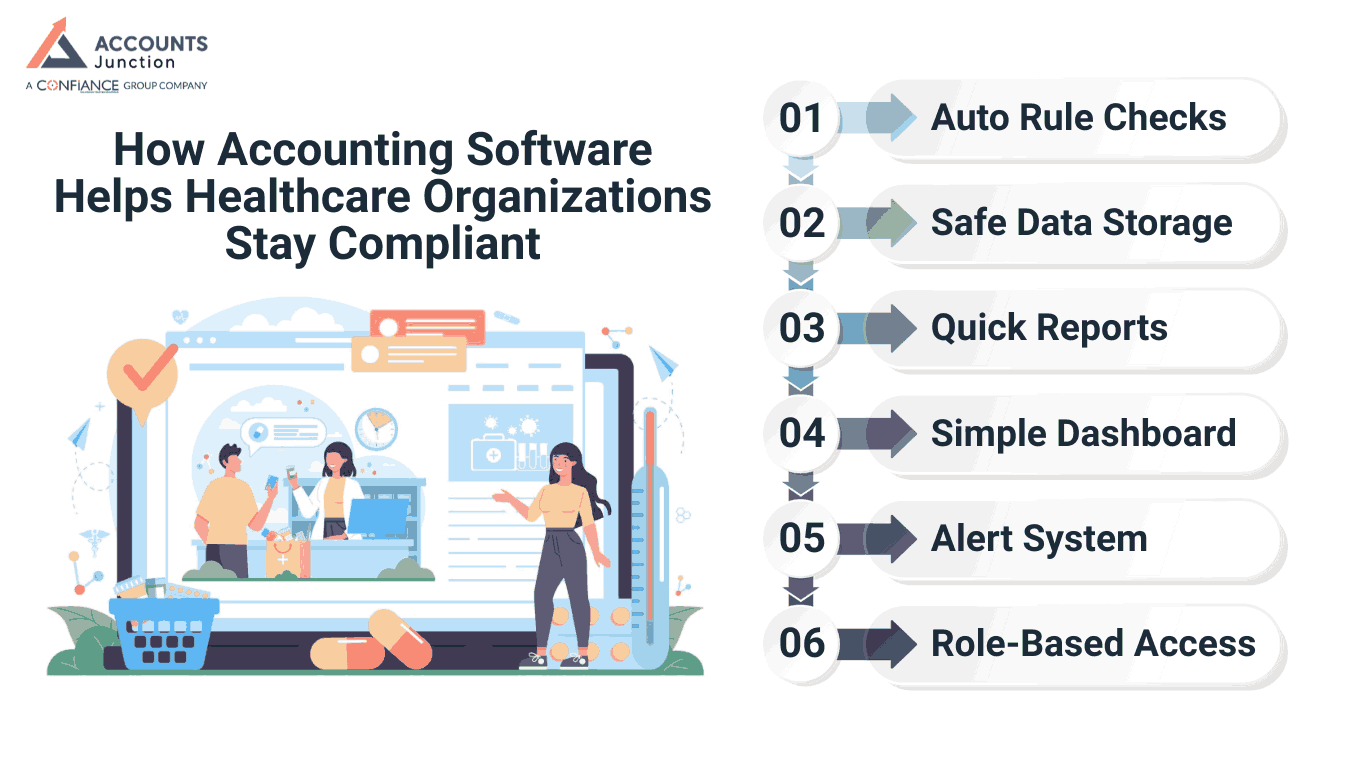
How Accounting Software Helps Healthcare Organizations Stay Compliant
Not all tools fit health care needs. The right software helps staff follow rules and avoid mistakes. Accounting software for healthcare organizations gives built-in tools that keep work safe, clear, and up to date.
1. Auto Rule Checks
- Good accounting software checks each rule on its own. It flags any wrong entry or missed step. This keeps all records clear and right while saving staff time.
2. Safe Data Storage
- Health care data must stay safe. The software locks each record with codes, passwords, and backups. This guards patient data and meets HIPAA rules with ease.
3. Quick Reports
- Real-time reports give a live view of all accounts. Staff, heads, and audit teams can see full data at once and make smart choices fast.
4. Simple Dashboard
- The software has a clean dashboard that shows key data in one view. Users can see income, spending, and tasks in a clear way. This helps plan and check work with ease.
5. Alert System
- The tool sends alerts for due dates, audit checks, or rule changes. This helps teams act fast and stay within all laws.
6. Role-Based Access
- Each user gets only the access they need. This stops leaks and keeps all data safe. It also makes tracking easy when many staff use the same system.
How Accounting Software Reduces Compliance Risks
Healthcare organizations face risks like errors or rule breaks. Accounting software lowers these risks.
Fewer Errors
- Manual accounting can cause mistakes. Accounting software calculates totals, checks records, and produces reports automatically. This keeps data accurate.
Track All Accounting Records
- Software tracks every accounting record. Staff can find errors or unusual transactions fast, helping stay compliant.
How to Pick the Right Accounting Software for Healthcare Organizations
Choosing the right software matters. It must fit the organization’s size, needs, and rules.
Can Grow With Your Organization
As healthcare organizations grow, their accounting needs grow too. Pick software that handles more records and reports easily.
Works With Other Systems
The best accounting software for healthcare organizations connects well with billing, payroll, and patient record systems. This keeps accounting data correct and consistent.
Easy to Use
Simple software saves training time and reduces mistakes. Staff can learn quickly and follow rules without stress.
Training and Support to Keep Healthcare Accounting Compliant
Even the best accounting software for healthcare organizations works only if staff know how to use it. Proper training and support help healthcare organizations stay accurate and follow all rules.
1. Regular Staff Training
- Healthcare organizations should train staff often. Software usually comes with guides, tutorials, and short videos. This helps staff learn quickly and use the software correctly.
2. Help From Support Teams
- Software companies give help for questions, updates, or problems. Healthcare organizations can get answers fast to stay on track with rules.
3. Ongoing Updates
- Good software updates often to match new rules. Staff get the latest tools automatically, which helps keep accounting correct and compliant.
4. User Tips and Best Practices
- Many software tools provide tips and best practice guides. Staff can follow these steps to reduce errors and make daily accounting easier.
Future Trends in Accounting Software for Healthcare Organizations
Accounting software keeps improving. Healthcare organizations that use modern tools stay ahead in compliance.
-
AI and Automation
AI can spot errors, suggest fixes, and predict risks. This helps staff prevent problems before they happen.
-
Cloud Software
Cloud software stores data online. Staff can access it anytime. It also updates automatically, keeps records safe, and helps with compliance.
-
Direct Rule Updates
Future software may update rules automatically from regulators. Healthcare organizations can follow rules without checking manually.
Choosing the right accounting software is vital for healthcare teams. It speeds up daily tasks, reduces errors, keeps data secure, and meets all compliance needs. With the right tool, staff can focus on patient care while audits, reports, and taxes run smoothly.
At Accounts Junction, we use top healthcare accounting software to track costs, monitor spending, and manage taxes. Our team ensures accurate tax reporting, stays compliant with regulations, and gives hospitals clear insights into budgets and financial records. Let Accounts Junction help your organization reduce errors, stay tax-compliant, and make fast, smart financial decisions.
FAQs
1. What is accounting software for healthcare organizations?
- It is a tool to track pay, costs, and reports while keeping data safe and rules in check.
2. Why do healthcare organizations need accounting software?
- Manual work can lead to mistakes, delays, or fines. Accounting software for healthcare organizations makes tasks fast, clear, and correct.
3. How does it help with regulatory compliance?
- The software checks rules, makes reports, keeps data safe, and warns staff of errors.
4. Which rules does healthcare accounting software support?
- It follows HIPAA, Medicare, Medicaid, and GAAP rules.
5. Can it help prepare for audits?
- Yes, it keeps all data in one place, making audits fast and easy.
6. How does the software keep data safe?
- It uses codes, backups, and locks to protect patient and accounting data.
7. Can multiple staff members use it at the same time?
- Yes, most software lets all users work together with role-based access.
8. Does it save time for staff?
- Yes, tasks like reports, sums, and data entry run automatically.
9. Does it reduce errors?
- Yes, it tracks all entries and calculations automatically to reduce mistakes.
10. How does it help track costs?
- It shows where money goes, highlights waste, and helps plan budgets.
11. Are updates automatic?
- Many tools update automatically to match new rules and accounting standards.
12. Can it work with billing or patient record systems?
- Yes, integration keeps accounting data correct and consistent across systems.
13. What support is available for staff?
- Software comes with guides, tutorials, videos, and help from support teams.
14. Does it provide alerts for deadlines?
- Yes, it sends reminders for audits, rule changes, or due tasks.
15. How does it handle role-based access?
- Users see only the data they need. This protects sensitive data and limits errors.
16. Can small healthcare organizations use it?
- Yes, many tools are scalable to fit small or large healthcare teams.
17. How does it improve report clarity?
- It generates clean, easy-to-read reports that show income, expenses, and compliance clearly.
18. Does it help with long-term planning?
- Yes, tracking spend and income trends helps staff make better budget choices.
19. Can AI or automation be used?
- Some software uses AI to spot errors, suggest fixes, and predict risk.
20. Will cloud software help compliance?
- Yes, cloud tools keep data safe, up-to-date, and accessible for audits and reporting.