
Top Accounting Software for Construction Contractors Compared
Accounting software for construction contractors is seen in many work sites today. Some teams use it to sort bills and cost notes with more ease. Some teams use it to track time, plan crew tasks, or read cash flow trends. In each case, work leads people to look for tools that fit their needs. As tools change with time, new users want clear and simple views of what each tool can give.
In the broad field of accounting for construction contractors, each choice sits on real-world use. There are large firms with large crew lists and strict cost needs. There are small teams with one site in one zone. There are solo trades who work in more than one area. With all these needs in mind, people often review tool lists to find software that feels right for their daily tasks.
This blog looks at the top tools used in the field. It does not say one tool is best for all teams. It does not claim one tool fits all jobs. It only shares broad views, user trends, and clear notes from real use cases. This form helps readers who want a calm and simple sense of the space.
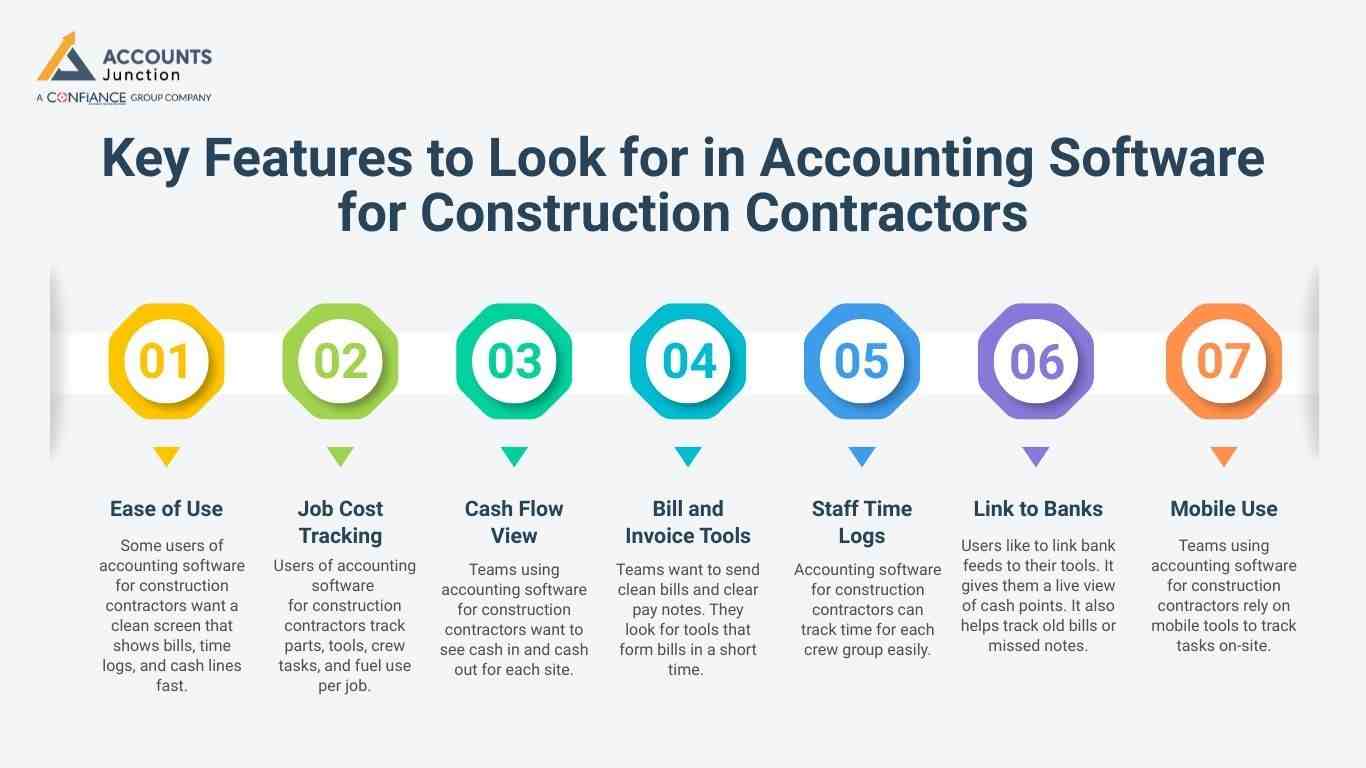
Key Features to Look for in Accounting Software for Construction Contractors
Before we compare tools, it helps to see the wide set of needs that come up in jobs that shift from site to site. The world of accounting for construction contractors sits on live tasks, new plans, and change on short notice. Here are the points users often check.
-
Ease of Use
Some users of accounting software for construction contractors want a clean screen that shows bills, time logs, and cash lines fast. They look for menus that guide them without long steps. A clear screen helps users who work long hours on-site and need quick notes.
-
Job Cost Tracking
Users of accounting software for construction contractors track parts, tools, crew tasks, and fuel use per job. Good tools let them pick one job card and see all linked costs in one place.
-
Cash Flow View
Teams using accounting software for construction contractors want to see cash in and cash out for each site. A strong cash view helps users form a sense of profit on slow days. The goal is a clean look at work and money lines.
-
Bill and Invoice Tools
Teams want to send clean bills and clear pay notes. They look for tools that form bills in a short time. Many want bills linked to job cards so all data stays in one frame.
-
Staff Time Logs
Accounting software for construction contractors can track time for each crew group easily. It gives teams a clear sense of job hours. It helps when jobs run long or when sites change.
-
Link to Banks
Users like to link bank feeds to their tools. It gives them a live view of cash points. It also helps track old bills or missed notes.
-
Mobile Use
Teams using accounting software for construction contractors rely on mobile tools to track tasks on-site. Users want phones or tablets to send notes and track cost lines.
Top Tools Compared
The list below looks at common tools used in the space of accounting software for construction contractors. This review is not placed on fixed ranks. Each tool sits in its own space. Each tool is seen in many work sites.
QuickBooks
-
Overview
QuickBooks is well-known in the field of small business work. Users in accounting for construction contractors see it as a tool with simple screens and easy paths. It holds job cost lines, time logs, and crew tasks in one space. It fits small and mid-sized teams with ease.
-
Job Cost Tools
People use job cost cards to see cost lines split by tools, parts, and time logs. The tool shows cost trends when users link time cards or bills.
-
Cash Flow View
Users can track cash lines with clear graphs. It gives teams a broad sense of how cash shifts in the week.
-
Bill and Pay Tools
QuickBills lets users form bills and send them fast. The tool keeps past bills in clean lists. It helps when teams want to check old jobs.
-
Why Users Select It
It holds simple menus, fast bills, clean job cards, and bank links. It fits teams with one site or with more sites each week. It is also seen as a low-stress tool for new users.
FreshBooks
-
Overview
FreshBooks is used in small teams and by trades who use accounting software for construction contractors. Many who use accounting for construction contractors look at its clean design and soft color screens. It helps users send bills in a short time and track job costs with a few steps.
-
Job Cost View
Users link job cards with parts, tools, and notes. They read cost lines in a clear list. It helps when they want a calm view of job costs.
-
Time Log Tools
FreshBooks holds a clean time log tool. Users click a card and tap time logs fast. It helps solo traders who want to track all hours with ease.
-
Bill Screen
Bills appear clearly on a single, easy-to-use screen. Users select names, costs, and send bills quickly.
-
Why Users Select It
They like its soft look, quick steps, short bills, and simple time logs. It suits small teams and solo traders.
Xero
-
Overview
Xero is used in teams for accounting for construction contractors, offering a wide view of their full work sets. It is known in the world of accounting software for construction contractors due to its clean screens, tax tools, and job cost cards. Users form a calm sense of their cash state and cost lines.
-
Cost Lines
Xero holds job cost sets split by parts, tasks, and time. It shows them in clear lists. The view helps teams that track each site in detail.
-
Cash Flow View
The tool gives banks links and cash lines that shift by day. It gives users a broad sense of their long week.
-
Bills and Pay Notes
Users send bills in a short time. They can read old bills on one list. They can also mark notes when they get pay alerts.
-
Why Users Select It
They like its calm screen, strong bank links, and job cost lists. It fits teams with more than one site.
Sage Intacct
-
Overview
Sage tools sit in the mid and large team groups. In the world of accounting for construction contractors, it is used by teams who want deep data sets. Sage holds more cost lines and more job tasks than small tools.
-
Job Cost and Crew Tools
Teams with large crew groups use Sage job cost cards. They can track tasks, shifts, parts, and job notes with more detail.
-
Cash Flow and Bank View
Sage shows bank feeds and long cash lines. It helps when teams want long trend views. They check old lines and pick new plans.
-
Bills and Stock View
Sage holds a stock list tool for parts. Users track parts used in each site. It helps teams that run large stores.
-
Why Users Select It
Large teams need detailed data and stronger task management. Sage software works well for this type of group.
Buildertrend
-
Overview
Buildertrend is a key tool in accounting software for construction contractors, helping track jobs, crew logs, and bills on-site. It gives users a broad tool set for site tasks.
Many in accounting for construction contractors use it for job logs, crew logs, and build tasks. It is also used for parts lists, bills, and build plans.
-
Job Logs and Site Tasks
Users track tasks, hours, and site shifts. They add notes when tasks change. It helps when teams want a live view.
-
Bill Tools
Bills sit next to job logs. Users link cost lines to tasks. It keeps all data clean and sorted.
-
Crew and Site Chat
Teams talk in the tool. It helps them share site news fast.
-
Why Users Select It
They like that it ties site tasks with cost lines. It sits well in big job zones.
Procore
-
Overview
Procore sits in the high-end group. It is seen in large building jobs. People use it in the broad field of accounting software for construction contractors. It holds site logs, tasks, cost lines, and crew notes. It links tasks with bills.
-
Job Cost and Work Sets
Procore holds job cost cards in large sets. Teams track long tasks, long shifts, and deep part lists.
-
Cash View
It offers a broad cash look. Users track lines linked to job sets.
-
Bill Screen
Users form bills from job cards. They add cost lines with ease. It keeps jobs and money in one frame.
-
Why Users Select It
It is used by teams that run large jobs with more site tasks. They want a strong tool set for all job points.
How to Pick the Right Tool
Users in accounting for construction contractors need tools that fit their pace and site needs. Here are simple points that help readers form their view.
-
Know Your Team Size
Teams using accounting software for construction contractors must match tool features to team size. Large teams look for deeper data tools. Small teams want simple screens.
-
Know Your Job Type
For heavy tasks, choose strong accounting software for construction contractors. For small jobs, simple tools work best. Pick tools that give what your job style needs.
-
Check Your Cash Needs
When you manage many sites or pay many bills, good accounting software for construction contractors must show clear cash flows.
-
See How You Bill
For accounting software for construction contractors, a fast bill screen improves efficiency for frequent invoicing. If you send a few bills, a simple tool works.
The world of accounting software for construction contractors holds a wide range of tools. Each tool sits in its own place. Each tool holds its own tone and style. No tool fits each team in all ways. Each reader forms their view based on their real field tasks. It rests on how they plan, how they track costs, and how they run their day.
In the broad field of accounting for construction contractors, tools shift each year. Users look at new screens, new job cost lists, and new cash views. This blog holds the goal to give readers a calm and clear sense of each tool set. These views help teams using accounting software for construction contractors pick a tool that fits their pace and job needs.
Accounts Junction provides accounting and bookkeeping services for construction contractors. We offer job cost tracking, cash flow views, and billing in one platform. Teams can manage multiple sites and track crew hours without using many tools. Our certified experts handle accounts with accuracy and real-time updates. Partner with us today for reliable support and smooth accounting.
FAQs
1. What is the best accounting software for small construction contractors?
- QuickBooks and FreshBooks are top tools for small contractors. They help track job costs, time, and invoices easily.
2. How can construction contractors track job costs by project?
- Most software lets users track costs for each project. It includes labor, materials, and equipment in one view.
3. Which accounting software helps manage payroll for construction contractors?
- Some tools include payroll features for construction teams. They simplify wage tracking and link payments to job costs.
4. Is mobile accounting software useful for construction contractors?
- Yes, mobile access lets teams manage jobs from any site. They can check bills, payments, and labor hours on the phone.
5. Can construction accounting software integrate with banks and payments?
- Many tools connect directly with bank accounts for live updates. This makes payment tracking and invoice management fast and simple.
6. How does accounting software for construction contractors handle multiple sites at once?
- Procore and Buildertrend track costs, tasks, and labor across sites. They give teams a clear view of each project in real time.