

Accounting for Startups: The Ultimate Guide to Scaling Your Financials
Accounting for startups is key to running a smooth business. Many new owners focus on product growth or marketing campaigns first. Yet, tracking money is often missed or done late. Without proper tracking, cash can run low or debts grow fast. Accounting helps owners see income, costs, and overall money clearly.
Proper accounting saves time, stress, and potential future losses. Early record keeping helps plan smart money moves for growth. Financial management for startups ensures funds are used safely. This guide shares clear, simple tips to scale money.
Importance of Accounting for Startups
-
Clear Money View
Accounting for startups shows all money coming in and out. This helps owners make smart choices each month.
-
Prevent Money Problems
Tracking money prevents gaps, late bills, or overspending issues. It keeps cash flow steady and predictable for growth.
-
Build Funder Trust
Clear records help attract funders or loans quickly. Funders trust startups that show clear money moves.
Essential Accounting Practices Every Startup Should Follow
-
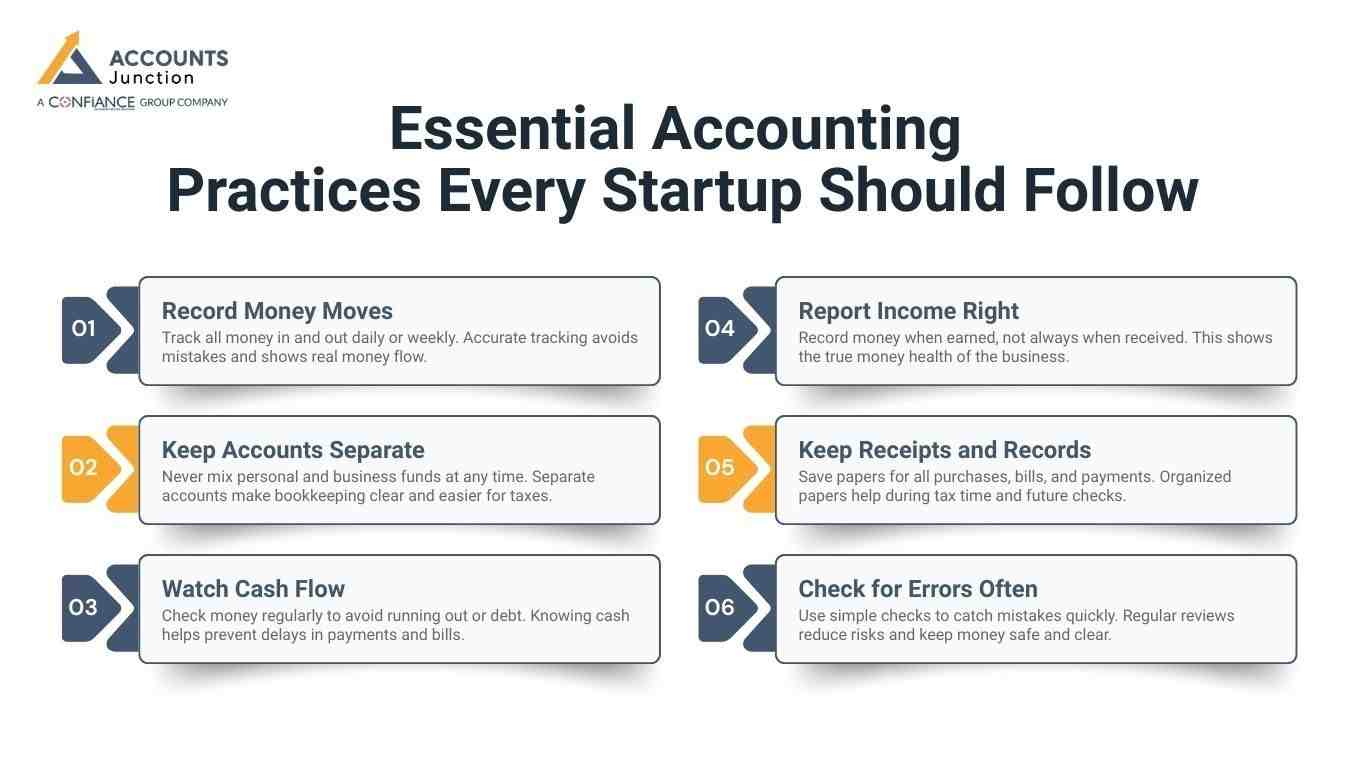
Record Money Moves
Track all money in and out daily or weekly. Accurate tracking avoids mistakes and shows real money flow.
-
Keep Accounts Separate
Never mix personal and business funds at any time. Separate accounts make bookkeeping clear and easier for taxes.
-
Watch Cash Flow
Check money regularly to avoid running out or debt. Knowing cash helps prevent delays in payments and bills.
-
Report Income Right
Record money when earned, not always when received. This shows the true money health of the business.
-
Keep Receipts and Records
Save papers for all purchases, bills, and payments. Organized papers help during tax time and future checks.
-
Check for Errors Often
Use simple checks to catch mistakes quickly. Regular reviews reduce risks and keep money safe and clear.
Choosing the Right Accounting System
-
Cloud Software
QuickBooks or Xero lets owners track funds, an essential part of accounting for startups. Cloud systems allow team work and faster updates daily.
-
Manual Spreadsheets
Spreadsheets can work if transactions are low. They need careful updates and good organization to stay useful.
-
Integrated Tools
Link billing, payroll, and sales tracking in one. Integration saves time and reduces errors in records.
-
Flexible Choice
Pick tools that fit current needs and growth plans to support accounting for startups efficiently. Changing tools later is harder and may waste time.
Key Accounting Tips for Startups
-
Open Business Account
Use a bank account for only business money. This keeps records simple and spending clear for taxes.
-
Chart of Accounts
Make categories for income, bills, and money owned. Clear categories make reports simple and easy to read.
-
Invoicing System
Send invoices on time to get money faster. Organized billing helps cash flow and keeps clients happy.
-
Track All Expenses
Write down every cost or payment promptly to maintain proper accounting for startups records. Proper tracking helps tax deductions and future money planning.
-
Choose Accounting Method
Cash method is simple for very small startups. Accrual method gives a clearer money picture over time.
-
Monthly Reviews
Check all money records once every month. Regular reviews find errors and improve planning for growth.
Financial Management for Startups: Best Practices
-
Plan Budget and Spending
Set clear limits on costs and predict income as part of strong financial management for startups. Budgeting avoids overspending and helps money last longer.
-
Track Key Numbers
Follow profit, loss, and cash run each month. Numbers show areas needing improvement or attention soon.
-
Manage Working Capital
Keep enough money for daily needs and bills. Proper funds prevent delays and keep business running smoothly.
-
Save for Taxes
Put money aside for taxes every month. Planning prevents late fees and legal problems with authorities.
-
Control Costs
Check repeat payments, subscriptions, and bills often. Reducing waste frees money for growth or new projects.
-
Raise Funds Smartly
Use clear money reports to get funders or loans. Accurate records make raising money safer and easier.
Common Accounting Challenges Startups Face
-
Cash Flow Gaps
Unexpected bills or low money can stop work, making proper accounting for startups vital. Tracking money carefully avoids gaps or delays in payments.
-
Messy Records
Poor organization can hurt accounting for startups efficiency. Organized records help with planning and future checks quickly.
-
Growth Complexity
More sales create more money moves to track. Systems must adjust to handle bigger and faster growth.
-
Following Rules
Ignoring rules can cause fines or extra bills. Following rules keeps money safe and avoids trouble.
-
Wrong Forecasts
Poor money predictions cause wrong decisions often. Clear plans guide spending, hiring, and growth choices safely.
Benefits of Outsourced Accounting for Startups
-
Expert Help
Outsourced accountants improve accounting for startups and prevent errors. They manage money, taxes, and reporting efficiently every month.
-
Save Time
Founders can focus on products or marketing work. Accounting is done by skilled experts without worry or delay.
-
Use Better Tools
External accountants have advanced software for tracking money. Startups get benefits without hiring full-time staff.
-
Grow Easily
Services can scale as startup transactions increase. Providers handle bigger workloads without affecting record accuracy or speed.
Financial Reporting for Startups
-
Profit and Loss
Shows money earned, costs, and net profit monthly. Review reports to spot weak or strong areas quickly.
-
Balance Sheet
Shows money owned, debts, and equity clearly. It helps understand overall money health and business safety.
-
Cash Flow Statement
Tracks money coming in and out daily or monthly. Helps plan spending and prevents running out of cash.
-
Key Numbers
Follow margins, costs, and run rate each month. Numbers guide spending and future business choices carefully.
-
Investor Reports
Clear reports help get funders or loans easily. Showing money clearly builds trust and confidence quickly.
Scaling Accounting as Your Startup Grows
-
Upgrade Software
Use better tools to improve accounting for startups as the business grows. Automation reduces mistakes and saves time for important tasks.
-
Hire Staff
Add accountants when money tracking becomes complex. Skilled staff ensures accurate records and safe reporting each month.
-
Internal Checks
Check money moves often to prevent mistakes. Audits keep records safe and build funder trust.
-
Automate Tasks
Use software for invoices, bills, and payroll. Automation saves time for growth and daily work.
-
Link Systems
Connect accounting with sales, CRM, and HR. Integration avoids double work and keeps money info accurate.
Using Key Metrics for Startup Growth
-
Burn Rate Analysis
Monitor how fast cash is used each month. Understanding burn rate helps plan for funding needs.
-
Cash Runway Planning
Calculate how many months cash will last. Runway helps decide when to cut costs or raise funds.
-
Profit Margin Insights
Compare costs with income for each product or service. Healthy margins show financial strength and efficiency.
-
Customer Acquisition Costs
Track money spent to get each customer. Helps optimize marketing and reduce unnecessary spending.
Understanding Startup Taxes
-
Know Your Tax Rules
Following rules is crucial for accounting for startups and tax compliance. Missing payments can lead to fines or extra fees.
-
Plan for Tax Money
Set aside part of income each month for taxes. This keeps cash ready and avoids borrowing or stress.
-
Use Tax Tools
Software can calculate taxes and track costs quickly. It reduces mistakes and saves time for owners.
-
Hire a Tax Expert
Accountants ensure all rules are followed correctly. They help find savings and prevent audit problems.
-
Track Tax Dates
Staying on schedule is important in accounting for startups. This prevents late fees and ensures smooth yearly filings.
-
Keep Money Records
Save receipts, bills, and payment notes safely. Clear records make tax filing easier and avoid errors.
Tips for Effective Financial Management for Startups
-
Organize Records
Keep papers and records neat and updated daily. Organization prevents mistakes and eases tax time reporting.
-
Review Statements Monthly
Check money records each month to find issues. Early reviews help fix problems before they grow large.
-
Keep Reserve Funds
Hold extra money for emergencies or sudden bills. Reserve funds protect operations during hard or slow periods.
-
Separate Accounts
Do not mix personal and business accounts ever. Clear separation helps tracking and avoids tax problems later.
-
Use Right Tools
Pick software that fits startup needs now. Good tools improve tracking, reporting, and planning for growth.
Accounting for startups helps business owners stay in control. Smart money handling avoids mistakes and improves cash flow. Early setup of systems makes scaling much easier later.
Accounts Junction helps startups manage their finances effectively from day one. Our reliable bookkeeping, reporting, and tax support keep your finances clear, accurate, and under control. We work closely with founders to maintain clean records and reduce financial stress, so you can focus on growing your business with confidence. Ready for simple, worry-free financial management? Partner with Accounts Junction today and take the next step toward secure, sustainable growth.
FAQs
1. What is accounting for startups?
- It tracks money in and out clearly each month. It helps owners make smart decisions for future growth.
2. Why is financial management for startups important?
- It avoids mistakes and keeps cash flow steady monthly. Good money handling helps startups survive slow or busy times.
3. Can startups manage accounting manually?
- Yes, if papers and spreadsheets are kept updated. Manual tracking works only if transactions stay very low.
4. When should a startup hire an accountant?
- Hire when money moves grow too large or complex. An accountant saves time and prevents costly mistakes quickly.
5. What software helps with accounting for startups?
- QuickBooks, Xero, and FreshBooks track money clearly. They make reporting simple and reduce manual calculation errors.
6. How often should startups review financial statements?
- Check records monthly to spot mistakes and plan ahead. Monthly reviews help make better spending and hiring decisions.