Best Practices Recommended by an Accountant for Medical Professionals
Running a clinic can be hard when managing money, taxes, and payroll. A skilled accountant for medical professionals may guide staff to track income, pay bills, and keep clear records. Many clinic leaders find that accounting for medical professionals reduces mistakes, builds trust, and helps the clinic grow steadily.
An accountant for medical professionals may create simple systems for staff to complete daily tasks accurately. Financial management for clinics may include tracking cash, checking claims, and making reports to support good choices. Small, regular steps guided by an accountant may help the clinic stay organized and avoid financial problems.
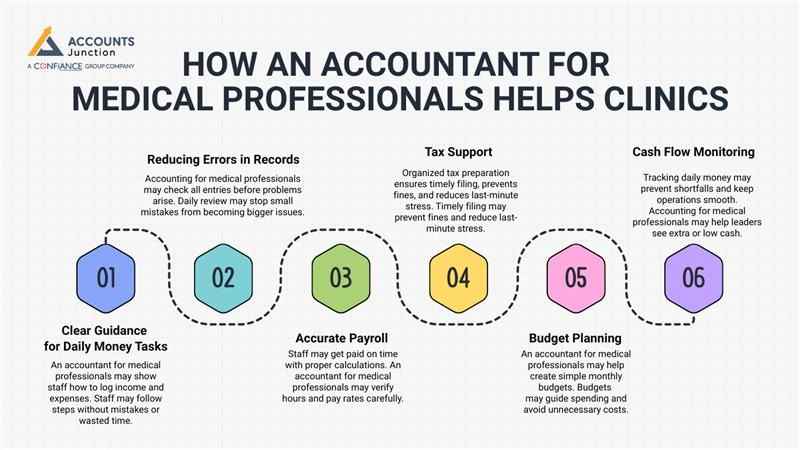
How an Accountant for Medical Professionals Helps Clinics
Daily clinic tasks may leave little time for money management. An accountant for medical professionals may bring order, letting leaders focus on patients. Accounting for medical professionals may lower stress by giving clear steps and organized records.
-
Clear Guidance for Daily Money Tasks
An accountant for medical professionals may show staff how to log income and expenses. Staff may follow steps without mistakes or wasted time.
-
Reducing Errors in Records
Accounting for medical professionals may check all entries before problems arise. Daily review may stop small mistakes from becoming bigger issues.
-
Accurate Payroll
Staff may get paid on time with proper calculations. An accountant for medical professionals may verify hours and pay rates carefully.
-
Tax Support
Organized tax preparation ensures timely filing, prevents fines, and reduces last-minute stress. Timely filing may prevent fines and reduce last-minute stress.
-
Budget Planning
An accountant for medical professionals may help create simple monthly budgets. Budgets may guide spending and avoid unnecessary costs.
-
Cash Flow Monitoring
Tracking daily money may prevent shortfalls and keep operations smooth. Accounting for medical professionals may help leaders see extra or low cash.
Core Practices in Accounting for Medical Professionals
Good financial practices may keep the clinic stable and organized. Accounting for medical professionals often includes logging money, tracking costs, and reviewing reports.
-
Accurate Income Records
Income logs may show all payments from patients and insurance claims. Daily checks may prevent missing or late payments from affecting work.
-
Expense Records
All costs, like supplies, bills, and salaries, should be recorded. Financial management for clinics may spot areas to save money easily.
-
Payroll Management
Staff hours and pay rates may be reviewed each cycle. An accountant for medical professionals may ensure timely and correct payments.
-
Tax Compliance
All income and costs should be organized throughout the year. Accounting for medical professionals may make tax filing easier and faster.
-
Cash Flow Checks
Compare daily income and spending to planned budgets carefully. This may help leaders avoid shortages or unnecessary spending.
-
Audit Preparation
Well-kept records may support audits and show compliance. An accountant for medical professionals may keep files ready for review.
Daily and Weekly Routines
Routine checks may reduce mistakes and support transparency. Accounting for medical professionals may guide daily, weekly, and monthly tasks.
-
Daily Record Checks
Compare receipts and entries each day to keep records correct. Errors may be fixed immediately before they grow into bigger issues.
-
Weekly Claim Reviews
Check pending insurance claims weekly to avoid delays in payments. Regular checks may flag issues early, allowing timely correction.
-
Monthly Reports
Reports may summarize money in, money out, and clinic trends. These reports may help leaders make wise decisions for the clinic.
-
Inventory Checks
Track supplies and medications daily to prevent shortages or excess. Financial management for clinics may reveal cost savings opportunities.
-
Staff Payment Verification
Check staff hours and payments before finalizing payroll each week. Accurate payments may maintain trust and reduce complaints.
-
Outstanding Payments Follow-Up
Monitor unpaid patient bills or insurance claims carefully. Accounting for medical professionals may guide polite and effective collection.
Tools That Simplify Accounting for Medical Professionals
New tools save time and cut many errors. Accounting for medical pros may use apps for cash tracking.
-
Cloud Accounting Systems
Cloud apps let staff check records from any place. Updates come fast, which cuts errors in cash logs.
-
Billing Software
Billing apps may send claims fast and cut mistakes. Accounting for medical pros may track claims to stop delays.
-
Payroll Software
Payroll apps may count pay and tax cuts fast. This cuts errors and saves staff a lot of time.
-
Dashboards
Dashboards show cash in, cash out, and trends. Leaders use dashboards to make quick, smart choices.
-
Linking With Clinic Systems
Apps may link with EMR or clinic tools. This stops double entries and makes the work smooth.
Long-Term Financial Strategies
Planning ahead with an accountant for medical professionals may protect clinics and help with growth.
-
Budget Creation
Monthly budgets may guide spending and resource use efficiently. Regular review may allow timely changes for new expenses.
-
Reserve Funds
Reserve funds may cover slow months or sudden costs. Accounting for medical professionals may involve managing these funds carefully.
-
Predicting Income and Costs
Use past data to predict future earnings and spending. Forecasts may help leaders plan long-term strategies for the clinic.
-
Risk Assessment
Identify risks like unpaid claims or unexpected bills. Financial management for clinics may suggest ways to reduce risks.
-
Cost Control
Review expenses regularly to find ways to save money. Small savings may improve financial health over time.
-
Investment Planning
Plan small investments in tools or clinic expansion wisely. Accounting for medical professionals may guide safe financial decisions.
Staff Training and Engagement
Staff keep records correct with guidance from an accountant for medical professionals. Accounting for clinics needs rules, training, and clear roles.
- Software Training
Staff learn software to track cash and bills. Training helps cut errors and saves time each day.
- Standard Procedures
Clear rules guide staff in daily record work. Following steps stop mistakes and keep files correct.
- Regular Meetings
Meet weekly to check income, cost, and payroll. Early checks help find errors before they grow.
- Accountability
Give each staff member a clear task to do. Clear roles stop work from being missed or repeated.
- Feedback and Improvement
Ask staff for tips to improve accounting work. Good ideas may save time and cut mistakes.
Compliance and Legal Considerations
Clinics must follow all local and state rules each day. An accountant helps clinics stay within the law at all times. Good records make audits and checks simple and stress-free.
-
Health Rules
Track all money and costs as health rules require. An accountant makes sure staff follow the rules for records.
-
Taxes
File taxes on time with help from an accountant for medical professionals. Accounting helps clinics follow law and keep money safe.
-
Insurance
Keep records clear to pass insurance checks on time. An accountant makes sure claims meet the needed rules.
-
Privacy
Keep patient bills and money data safe and secure. Accounting shows how to store and share data safely.
-
Audit Prep
Get ready for audits to avoid stress and mistakes. An accountant sets up records for easy audit checks.
Financial Performance Metrics
An accountant for medical professionals may track key numbers to show growth. Accounting gives simple data to show income and costs.
-
Money per Patient
See how much money comes from each patient. An accountant may show ways to earn more income.
-
Cost Ratios
Compare costs to income to spot areas of waste. Accounting highlights costs that can be cut each month.
-
Profit
Track profit to see if the clinic earns enough. An accountant may suggest changes to prices or costs.
-
Bills Collected
Check how fast patients or insurers pay owed bills. Accounting helps collect unpaid bills faster and on time.
-
Work Flow
Daily money flow tracked by an accountant for medical professionals helps spot errors. An accountant may suggest ways to save time and money.
Financial Planning for Expansion
Clinics can plan growth with new rooms or services. An accountant helps clinics make smart growth decisions safely.
-
Cost Check
Estimate the cost for staff, tools, or a new clinic space. Accounting helps make real budgets that clinics can follow.
-
Income Forecast
Guess income from new rooms, services, or patients. An accountant checks the new income against the current clinic income.
-
Risk
Find money risks before adding rooms, staff, or services. Accounting helps reduce risk and avoid big money losses.
-
Investment
Plan to buy tools or software to help work. An accountant guides safe and steady money use choices.
-
Keep Stable
Grow without hurting current money or clinic workflow. An accountant helps clinics grow step by step safely.
Cost-Saving Strategies for Clinics
-
Cost-Saving Tips for Clinics
Controlling costs helps clinics stay strong and run smoothly. Accounting can find waste and suggest ways to save money.
-
Track Supplies
Track supplies carefully and buy only what you truly need. An accountant can suggest stock levels to reduce extra costs.
-
Compare Prices
Compare different vendors often to get the best prices. Accounting can help negotiate better deals with your suppliers.
-
Save Energy
Monitor energy use and cut costs without harming operations. An accountant can suggest simple ways to save daily power.
-
Plan Staff Hours
Plan staff shifts to match patients and lower overtime. Accounting can check how schedule changes affect total payroll.
-
Cut Extra Costs
Review all expenses and remove payments that are unnecessary. An accountant can advise stopping or lowering non-essential costs.
Keeping clear money records is key for clinics to run well. Tracking income, costs, payroll, and taxes may cut mistakes and aid good choices. Daily steps, regular reports, and clear staff roles keep work organized. Using simple tools and software may make accounting for medical professionals fast and reliable. Planning ahead and controlling costs may keep finances steady and support growth.
Accounts Junction offers accounting and bookkeeping services for medical professionals of all sizes. We have certified experts who record data and watch financial tasks closely. Our team tracks income, costs, payroll, and reports with care. With strong methods, clinics may keep records clear, correct, and complete. Partner with us for trusted accounting and bookkeeping support for your clinic.
FAQs
1. Why do clinics need an accountant for medical professionals?
An accountant may guide clinics with clear steps daily. Staff may complete tasks properly and keep accurate records.
2. How can income logs help clinics?
Income logs may track patient payments and insurance claims. Leaders may find trends and manage cash flow easily.
3. Why is payroll accuracy important?
Accurate payroll may maintain trust and prevent staff complaints. Mistakes may cause stress and disrupt daily clinic work.
4. How do cloud tools support accounting?
Cloud tools may allow staff to view records from anywhere. Staff may update and share data without making mistakes.
5. How can budgeting improve clinic finances?
Budget plans may guide spending and prevent extra costs monthly. Adjustments may happen when revenue or expenses change suddenly.
6. How do reserve funds help clinics?
Reserve funds may cover slow months or sudden expenses. Unexpected costs may be managed without creating financial stress.
7. Why should staff be trained in accounting practices?
Training may reduce errors in daily record-keeping and reporting. Staff may gain confidence using software and following proper rules.