

Law Office Bookkeeping Software: A Simple Guide for Attorneys
Attorneys may look for tools that give clear support with daily money work. Many firms explore law office bookkeeping software since it seems to offer steady control over their books. Some lawyers feel these tools create calm order, while others see them as a way to keep focus on core legal tasks. Though results may change from one firm to the next, many teams still try these tools in search of more organized money records. As this field grows, more attorneys hope to find a simple guide that explains how these tools may fit their work.
Understanding the Role of Law Office Bookkeeping Software
-
Why Attorneys Look for Digital Support
Some attorneys feel they need a tool that clears daily tasks. Many turn to law office bookkeeping software when paper notes feel slow. The tool may show money paths in clean lines that feel simple.
A few firms test these tools to explore new ways of ordering. Others use them to reduce stress from complex money steps.
-
How These Tools May Shape Office Routines
A tool may bring fresh clarity to bills and client fees. Many lawyers think screens with clean lists support daily tasks.
The tool may show updated sums that guide staff work. It may also help staff understand each part of the books. Some teams see improved pace when screens stay neat.
-
How the Software May Support Legal Focus
Attorneys may want more time for case plans and client calls. Some say law office bookkeeping software frees hours each week. This may let lawyers shift focus from admin tasks.
Firms may find more room for deep research. Some teams feel more balanced once tasks feel lighter.
-
Ways These Tools May Bring Clearer Views
Digital tools may show rows that reveal money trends. These views may help teams see movement in firm activity.
Lawyers may use this insight to guide slow plans. Though not always perfect, the data may shape decisions. Some leaders feel dashboards give useful clues.
-
How Digital Tools Fit Different Firm Sizes
Small firms may enjoy tools with simple screens. Large firms may need broader features that serve many tasks. Each firm may choose tools that match its scale.
Some tools help small teams feel more stable. Others adapt to busy offices with many staff roles.
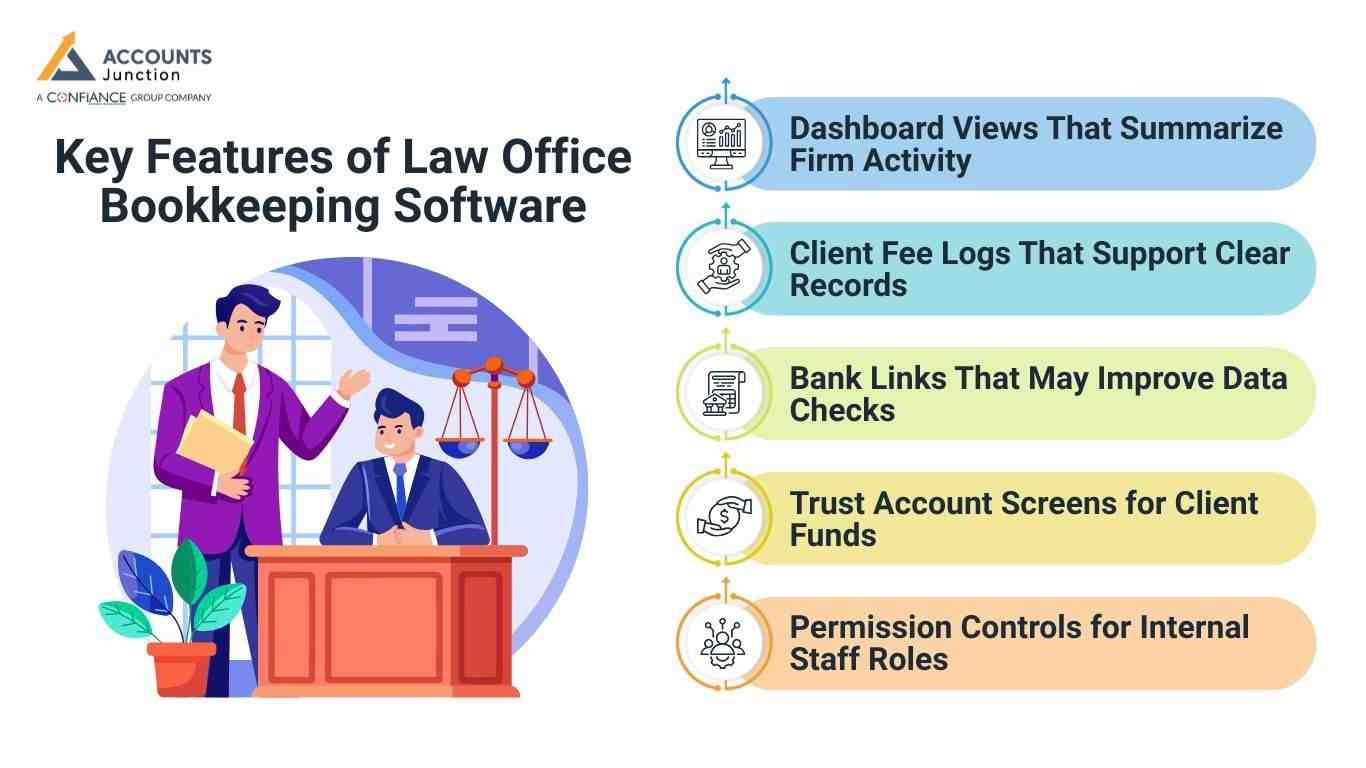
Key Features of Law Office Bookkeeping Software
-
Dashboard Views That Summarize Firm Activity
Many tools present a dashboard with calm visual lines. It may show income sums and pending bills at a glance. Some firms rely on this to stay aware each day.
Others use these views to guide slow internal tasks. The dashboard may shift as new data arrives.
-
Client Fee Logs That Support Clear Records
Firms handle many client fees each day. These tools may keep fee logs in well-arranged lists. Lawyers can review past transactions with minimal confusion.
The logs may help teams check errors with ease. Some users feel the fee layout creates calm order.
-
Bank Links That May Improve Data Checks
Some tools link firm books with bank records. This link may allow quick reviews of money flow. Teams might see faster checks of recent transactions.
The link may help reduce manual entry tasks. Still, some firms choose manual checks for comfort.
-
Trust Account Screens for Client Funds
Tools that act like trust account software may show client funds. They may separate firm cash from client cash in clear ways. Staff may review trust moves with a steady focus.
Some say these screens reduce doubts about trust rules. Others still add manual checks to ensure accuracy.
-
Permission Controls for Internal Staff Roles
Many tools include permission settings for users. These settings guide what each staff member may view. This may protect sensitive data from broad access.
Roles may also support smoother internal tasks. Some leaders review roles monthly for better safety.
How These Tools May Improve Law Firm Management
-
Support for Better Money Checks
Attorneys may feel more control when books stay neat. Law office bookkeeping software may highlight sums that need fast review.
Some teams use law office bookkeeping software to guide weekly checks. Clear books may help teams stay aligned. Many firms rely on law office bookkeeping software for steady insight into money movement.
-
Improvements in Team Communication
Shared screens may help staff view the same data. This may bring a smoother flow in daily work.
Teams may reduce errors when they share a view. Using law office bookkeeping software may create more unity and help new staff learn tasks faster.
-
More Predictable Cash Flow Views
Dashboards may show lines that suggest cash flow paths. These lines may help leaders plan future steps.
Some teams study these views each month. It may guide choices about firm costs. The insight may support more stable planning.
-
Better Support for Billing Processes
Billing may feel simpler with organized lists. Law office bookkeeping software can track unpaid fees with less stress. Trust account software may allow fast checks on pending bills. This can reduce delays in client billing.
This may reduce delays in client billing. Firms may gain clarity in monthly cycles.
-
Slow Reduction in Manual Tasks
Law office bookkeeping software may reduce frequent data entry, lowering the manual task load. Staff may shift time to needed legal tasks.
This may bring more balance to daily routines. Still, outcomes differ across different firms.
Choosing the Right Law Office Bookkeeping Software
-
Knowing Your Firm Needs Before You Decide
Each firm may bring unique needs to the table. Some need simple tracking tools with basic screens.
Others seek rich features that support large teams. Assess firm size before choosing a tool. Gauge trust work needs before testing options.
-
Checking Ease of Use During Trial Periods
Trial use may reveal the tool’s true pace. Staff may test screens with daily tasks for insight. Trials help leaders see strengths and limits.
Firms may use them to avoid bad choices. Real tasks give the clearest sense of fit.
-
Understanding Trust Rule Requirements
Trust rules may shift often in some regions. Using trust account software ensures these rules are followed easily
Still, firms must test rule fit with care. Some tools match rules while others fall short. The firm must keep checks to stay safe.
-
Checking Integration with Existing Tools
A tool may need to work with other firm apps. Check if it aligns well with billing systems. Some firms want simple links to document tools.
Integration with law office bookkeeping software may support smoother internal work. Firms test links before full adoption.
-
Watching Costs with Care
Costs may differ across many tool vendors. Some tools appear cheap but lack key features. Others feel costly but give broad support.
Firms must weigh long-term value. Cost should match the real firm's needs.
Challenges Firms May Face While Using These Tools
-
Training Staff to Use New Screens
New users may need time to learn screens in law office bookkeeping software. Training may help them feel steadier. Some firms train staff in small steps.
Others use guides that teach core tasks. Training helps reduce future errors.
-
Moving Old Data into New Systems
Past notes may need careful transfer. Some teams find data shifts time-consuming. Others use vendor support to speed tasks.
Clean data helps form neat books. Firms must check each moved file.
-
Keeping Trust Data Accurate
Trust books may need strict checks each week. Even with tools, errors may still appear. Staff should review client funds with care.
Firms must protect client money rights. Accuracy remains key for trust tasks.
-
Ensuring Staff Follow Firm Rules
Staff may drift from rules without reminders. Law office bookkeeping software can help enforce task steps and roles. Clear rules support clean daily tasks.
Some teams use monthly audits for review. Leaders may revise steps when needed.
-
Watching for Tool Limits
Tools may bring strong perks but clear limits. Some screens may lack needed depth.
Firms must check if features match needs. Limit checks protect future firm plans. A tool that lacks depth may slow progress.
Benefits Firms May See Over Time
-
Clearer Money Records for Daily Work
Books may stay neat when tools support tasks. Teams using law office bookkeeping software may work in a more calm order. Clear records may guide many decisions.
The tool may reveal movement across cases. Some users value neat logs more than anything.
-
More Consistent Billing Cycles
Billing may feel steady when logs stay clean. Firms can track pending fees with ease.
This may improve monthly review tasks. It may help show which clients pay fast. The process may feel more even.
-
Steady Trust Reviews
Trust account software may build new clarity. It separates client funds clearly with an easy display.
Staff may see trust changes at a glance. Firms may feel more control as rules shift. Trust reviews may gain a smoother pace.
-
Stronger Planning for Growth
A firm may seek growth after gaining clarity. Leaders may watch money paths for clues. They may plan new rooms or new staff.
Clear screens may guide long-term plans. Growth may come from better insight.
-
Better Staff Efficiency
Staff may feel smoother daily routines. Fewer manual tasks may reduce pressure. Teams may handle complex tasks with ease.
This may improve firm morale slowly. Clear tools may help staff stay focused.
Practical Tips for Better Use of These Tools
-
Start with Small Staff Tasks
Introduce new screens in small segments. This may help users learn faster. Small tasks may ease early stress.
Teams can build skills with steady practice. It keeps training time under control.
-
Review Books Once Every Week
Weekly checks may catch early errors. Teams may see new trends in money flow. This may help guide stable work plans.
Weekly reviews may build better awareness. Leaders often enjoy this steady rhythm.
-
Keep Trust Rules Up to Date
Trust rules may shift in unexpected ways. Firms must keep staff aware of updates.
This protects clients and the firm's reputation. It also keeps tools aligned with rules. New changes may need firm training sessions.
-
Refresh Permissions for Staff
Permission roles may change as staff move. Firms must review roles for safety. This may reduce risks in sensitive data.
Roles should match staff tasks closely. Regular checks may prevent issues.
-
Keep Reliable Backups
Data in law office bookkeeping software may break or shift without warning. Firms must keep backups in safe spaces. Backups protect years of firm work.
They help restore books after mistakes. A strong backup plan supports stability.
Law office bookkeeping software may bring more order, clear books, and steady views for daily firm work. Many lawyers feel these tools create a calm flow in bills, trust tasks, and staff steps. With neat screens, less manual work, and cleaner data, firms may see smooth cycles that keep strong control. Over time, these tools may shape firm growth, better staff performance, and more secure plans across the team.
Accounts Junction offers full accounting and bookkeeping services for law firms of all sizes. We have certified pros who track core tasks with care. Our team uses smart systems that keep your books clean, your trust funds right, and your bills on time. Choose a team that keeps firm work steady and clear. Partner with us for stable, accurate, and safe firm books.
FAQs
1. What does law office bookkeeping software help attorneys handle?
- Lawyers gain clear daily records that guide steady money reviews. Trust rules stay easier when funds remain in clean, separate lists.
2. Why do many firms move to law office bookkeeping software?
- Manual work drops fast when tools keep books in one place. Better money views help teams make calm and steady choices.
3. How does trust account software support client fund rules?
- Client money stays in strict zones that guard legal needs. Alerts show early signs when account records drift off track.
4. Can law firms reduce errors with this type of software?
- More checks run daily, which lowers the chance of wrong entries. Clear reports guide staff through smooth review steps each week.
5. What features should attorneys check before choosing software?
- Strong trust checks create safe client fund records for teams. Linked bank data helps firms match entries with quick daily reviews.
6. Do small law firms gain from trust account software?
- Small teams gain steady trust control without heavy daily tasks. Safe fund tracking builds client faith across long service periods.